Woe to you lawyers! for you have taken away the key of knowledge; you did not enter yourselves, and you hindered those who were entering.
Luke 11:52 (RSV CE)
You’ve got the key to turn love loud Turn it baby, let’s don’t stop,
You’ve got the key to turn love loud Just turn it, take it and turn it!
The Key, Four Tops
Key, when near it announces the successful end of the matter, but at a distance the opposite
Original Instructions
Card No. 33, the Key, is represented by the Eight of Diamonds. At first glance, it appears to be one of the most straightforward cards in the Petit Lenormand. Yet, despite its apparent simplicity, the Key is one of the most important cards within the deck, for it governs access to the very things the seeker hopes to obtain.
The Essence and Function of the Key
The traditional eikōn for card 33 is remarkably consistent. Most decks depict a single-bit key, often a mortice key. Depending upon the pattern, the key may be shown vertically, horizontally, or diagonally. More ornate decks depict a key of considerable craftsmanship, decorated with intricate metalwork and elaborate wards. Regardless of these artistic variations, the symbolism remains unchanged.
The essence of the Key is access and its function is to secure.
A key performs a dual role. With the correct key, one may lock a door or unlock it. One may grant access or deny it. This duality is central to understanding the card. The Key does not automatically promise success, nor does it merely signify an answer. Rather, it facilitates access to those circumstances, resources, opportunities, and forms of assistance required to achieve a desired outcome.
When the Key falls near the significator, it is often a strong indication that the seeker possesses—or will shortly acquire—the resources, time, support, and opportunities necessary to realise their aims. The door is open, or the means of opening it are readily available. Help is at hand. The necessary pieces are falling into place.
Conversely, when the Key falls at a distance from the significator, the inference is often that access is restricted. This does not necessarily mean failure. Indeed, I would seldom predict outright failure on the basis of the Key’s position alone. Rather, the card frequently suggests that the timing is not yet right, that some necessary resource remains unavailable, or that circumstances have not sufficiently matured. Attempts to force the matter often create additional complications which might otherwise have been avoided.
Over the years, I have found that time itself is frequently the missing key.
I recall a consultation during the latter half of 2019 with a lady who had recently become engaged. She was determined to marry on the same date upon which both her parents and maternal grandparents had wed. In the spread, the Key and Ring fell far from the Lady and were accompanied by the Scythe and the Cross. I advised caution and suggested that there might not be sufficient time for matters to unfold as she hoped.
Sadly, the wedding was later postponed as the intended date fell during the first COVID-19 lockdown. The issue was not a lack of commitment or desire. Rather, the necessary resources—the church, the hotel, and the practical arrangements required for the ceremony—had become inaccessible. The door was temporarily closed. This example illustrates the central lesson of the Key. The card facilitates our access to the circumstances necessary to achieve a goal. Equally, it may reveal that such access is presently limited or unavailable.
Cooper Hewitt, Smithsonian Design Museum, Public domain, via Wikimedia Commons
It is important not to confuse the Key with the Cloverleaf. The Cloverleaf may bring opportunities, fortunate chances, and favourable circumstances, but the Key determines whether one can actually gain access to what is desired. Opportunity and access are not necessarily the same thing. A door may present itself, yet remain firmly locked.
In practice, the surrounding cards usually reveal precisely what the Key opens. In a general reading, the Key will often connect itself to the nearest carte maîtresse. The Key and Fishes may indicate access to money, income, or material resources. The Key and Heart can point towards opportunities in matters of love, affection, and relationships. The Key and House frequently signify access to property, domestic stability, or family matters. In each case, the Key acts as the means by which the relevant matter is opened, secured, obtained, or made available.
Coda
At its heart, the Key is a card of access, opportunity, and facilitation. It reveals whether the seeker possesses the resources, support, timing, and circumstances necessary to move forward. Above all, the Key reminds us that success rarely depends upon desire alone; one must also possess the means to unlock the door.
Person and Description
The Key is a particularly interesting card when it comes to description. In and of itself, it does not signify a person and is not ordinarily employed as a significator. Nevertheless, when it appears alongside a person card, it contributes an important layer of meaning, albeit in a manner somewhat different from most descriptive cards.
The principal function of the Key is emphasis. It tells us that the individual in question is significant and warrants close attention. Quite simply, that person is key to the matter under consideration, whether for good or ill. Whenever the Key appears in conjunction with a person card, the reader should immediately ask how that individual facilitates, restricts, opens, or secures the outcome.
Cooper Hewitt, Smithsonian Design Museum, Public domain, via Wikimedia Commons
For example, let us suppose the Hound and Key appear in a reading concerning a job interview. We may reasonably conclude that the person represented by the Hound will play an important role in determining the outcome. Thus, Fox–Hound–Key may indicate a rival whose actions prove decisive. I encountered precisely such a combination in a consultation for a client seeking a promotion. His colleague, represented by the Hound, was the other candidate and therefore a rival in the context of the Fox. The Key revealed that this individual would prove instrumental in the matter. Although the colleague had initially coached and advised the client, he ultimately manipulated the process to his own advantage and secured the promotion himself. The Key showed not merely who was present, but who possessed access to the mechanisms that determined the final result.
Physical Description
In the appendix to my book, I note that the Key does not provide a physical description in the conventional sense. This remains substantially true, though a small qualification should be made.
Rather than contributing a specific physical characteristic of its own, the Key tends to strengthen and refine the descriptions supplied by neighbouring cards. It adds a degree of emphasis and refinement, almost as though the features in question are brought into sharper focus. The effect is rather like polishing a piece of metal; the features are not changed, merely made more apparent.
Temperament
When describing temperament, the Key points towards someone who naturally facilitates solutions. These are individuals who know how to open doors, whether through knowledge, influence, expertise, or practical experience. They are often dependable, steadfast, and trustworthy, but it is their usefulness and effectiveness that most distinguishes them.
The Key person possesses a practical intelligence. Faced with a locked door, their instinct is to find the means of opening it rather than lamenting its existence. They are frequently resourceful, methodical, and capable of identifying solutions where others perceive only obstacles.
One curious observation from practice is that Key people are often multilingual. Whether through education, travel, profession, or simple intellectual curiosity, they frequently possess an ability to move between different worlds, cultures, and modes of communication with relative ease. More broadly, they tend to be knowledgeable individuals who enjoy acquiring skills and information that expand their capabilities.
The Key person is also frequently encountered in occupations or situations where they facilitate access for others. Teachers, consultants, advisers, brokers, translators, radiologists and radiographers, and various gatekeepers often fall under this card. The common thread is not authority itself, but possession of something another person requires in order to proceed.
Above all, the Key describes a person upon whom progress depends. They possess knowledge, influence, authority, resources, or connections that others require. Whether they choose to open the door or keep it locked is another matter entirely, but their significance to the outcome should never be underestimated.
Special Features
Lock or Unlock
Like the Clouds, the Scythe, and the Cross, the Key exerts a particular influence upon the cards immediately adjacent to it. Understanding this interaction is essential if one is to appreciate the card’s full significance.
Traditionally, cartomantes taught that the Key says “yes” to the card on its left, whilst rendering the card on its right certain or guaranteed. Whilst there is some truth in this, I have found it more useful to approach the matter through the card’s underlying symbolism. The card to the left of the Key has been opened; the card to the right has been secured.
The card to the left of the Key is therefore best understood as having been opened. Access has been facilitated. The matter is available, accessible, and capable of manifesting freely.
By contrast, the card to the right of the Key is locked. It is secured, protected, contained, or otherwise restricted from casual access.
Thus, when we encounter Park – Key, we have a public space that is open and accessible. It may indicate an open-door policy, free admission, unrestricted access, or a social environment in which participation is encouraged.
Conversely, Key – Park suggests that access to the public space is restricted. We may be dealing with a private club, members-only organisation, secure facility, or venue requiring authorisation or payment for entry.
The distinction becomes even clearer with Book – Key and Key – Book.
With Book – Key, knowledge has been opened. Information is shared freely, secrets are disclosed, passwords revealed, or confidential matters exposed. In modern contexts, one might even think of leaked documents, compromised security, or unauthorised disclosure.
With Key – Book, the reverse applies. Information is secured and protected. We encounter confidentiality agreements, trade secrets, secure passwords, encryption, and need-to-know policies. The knowledge exists, but access to it has been restricted.
The principle remains the same regardless of the cards involved. The Key either facilitates access or secures the matter against intrusion. Understanding whether something has been opened or locked often reveals far more than simply reading the neighbouring cards in isolation.
Providence
Over time, it has become increasingly common to associate fate, destiny, and providence with the Cross. I have never found this interpretation entirely satisfactory. The Cross is a card of burdens, suffering, sacrifice, and endurance—qualities entirely consistent with its historical use as an instrument of torture and execution. It is better understood as a fateful card than a card of Providence.
Providence is more naturally encountered through the workings of the Key.
As we know, cards exert an influence upon those beneath them. When the Key crowns the significator, there is often a remarkable alignment of circumstances. The seeker encounters the right person, receives the necessary assistance, obtains the required information, or discovers the correct path forward. There is a sense that circumstances are co-operating rather than resisting.
In such situations, the Key can suggest that matters are unfolding as they should. Opportunities emerge at the proper moment, obstacles prove surmountable, and the next step becomes apparent. Whether one chooses to call this providence, destiny, or simply fortunate timing is largely a matter of personal philosophy.
The Exclamation Mark
The Key can also function rather like an exclamation mark.
When a particular issue dominates a reading, the Key often draws attention to the card immediately above it. In effect, the Key tells the reader, “Pay attention to this card.” In many instances, the card above will contain the answer, solution, or crucial piece of information needed to resolve the matter.
Over the years, I have found this especially useful when searching for missing or misplaced objects. In such cases, the card above the Key frequently provides a remarkably accurate indication of where the item may be found or the circumstances surrounding its disappearance.
More generally, whenever the Key appears beneath another card, one should pay close attention. The card above has often been elevated in importance and deserves careful consideration before the remainder of the spread is interpreted.
Timing
In matters of timing, the Key is generally a slow card. It emphasises that events occur at their appointed time and rarely before.
Unlike cards such as the Birds or Cavalier, which indicate rapid developments, the Key is concerned less with speed than with readiness. It asks whether the necessary conditions are present and whether the appropriate door can, in fact, be opened. The Key is not slow because it delays; rather, it waits until the necessary conditions are in place.
The card also has a tendency to reinforce the timing of neighbouring cards. Thus, when found with slower cards such as the Lilies or the Mountain, delays are often magnified. Events take longer to mature and progress proceeds cautiously. Conversely, when combined with cards such as the Cloverleaf or the Mice, developments may occur more quickly than expected.
Ultimately, the Key reminds us that timing is often a matter of access. A door may exist, but until it can be opened, progress remains deferred.
Health
Unlike many cards within the Petit Lenormand, the Key does not possess a specific anatomical correspondence. Instead, it governs the process by which answers are obtained and the investigations required to determine both diagnosis and treatment.
Consequently, the Key frequently appears whenever tests, examinations, assessments, or professional expertise are required. Depending upon the surrounding cards, this may include imaging studies such as X-rays, CT scans, or MRI examinations, particularly when supported by the Moon. With the Book, one may encounter screening questionnaires, psychological assessments, or investigations into developmental and communication disorders. With the Tree, the card may point towards genetic or DNA testing.
Other combinations can provide additional nuance. The Key and Scythe may indicate exploratory or keyhole surgery, whilst the Key and Serpent can suggest investigations involving the digestive tract, such as a colonoscopy.
From a practical standpoint, the appearance of the Key usually advises consultation with an appropriate professional and a willingness to submit to expert assessment. The card reminds us that answers are obtained through knowledge and investigation rather than conjecture.
Taken alone, the Key is generally a promising omen in health matters. It suggests that the expertise, information, and resources required to understand the problem are available and that appropriate investigation is likely to lead towards a constructive outcome.
The Key in Action
Pyramid spreads have long been popular amongst cartomantes, with antecedents stretching back to Etteilla. Over the years, numerous variations have emerged, differing in size, orientation, and method of interpretation.
Here we shall employ a simple inverted pyramid using ten cards. The spread is particularly useful when examining the development of a situation over time, as each row reveals a stage in the unfolding narrative, whilst the final card indicates the likely outcome.
The Inverted Pyramid
Shuffle and cut the cards. Then deal four cards in a row. Beneath these, deal a second row of three cards. Below the second row, deal a third row of two cards. Finally, place a tenth card beneath the third row.
The layout will appear as follows:
01 – 02 – 03 – 04 05 – 06 – 07 08 – 09 10
It will be noted that 4 + 3 + 2 + 1 = 10. The structure has roots in Neoplatonic and Pythagorean numerical concepts. Whilst this is an interesting historical feature, it has little practical significance during the reading itself. For our purposes, each row is simply read as a line within a story, gradually moving towards its conclusion.
Jessie’s Reading
Jessie consulted me during the spring of 2025. She had recently emerged from a long-term relationship that had ended in the autumn of the previous year. Since then, she had struggled to meet someone with whom she could build a serious future and was considering joining a dating application.
Her question was simple:
Would she meet someone suitable for a serious long-term relationship through the app?
The cards drawn were:
Stars – Roads – Ship – Sun Lord – Key – House Lilies – Bouquet Anchor
At first glance, the spread appears highly encouraging.
The opening line immediately suggests a clear and positive course of action. The combination of Stars–Roads–Ship–Sun indicates a path forward that will broaden Jessie’s horizons and move her love life in a more favourable direction. The Stars provides clarity, the Roads presents a choice, the Ship introduces movement and expansion, and the Sun promises a positive outcome. Together, the cards strongly suggest that joining the application is a constructive decision.
The second line reveals why.
Here we find Lord–Key–House. As discussed earlier in this article, the Key facilitates access. It opens doors and makes resources available. In this instance, the Key acts between the Lord and the House. It opens the door to meeting a suitable man (Lord) and secures the possibility of building something stable and meaningful (House).
Whilst the House is naturally associated with property and domestic concerns, it also governs our private world, our personal lives, and those places where we feel safe, secure, and accepted. The combination therefore suggests a man who shares Jessie’s desire for stability, commitment, and a genuine home life.
The Key is particularly important here. Rather than simply promising success, it indicates that the dating application provides access to the sort of person Jessie wishes to meet. The opportunity exists, and the means of reaching it are readily available.
The third row, Lilies–Bouquet, describes the quality of the relationship itself. The dates (Bouquet) will be characterised by mutual respect (Lilies), kindness, and good manners (Lilies – Bouquet). There is both warmth and maturity present, suggesting a relationship capable of developing on a healthy foundation rather than one driven solely by passion or excitement.
Finally, the Anchor provides the outcome.
The Anchor is a card of stability, permanence, and faithfulness. As the culmination of the spread, it suggests that the relationship has the potential to develop into something serious and enduring. Rather than a brief romance or casual encounter, the cards point towards the possibility of building something lasting.
The spread therefore answered Jessie’s question quite clearly. Joining the app would provide access to new opportunities and place her in contact with someone whose goals and values aligned closely with her own. The relationship revealed by the cards possessed both warmth and stability, offering a realistic prospect of a long-term future together.
This proved to be an accurate assessment. Jessie met a gentleman through the app. At the time of writing, they are approaching their first anniversary together. Whilst only time will determine the ultimate outcome of the relationship, the cards correctly identified both the means by which they would meet and the serious long-term potential of the connection. In this respect, the Key performed exactly as expected: it did not create the relationship, but revealed the door through which Jessie needed to pass in order to find it.
Boroveshengra, A., 2013. Cartomantes’ Cabinet: The Petit Lenormand Course. Boroveshengra, A., 2015. Lenormand Thirty Six cards. 2nd ed. Create Space. George, R. (2014) The Essential Lenormand: Your Guide to Precise & Practical Fortunetelling. Woodbury, MN: Llewellyn Publications. Ignatius Press (2005) Holy Bible RSVCE Compact Zipper. Ignatius Press. Marco, M. and Goffinet, J., 1989. Petit Lenormand. Bruxelles: Servranx. Silvestre, C., 2003. Le Petit Lenormand. [Montpellier]: Gange éd.
The Fox article has been revised and expanded in this edition, incorporating material that previously appeared elsewhere and bringing related themes together in a single, coherent treatment of the card.
At that very hour some Pharisees came, and said to him, “Get away from here, for Herod wants to kill you.” And he said to them, “Go and tell that fox, ‘Behold, I cast out demons and perform cures today and tomorrow, and the third day I finish my course…’”
Luke 13: 31 – 32 (RSV CE)
Avec tout son mépris, il s’est bien joué du roi qui va perdre son temps à l’attendre et en être pour ses frais (With all his contempt, he played the King well who will waste his time waiting for him and being at his expense.)
Le Roman de Renart
Fox, if this card is near, you must beware of those with whom you are connected, because some seek to deceive you, otherwise there is no danger.
Original Instructions
Card No. 14, the Nine of Clubs or Fox, is one of the most divisive cards in the Petit Lenormand. Is Renard the master card of work and employment? Is he the family card par excellence? Or is he the red devil himself?
The Essence and Function of the Fox Card
The essence of the Fox is falsehood and its function is to manipulate.
The Fox appears whenever another person’s interests compete with our own and they are prepared to employ cunning, deception, flattery, misdirection, or dishonesty in order to obtain what they want. Unlike the Serpent, whose actions are often driven by resentment, jealousy, spite, or personal animosity, the Fox is usually pragmatic. He does not deceive because he hates the querent. He deceives because doing so serves his interests.
The Fox wants something.
Unfortunately, it is often something that belongs to us.
For this reason, I frequently describe the Fox as the deck’s principal red flag. Its appearance does not automatically mean that disaster has struck, but it does warn that caution is required. Someone is not being entirely truthful, and a failure to remain vigilant may result in loss.
To understand the Nine of Clubs properly, we must consider both its eikōn and its folklore.
Beginning with Das Spiel der Hoffnung, the traditional motif of Card No. 14 depicts a stealthy fox stalking its prey or carrying off a recently killed bird. Depending upon the deck, we may see a fox ready to pounce upon a chicken or goose, or one already carrying away its prize.
Johann Kaspar Hechtel, Public domain, via Wikimedia Commons
The chicken never saw him coming.
Over time, the image has changed remarkably little. The classic Brepols & Dierckx pattern, much loved by serious readers, depicts a fox returning to its den carrying a goose for its cubs. Other traditional decks merely vary the species of bird involved.
The crucial detail is that the bird does not belong to the fox.
The fox is not hunting wild game. It is helping itself to somebody else’s resources.
The birds depicted are usually domestic fowl: chickens, geese, partridges, or other livestock raised for food. In order to feed itself, the fox has trespassed upon another person’s land, located their resources, and taken what it needs.
Naturally, the fox is not evil. It must eat.
Nevertheless, the farmer must also feed his family.
Here we encounter one of the Fox’s most important themes: competing interests.
The fox requires the chicken.
The farmer requires the chicken.
Only one of them can have it.
Bruno Liljefors, Public domain, via Wikimedia Commons
This same principle appears repeatedly in readings. Two people may want the same promotion. Two companies may be competing for the same contract. Several candidates may be pursuing the same position. The Fox appears wherever interests collide and somebody is attempting to secure an advantage.
This understanding also explains why I have never regarded the Fox as a card of employment itself.
The fox is not working.
He is competing.
In professional matters, the Fox frequently signifies rivals, competitors, opposing applicants, commercial adversaries, or others whose interests conflict with our own. The card often reveals those people who stand between us and whatever it is we seek to obtain.
The Fox also teaches a second lesson.
Because he survives through cunning rather than strength, the card frequently calls for strategy and careful thinking. The querent must consider their actions carefully because errors and weaknesses tend to be exploited when the Fox is nearby.
Careless words are repeated. Oversights are noticed. Mistakes are used against us.
The card therefore warns that success depends not only on recognising opportunities but also on recognising the motives of others.
Foxes are ever-present figures in European folklore. Rooted in agriculture and husbandry, the fox became the archetypal trickster: cunning, resourceful, manipulative, and difficult to catch.
Perhaps no tale illustrates this better than The Fox and the Crow.
Observing a crow carrying a piece of cheese, the fox realises he would very much like it for himself. Yet he cannot simply seize it. The crow can fly away.
Instead, the fox resorts to flattery.
Approaching the bird, he praises her beauty and elegance and finally remarks that a creature so magnificent must surely possess a beautiful singing voice. Delighted, the crow opens her beak to sing and promptly drops the cheese directly into the waiting mouth of the fox.
The fox takes the cheese not through strength, but through manipulation.
The craftiness, ingenuity, and desire for something belonging to another are all clearly visible in Card No. 14. The Judith Bärtschi Lenormand even makes direct use of this famous story.
Classic tales such as Reynard the Fox, Schir Lowrence, Godmother Lisa, The Fox and the Mask, The Wolf and the Fox, and the legend of the Teumessian Fox can all reward further study.
Together they reveal the same enduring lesson.
The Fox does not oppose us because he dislikes us.
He opposes us because he wants what we have.
Coda
The Fox is a red flag.
Where he appears, vigilance is required. The querent must guard against deception, manipulation, self-interest, and competing agendas. Unlike the Serpent, whose actions are often personal, the Fox is generally pragmatic. He does not seek to wound us emotionally.
He seeks advantage.
Failing to recognise this may prove costly.
Always remember: The Fox is after your cheese.
Person and Description
Person
Although uncommon, the Fox can function as a person card.
Unlike the Hound or the Bear, the Fox does not ordinarily identify a specific individual within the seeker’s life. Instead, it most frequently signifies a rival, competitor, adversary, or other person whose interests conflict with those of the querent.
The Fox may be either male or female.
When uncertainty arises, I often examine the card towards which the Fox is oriented. If it faces a card belonging to the suits of Hearts or Clubs, the individual is more frequently male. If it faces a card associated with Spades or Diamonds, the individual is more often female. Like all such methods, this should be treated as a tendency rather than an absolute rule.
In practice, the Fox most commonly appears as the seeker’s principal competitor. This is particularly true in matters of romance, employment, promotion, business, and other situations involving competing interests. The Fox is not the work card. Rather, it represents those people with whom we must compete for opportunities, resources, recognition, customers, contracts, or advancement.
Physical Description
Physically, the Fox most often describes a person with red hair. This can range from strawberry blonde through ginger to deep auburn or reddish-brown.
Nostromo-io, Public domain, via Wikimedia Commons
Because the Fox is a creature of disguise and deception, it will occasionally indicate artificial hair, including extensions, wigs, hairpieces, and similar enhancements. By contrast, I have rarely found it signifying dyed hair.
The build is often lean rather than merely slim. There is frequently a wiry quality to the physique, and the face commonly possesses sharp or angular features. A prominent nose is particularly characteristic.
Many Fox people possess what might best be described as a vulpine appearance. Their smile appears knowing or calculating, the eyes possess unusual intensity, and there is often a slightly predatory quality to their demeanour. Curiously, this can be quite attractive or charismatic. One often finds oneself drawn in despite sensing that something is not entirely straightforward.
The voice is frequently smooth, persuasive, and articulate. Fox people often possess the “gift of the gab” and can be highly effective communicators when they wish to be. They know how to flatter, persuade, and present themselves in the most advantageous light.
Temperament
The Fox most closely corresponds to a mercurial temperament.
Such individuals are adaptable, clever, resourceful, and difficult to categorise. They often present different aspects of themselves to different people and can move comfortably between social groups, professions, and circumstances.
For this reason, one rarely feels that one completely knows a Fox person.
At their best, these individuals are strategic thinkers capable of remarkable ingenuity. They identify opportunities quickly, solve problems creatively, and rarely remain trapped by convention. They are observant, analytical, and exceptionally good at understanding how systems and people operate.
They are usually family oriented, too.
At their worst, these same qualities become manipulation, dishonesty, opportunism, and deceit.
The defining characteristic of the Fox is not malice but self-interest. This is one of the principal distinctions between the Fox and the Serpent.
The Serpent often acts from jealousy, resentment, rivalry, or spite. There is frequently something deeply personal about the Serpent’s actions. The Fox, by contrast, is usually practical and self-serving. He does not manipulate because he dislikes the querent. He manipulates because doing so advances his interests.
Where the Serpent wounds emotionally, the Fox exploits strategically. The Fox wants the same thing as you.
If deception, flattery, or manipulation help him obtain it, he will employ them without hesitation.
For this reason, the Fox frequently appears in situations where careful planning and strategy are required. The card reminds us that mistakes rarely go unnoticed and weaknesses are often exploited. Whenever the Fox appears, one should consider not only what is happening, but who benefits from it.
Special Features
The Fox in the Grand Tableau
Often dismissed by newer generations of cartomantes, the original instructions place considerable emphasis upon what has become known as near and far. Contrary to popular opinion, however, this is neither an archaic nor illogical concept. Rather, it reflects a natural understanding of how events and influences are experienced within our lives.
When a card falls close to the significator, we engage with it directly. Its influence is immediate, personal, and difficult to ignore. When a card falls at a distance, it retains its significance but is experienced less intensely. It remains part of the seeker’s life, yet operates on the periphery rather than at the centre of attention.
This is fundamentally a spatial understanding.
The Grand Tableau functions as a reflection of the seeker’s life. It contains all the threads of the tapestry, from pressing concerns and immediate circumstances to those matters that are more distant, indirect, or only developing in the background.
The Fox provides an excellent illustration of this principle.
When the Fox falls close to the significator, the seeker experiences its mercurial presence directly. The Fox is stalking close to home. Someone’s competing interests, dishonesty, manipulation, hidden agenda, or strategic behaviour is operating within the seeker’s immediate environment.
In such circumstances, particular attention should be paid to the cards the Fox affects or dominates. These become red-flagged areas requiring vigilance and caution.
When the Fox falls at a distance, however, its opportunities for mischief are reduced. It is simply too far from the seeker’s immediate circumstances to exert the same degree of influence. This does not mean the matter can be ignored. Rather, the significance becomes less immediate and less personally experienced.
As with every card in the Tableau, the Fox cannot affect the entire spread simultaneously.
Its influence is generally confined to those cards with which it is in closest contact.
Cards are often controlled or dominated by the card that precedes them. In other words, the A card exerts influence over the B card within an A + B (+ C) grouping.
For the Fox, particular attention should be paid to:
The card directly beneath the Fox.
The card immediately to the Fox’s right.
The cards diagonally below and to the right of the Fox.
The card beneath the Fox is influenced or controlled by it.
The card immediately to the Fox’s right is overcome by the Fox and frequently becomes the principal area through which the Fox expresses itself.
Likewise, the cards diagonally below and to the right often reveal the consequences of the Fox’s activity. Diagonal cards are frequently read as causes and effects, making them especially valuable in identifying both the origin and outcome of deceptive behaviour.
These positions deserve careful examination.
If a carte maîtresse falls within the Fox’s sphere of influence, it often provides an immediate indication of where the problem lies.
For example:
Fox + Fishes or Fox + Bear immediately raises concerns regarding finances, income, savings, resources, or investments.
Fox + House points towards domestic affairs, property matters, or people living within the household.
Fox + Lilies frequently involves family members, relatives, or those connected by kinship.
Fox + Moon can indicate professional politics, damage to reputation, or manipulation within one’s public or professional life.
Fox + Heart often introduces competing interests, hidden motives, or insincerity into matters of affection and romance.
The essential task is always the same: determine where the Fox is hunting.
The card itself tells us that somebody is acting from self-interest and pursuing an advantage. The surrounding cards reveal what they are pursuing, how they intend to obtain it, and where the querent must exercise caution.
In the Grand Tableau, therefore, the Fox is less a singular event than an active presence. Like the animal itself, it moves quietly through the landscape of the reading, seeking opportunities, exploiting weaknesses, and looking for ways to obtain what it desires.
Your task as cartomante is to spot it before it reaches the henhouse.
The Fox and Person Cards
Because the Fox is naturally volatile and mercurial, the order in which it appears relative to a person card is often extremely important. Here, we’re using the Lady card. However this applies to all person cards.
Fox – Lady
When the Fox precedes the Lady, she immediately receives a red-flagged status. Such a person must be treated with caution.
Her interests come first, and she may resort to manipulation, dishonesty, or strategic behaviour in order to achieve her aims. Charming and persuasive, she prefers indirect methods to open confrontation. One should pay close attention to what she says and, more importantly, what she chooses not to say.
Lady – Fox
The reverse produces a noticeably different result.
Here the Lady is usually independent, resourceful, and highly self-reliant. She prefers to depend upon her own abilities rather than others. Whilst she may be ambitious, calculating, and difficult to warm to, she is not necessarily dishonest or dangerous.
The emphasis falls upon self-sufficiency rather than deception.
Such women are frequently described as “self-made.” They solve problems through ingenuity and determination and have little patience for incompetence.
Fox above the Lady
When the Fox controls the Lady from above, the result is often more troubling.
Such a woman possesses a clear agenda and a carefully considered strategy. She already knows what she wants and has formulated a plan to obtain it. Unfortunately, she may also conclude that deception, manipulation, or sabotage are acceptable tools for securing her objective.
In my experience, this formation frequently identifies the arch-saboteur.
Fox beneath the Lady
When the Fox appears beneath the Lady, the result is generally more constructive.
The Lady employs strategy, research, planning, and intelligence in pursuit of her goals. She remains calculating but not necessarily dishonest. The emphasis lies upon competence and shrewdness rather than deceit.
She understands how to achieve results, but prefers to do so through skill rather than treachery.
One unexpectedly positive attribute the Fox often brings to person cards is loyalty towards family and one’s own circle. Fox people frequently care deeply for those they regard as their own, although this concern does not always extend to outsiders. Much like the fox carrying food back to its den, they tend to prioritise those closest to them above everyone else.
Finally, when the Fox falls immediately before the querent’s significator, I frequently regard it as a warning that the seeker is withholding information or presenting a selective version of events. Such clients are not always deliberately deceptive, but they are rarely telling the entire story. As every experienced cartomante eventually learns, there are occasions when the Fox appears because the fox is sitting directly across the table from you.
Masks, Disguises, and the Colour Red
Throughout European folklore, the Fox is frequently associated with disguise, deception, and the ability to appear as something it is not. Whilst foxes do not literally change shape, many trickster figures possess distinctly vulpine characteristics and achieve their objectives through concealment, misdirection, and assumed identities.
For this reason, the Fox commonly signifies masks, disguises, costumes, aliases, pseudonyms, and any situation in which a person is not presenting their true self.
The association with the colour red arises naturally from the animal itself but is reinforced through folklore. Trickster and diabolical figures are often depicted with red clothing, red hair, or reddish features. Méphistophélès, for example, is frequently portrayed in red garments and sometimes possesses distinctly vulpine characteristics. Over time, red became associated not merely with danger, but also with cunning, temptation, deception, and false appearances.
In practical readings, these themes manifest quite readily.
Park + Fox may indicate a masquerade, costume party, cosplay event, theatrical performance, re-enactment society, or any other social gathering where people deliberately adopt alternative appearances or identities.
Book + Fox frequently signifies a pseudonym, alias, nom de plume, pen name, secret identity, or concealed authorship. In some circumstances it may indicate information that has been deliberately obscured or a person who is intentionally concealing their true identity.
One should also pay careful attention to combinations such as Cross + Fox. In some readings, particularly those involving esoteric or spiritual subjects, I have observed this combination appearing in connection with left-hand path traditions, Satanism, and other belief systems that place particular emphasis upon the figure of the Adversary. The association arises quite naturally from the Fox’s longstanding link with falsehood and deception, combined with the traditional view of Satan as the Father of Lies. The Fox’s red colouring further reinforces this symbolism.
More broadly, however, Cross + Fox often points towards a serious warning that the Querent will soon potentially find herself manipulated or her trust abused.
Above all, the Fox reminds us that appearances can be deceiving. Not everyone is what they claim to be, and not everything is exactly as it first appears. The mask may be attractive, impressive, or even persuasive, but the cartomante’s task is to look beyond it and discover who is really wearing it.
Cats
The Petit Lenormand’s Fox shares several associations with the Italian Falsità (4♦) card, which depicts a cat. This parallel is not accidental. Across a number of European cartomantic traditions, foxes and felines appear as interchangeable symbols for deceit, cunning, manipulation, and self-interest.
In Continental and Eastern Europe, the association between the Fox and cats remains well known. French, Belgian, Romanian, and Russian cartomantes have all discussed or acknowledged this connection in one form or another.
This occasionally surprises modern readers.
Some regard the association as flawed and argue that cats should instead belong to the Hound because foxes are members of the canine family. A few years ago, one cartomante went so far as to argue that the Fox could never signify a pet cat for this very reason.
The difficulty with this argument is immediately apparent.
If biological classification alone determines symbolism, then the Hound must also be excluded because it too belongs to the canine family. The logic defeats itself.
More importantly, cartomancy derives its symbolism from folklore rather than zoology.
The people who created and transmitted these meanings were not concerned with modern taxonomic classification. They were interested in how animals behaved, how they were perceived, and what they represented within popular culture.
It is therefore folklore, not biology, that links the Fox and the cat.
Both animals possessed similar reputations. Both were regarded as independent, elusive, opportunistic, and capable of obtaining what they wanted through stealth and cunning. Both acquired associations with deception, trickery, and shape-shifting.
The folkloric connection appears clearly in the Reynard cycle, one of the most important influences upon the Fox card itself. Within these stories appears Tybalt, the Prince of Cats, variously described as a friend, ally, rival, and even cousin of Reynard. Whilst the two characters are not always in agreement, they undeniably belong to the same folkloric world.
It is essential to recognise the role of folklore within cartomancy.
If one dismisses such associations because they fail a modern biological test, one risks discarding the very material from which the oracle itself was constructed. The Petit Lenormand is a folkloric system. Its symbols derive their power from cultural memory, stories, traditions, and collective experience.
In practical readings, however, I do not routinely use the Fox as a significator for cats.
Most of the time, the issue never arises.
When animal identification becomes important, however, the Fox can serve as a perfectly effective feline significator. This is particularly useful when a household contains both dogs and cats and we need to distinguish clearly between them.
For example:
Hound + Fox will often indicate that the querent either owns cats or both dogs and cats.
Likewise, if a reading concerns multiple pets and the Hound has already been established as the dog, the Fox provides a natural significator for the cat.
Historically, folklorically, and practically, the association is well established. Whether one chooses to employ it is a matter of personal preference. What should be avoided, however, is the assumption that the association is somehow illogical. It derives from the same folkloric foundations that gave rise to the Fox card itself.
Renard the Worker
In their 1989 Petit Lenormand: Méthode de Cartomancie, Mary Marco and Janine Goffinet associated the Fox with salaried employees and the Fishes with the self-employed, entrepreneurs, members of the armed forces, and those running their own businesses. Whilst neither Silvestre nor Delclos adopted this particular model, it has subsequently appeared in the work of several modern authors, including Rana George, Lozzy Phillips, and Moony. My second mentor, herself French, taught a variation of the same idea, using the Fox primarily for temporary and self-employed workers.
The distinction between salaried employment and self-employment was once quite common within Petit Lenormand literature. Several German readers likewise preferred the High Tower where Marco utilised the Fishes.
As a younger reader, I made considerable effort to incorporate this distinction into my own practice. I could certainly see the logic. Foxes work for themselves. They are opportunistic, adaptable, and survive through ingenuity. The image appears well suited to freelancers, temporary workers, and various forms of self-employment.
Over time, however, I found that the cards simply did not adhere to the distinction consistently.
The same cards appeared regardless of whether the individual was salaried, self-employed, or operating somewhere between the two. What changed was not the card itself, but the surrounding circumstances and nuances revealed by the reading.
For this reason, I do not personally use the Fox as a general significator of employment.
This is not because I believe the interpretation is wrong. Many excellent cartomantes continue to employ it successfully, such as the wonderful Rana George and Elvira. Rather, I have never found it necessary. The card makes considerably more sense to me when interpreted through its essence and function.
Foxes are opportunists existing in constant competition with their environment. They are remarkable survivors, continually adapting to changing conditions and competing for resources.
Consequently, card no. 14 speaks (to me) more naturally of competition, rivals, self-interest, and the strategies required to succeed.
When a seeker attends a job interview, the Fox often signifies the other candidates.
When a company bids for a contract, the Fox frequently appears as the competing firms.
When a person seeks promotion, the Fox may describe the colleague pursuing the same opportunity.
The card therefore tells us less about employment itself and more about the competitive environment in which employment occurs.
This interpretation also explains why the Fox appears so frequently in career readings without requiring it to become a universal “work card.” The workplace is one of the primary theatres in which competing interests, hidden agendas, office politics, and strategic behaviour play out.
When the Fox does describe occupations directly, these tend to reflect the card’s own nature and habits. Thus, it may indicate casual labour, cash-in-hand work, gamekeepers, night workers, hunters, trappers, pawnbrokers, traders, smallholders, and, less favourably, poachers and other occupations operating along the edges of respectability.
Competition and Rivals
Competition is one of the Fox’s most important manifestations and arises naturally from both its eikōn and folklore.
The fox survives by competing for resources. The chicken he seeks already belongs to someone else. Consequently, the Fox frequently appears wherever multiple parties desire the same opportunity, reward, resource, or person.
This is particularly important in readings concerning career, finances, and romantic relationships.
Career and Employment
In employment matters, the Fox most commonly signifies the seeker’s rivals and competitors.
When applying for a new position, the Fox often represents the other candidates being considered. When seeking promotion, it frequently identifies colleagues pursuing the same opportunity. In business, it may represent competing firms, rival traders, or organisations vying for the same contract or customer base.
The Fox therefore tells us less about employment itself and more about the competitive environment in which employment takes place.
Particular attention should be paid to the relationship between the Fox and the seeker’s significator.
Any chain of cards linking the Fox and the Lord or Lady can provide valuable insight into the interaction between the parties. The cards reveal advantages, obstacles, weaknesses, and points of competition.
When reading for a woman, the Lady ordinarily represents the client. The Lord frequently signifies the hiring authority, interview panel, or decision-making body regardless of the sex or number of people involved. This follows the same principle discussed in the Lord and Lady chapter. There exists a relationship between the querent and those deciding whether she will be offered employment.
Accordingly, the relationship between the Fox and the hiring authority can be just as revealing as the relationship between the Fox and the client herself.
The key question is simple: who does the decision-maker favour?
Financial Matters
The Fox deserves special attention in financial readings.
As a card of self-interest, competition, and opportunism, it frequently warns that finances may become a battleground of competing demands.
The Fox is rarely a welcome sight around money because somebody or something wants the same resources that you do.
Unexpected expenses, rival claims on income, avoidable expenditure, predatory lending, manipulative sales tactics, scams, and poor financial decisions can all appear under its influence.
For this reason, I often regard the Fox as a major red flag whenever it appears near the Fishes or Bear.
The card encourages caution, careful budgeting, and the avoidance of unnecessary risks. One should examine any proposed purchase, loan, investment, or financial commitment particularly carefully when the Fox is involved.
The essential question becomes: who is benefiting from this transaction? If the answer is “everyone except the querent,” the Fox has probably revealed its hand.
Love and Relationships
In matters of romance, I have consistently found the Fox to signify a rival.
Importantly, this does not automatically indicate infidelity.
Rather, it indicates that somebody other than the querent has developed an interest in their partner or love interest. More often than not, that interest is mutual or at least acknowledged by the other person.
Nevertheless, attraction and opportunity are not the same thing as betrayal.
For this reason, great care should be exercised before making pronouncements regarding affairs.
The Fox establishes competition. It alone does not establish cheating.
Further evidence should always be sought.
Carefully examine the interaction between the Fox and the partner’s significator. Do they form a chain? Do they share significant intersections? Are they facing one another? What role do cards such as the Serpent, Lilies, Clouds, Roads or Heart play in the wider picture?
The Lilies, for example, may reveal underlying desires. Is below the partner or clouded? The Serpent may introduce temptation and emotionally charged nature (if near the Heart).
I generally prefer to see at least two or more convincing testimonies before concluding that an affair is taking place.
A person may experience attraction, temptation, curiosity, or emotional conflict without ever acting upon those feelings. Likewise, a relationship may end without the partner ever pursuing the Fox.
The distinction matters.
The Fox introduces a rival.
What happens next depends upon the rest of the tableau.
A Consistent Principle
Regardless of the subject matter, the Fox introduces competition.
In employment, it is the rival candidate.
In business, it is the competing firm.
In financial matters, it is the competing demand upon one’s resources.
In love, it is the competing romantic interest.
The details change, but the principle remains remarkably consistent. The Fox wants the same thing as the querent and is prepared to pursue it through cunning, strategy, adaptability, and self-interest. The wise cartomante pays close attention to where the Fox is hunting and whether the henhouse door has been left open.
Timing
In matters of timing, the Fox is generally a card of moderate or steady pace. It is neither especially fast like the Cloverleaf or Heart, nor especially slow like the Tree or Mountain. Events represented by the Fox tend to unfold at an ordinary pace, but rarely in a straightforward manner. The card often introduces complications, adjustments, and last-minute changes that require the querent to think on their feet.
For this reason, the Fox can occasionally create delays. Unlike the Mountain, however, these delays arise not through obstruction but through error, miscalculation, deception, or unforeseen circumstances. A detail may have been overlooked, somebody may have acted dishonestly, or a competitor may have altered the situation unexpectedly.
The appearance of the Fox therefore frequently suggests the need for flexibility and contingency planning. One should always have an alternative course of action available should circumstances change unexpectedly.
A traditional timing combination worth noting is Fox + Stars, which has long been interpreted as the wrong time.
This can be understood literally. The timeline itself may be incorrect. A meeting occurs on the wrong day, an appointment is scheduled incorrectly, a deadline changes, or an event fails to take place when anticipated.
Figuratively, the combination often carries a different message. Rather than indicating an error in calculation, it suggests that the timing itself is unfavourable. In such circumstances, I frequently interpret the cards as advising restraint. Providence appears to be indicating that this is not the correct moment to pursue the matter further.
The wiser course is often to step back, redirect one’s attention elsewhere, and wait for more favourable conditions to emerge.
In keeping with the Fox’s nature, the issue is rarely that something cannot be achieved. Rather, it is that the circumstances are not yet aligned in a way that permits success.
The Fox can, sometimes, also indicate between 11 – 14 of May.
Health
Anatomically, the Fox is associated with the nose and olfactory system. This correspondence arises naturally from the animal itself. A fox relies heavily upon scent to navigate its environment, locate prey, identify danger, and communicate with other foxes. Consequently, the Fox frequently appears in connection with nasal complaints and disorders affecting the sense of smell.
Thus:
Fox + Bouquet may indicate allergic rhinitis, hay fever, or other allergy-related nasal conditions.
Fox + Mountain can suggest obstruction, congestion, a blocked nose, or restricted airflow.
Fox + Birds may point towards irritation of the sinuses.
Fox + Birch Rod can indicate inflammation affecting the nasal passages.
Over many years of practice, I have repeatedly observed the Fox appearing near the Tree or Coffin when a client is experiencing illness that has not yet been fully identified or understood. Sometimes the individual is symptomatic but the cause remains unclear. At other times, there are few obvious symptoms despite an underlying problem being present.
Particular attention should be paid when the Fox influences either the Tree or the Coffin.
The Fox brings concealment, falsehood, confusion, and misdirection. When applied to cards associated with health and illness, these qualities often manifest as conditions that prove difficult to recognise, investigate, or interpret.
Thus, Fox + Tree frequently suggests that something affecting the person’s health is not immediately apparent.
Likewise, Fox + Coffin may indicate an illness whose presentation is misleading, confusing, or atypical. In some cases, this may correspond with inaccurate test results, delayed diagnosis, conflicting medical opinions, or an initial diagnosis that ultimately proves incorrect.
Importantly, the cards cannot determine whether someone is suffering from a medical condition, nor can they diagnose one.
What they can do is alert us to the possibility that all may not be as straightforward as it first appears.
For this reason, whenever I repeatedly encounter the Fox in close relationship with the Tree, Coffin, or Key, I generally encourage the seeker to be proactive regarding their health. Regular check-ups, appropriate medical investigations, and, when necessary, obtaining a second medical opinion are often sensible courses of action.
The Fox’s warning is not necessarily that something is seriously wrong.
Rather, it is that something may not be entirely as it seems.
The Fox in Action
Let us return to the well-known French Cross.
Remove the significator card prior to shuffling and place it in Position 0. The remaining cards are dealt as follows:
03
01 – 0/05 – 02
04
Position 1 — The querent and their approach to the situation.
Position 2 — Influences, obstacles, assistance, or another person involved in the matter.
Position 3 — The direction or course of action that initiates the outcome.
Position 4 — The answer and outcome.
Position 5 — The synthesis.
Unlike many Tarot versions of the French Cross, the synthesis is not calculated but dealt directly from the deck.
The synthesis qualifies the outcome and helps us understand whether it is ultimately beneficial or regrettable. For example, if a querent asks about reconciliation and we find the Coffin as the outcome but the Sun as the synthesis, the reconciliation is denied, yet this proves beneficial and clears the way for a happier future. If the cards are reversed, the relationship resumes (Sun) only to break down shortly afterwards (Coffin).
Leon’s Reading
Leon had been in a relationship with Samuel for five months.
Samuel had recently begun an internship involving long hours and a lengthy commute. Leon, meanwhile, was working as a junior doctor and already faced demanding and unsociable hours. As a result, time together had become increasingly scarce.
Over the preceding weeks, however, Leon felt that Samuel had become more distant and less enthusiastic about spending time together.
His question was straightforward: Does this relationship have a future?
The cards drawn were:
Position 1: Ring Position 2: High Tower Position 3: Ship Position 4: Mice Position 5: Fox
The Ring immediately revealed Leon’s mindset.
He was deeply invested in the relationship and genuinely wanted it to succeed. As a card of commitment, attachment, and repetition, the Ring suggested he had repeatedly tried to reconnect with Samuel and preserve the relationship despite the growing distance between them.
The second position often reveals the other person in relationship questions.
Here, the High Tower described Samuel with remarkable accuracy. The card depicts someone focused upon succeeding in life, achievement, and long-term goals. Samuel’s attention was increasingly directed towards his future, career development, and personal ambitions rather than the relationship itself. This does not imply a lack of affection. It simply shows where his priorities currently lay.
The answer begins with the Ship, which is seldom encouraging in matters where a couple are already drifting apart.
The Ship is a card of movement, distance, and changing horizons. Whilst Leon was attempting to maintain the relationship, the Ship indicated that the overall trajectory was carrying the two men further apart rather than bringing them together. Their lives were beginning to move in different directions.
The outcome was the Mice.
Importantly, the Mice does not indicate a dramatic or explosive ending. Instead, it reveals gradual erosion. Time together becomes less frequent, communication diminishes, and the relationship is slowly consumed by circumstance. Eventually, little remains.
The synthesis was the Fox.
This card reveals the true nature of the situation.
Neither man was behaving maliciously. There is no indication of manipulation, betrayal, or deliberate dishonesty. Instead, the Fox manifests through competing interests.
Leon wished to preserve the relationship.
Samuel wished to pursue opportunities that demanded increasing amounts of his time, energy, and attention.
Their goals were no longer aligned.
The Fox therefore appears not as a deceiver but as a competitor. Samuel’s ambitions, responsibilities, and future plans had effectively become rivals to the relationship itself.
The card also raises the possibility that other opportunities or interests may eventually compete for Samuel’s attention. However, there is insufficient evidence within the spread to conclude that infidelity had occurred. As discussed earlier, such a judgement requires multiple supporting testimonies. The Fox alone is not enough.
Leon and Samuel continued trying to make the relationship work for several weeks, but the underlying problem remained unchanged. The issue was not a lack of affection but the fact that their lives were moving in different directions and their priorities increasingly competed with one another. Samuel began to spend more time in London and the two barely saw each other. Sadly, that is the nature of the Mice: it is a card of slow declines and protracted breakups.
Ultimately, Leon ended the relationship. Shortly afterwards, Samuel relocated closer to London and began seeing a colleague almost immediately. There was no evidence of cheating.
In this reading, the Fox did not so much signify deception, betrayal, or infidelity. Instead, it manifested through competing interests. Neither man necessarily did anything wrong. They simply wanted different things, and ultimately there was not enough room for both those ambitions and the relationship to co-exist.
§
Images:
Featured Image:
Renart the Fox, Ernest Henri Griset, 1869, Public domain, via Wikimedia Commons
Boroveshengra, A., 2013. Cartomantes’ Cabinet: The Petit Lenormand Course. Boroveshengra, A., 2015. Lenormand Thirty Six cards. 2nd ed. Create Space. Ignatius Press (2005) Holy Bible RSVCE Compact Zipper. Ignatius Press. Marco, M. and Goffinet, J., 1989. Petit Lenormand. Bruxelles: Servranx. Matthews, C. 2014 The Complete Lenormand Oracle Handbook: Reading the Language and Symbols of the Cards. Rochester, VT: Destiny Books. Silvestre, C., 2003. Le Petit Lenormand. [Montpellier]: Gange éd.
Note: My second Lenormand teacher, Euphemie Al-Ansari, learnt the Petit Lenormand in France during the late 1960s or early 1970s. I met her through her husband in 2000 and learned much from her practical no nonsense approach to the cards. Euphemie associated the Fox with self-employed workers and the Anchor with salaried employment. She also taught me the Fox–Serpent v Serpent–Fox rule. As she preferred the Rote Eule (Red Owl) pattern, in which both cards face left, she would often remark that the “Serpent bites the Fox’s heel,” a vivid reminder that deceit, intrigue, or betrayal often undermines even the Fox’s schemes and ambitions. Plus it shows that the Serpent
Then the Lord God said, “It is not good that the man should be alone; I will make him a helper fit for him.” So out of the ground the Lord God formed every beast of the field and every bird of the air, and brought them to the man to see what he would call them; and whatever the man called every living creature, that was its name. The man gave names to all cattle, and to the birds of the air, and to every beast of the field; but for the man there was not found a helper fit for him. So the Lord God caused a deep sleep to fall upon the man, and while he slept took one of his ribs and closed up its place with flesh; and the rib which the Lord God had taken from the man he made into a woman and brought her to the man. Genesis 2: 18 – 22 (RSV CE)
The fountains mingle with the river And the rivers with the ocean, The winds of heaven mix for ever With a sweet emotion; Nothing in the world is single; All things by a law divine In one spirit meet and mingle. Why not I with thine?—
See the mountains kiss high heaven And the waves clasp one another; No sister-flower would be forgiven If it disdained its brother; And the sunlight clasps the earth And the moonbeams kiss the sea: What is all this sweet work worth If thou kiss not me? Love’s Philosophy, Percy Bysshe Shelley
The Gentleman, is the dominant card in the game, along with card n. 29, and shows us the happiness or misery of the person consulting the cards.
The Lady, is of the same importance, as all is revealed according to its position in the game, despite the perspicacity of the person reading the cards Original Instructions
Card Nos. 28 and 29 in the Petit Lenormand, the Lord and the Lady, are represented by the Ace of Hearts and the Ace of Spades respectively. Unlike the majority of cards within the deck, they are not primarily concerned with events, circumstances, or conditions. Instead, they identify the people around whom the reading revolves.
Essence and Function of the Lord and the Lady
The traditional eikōn depicts a well-dressed young man and woman respectively. Depending upon the deck, their attire reflects the artistic style of the period in which the cards were produced. The Brepols pattern, for example, places them in the late Belle Époque, whilst the Dondorf adopts a Biedermeier setting. It is also quite common for the Lord and Lady to share the same landscape, so that when placed together they appear to occupy the same location. Conventionally, they face towards one another, although some modern decks abandon this feature.
The essence of the Lord and Lady is identity and their function is to signify.
The Lord and Lady are the two principal significators of the deck and invariably identify the primary actors within the matter under consideration. In most readings, one of these cards will represent the querent because the querent is usually the central figure in the question being asked.
Significators
To understand the Lord and Lady properly, one must first understand the role of a significator.
A divinatory spread functions rather like a mirror or picture of the seeker’s circumstances. The cards reflect people, events, opportunities, challenges, and influences operating within their life. The significator acts as the seeker’s reflection within that picture. It identifies whose story is being told and provides a reference point from which the remainder of the reading may be interpreted.
For this reason, significators are traditionally chosen because they possess some degree of affinity or resemblance to the individual they represent.
Within the Petit Lenormand, this resemblance is ordinarily established through gender. The Lady is generally used for those who identify as women, whilst the Lord is used for those who identify as men.
Signifactors from the Petit Lenormand and Kipperkarten
Naturally, this approach presents certain challenges when working with clients who identify as non-binary or gender-fluid. In such circumstances, it is often best to discuss the matter directly with the client and agree upon an appropriate significator together. The purpose of a significator is identification rather than ideology.
Over the years, I have successfully employed alternative significators such as the Child, the Hound, or a specially created carte blanche. The specific choice is less important than ensuring that both reader and client readily recognise the card as representing the querent within the reading.
Ultimately, the Lord and Lady are less concerned with meaning than perspective. They tell us whose story we are reading.
Same-Sex Relationships
Many modern Petit Lenormand decks now include additional Lord and Lady cards intended specifically for same-sex relationships. A growing number of readers substitute one of these alternative cards when reading for gay or lesbian clients. If that approach works for you and your clients, there is no reason not to employ it.
The essential question, however, is not whether a card represents a man, a woman, or a particular type of relationship, but whether the card can naturally fulfil the function required of it within the reading. The purpose of a significator is not to satisfy a theoretical rule but to identify all the people involved clearly and consistently within the tableau.
When I first learnt the Petit Lenormand, the additional Lord and Lady cards now found in many modern decks simply did not exist. If one wished to read for same-sex relationships, one had little choice but to work with the cards already present in the deck.
For this reason, cartomancers developed their own approaches to interpreting the Lord and Lady cards for same-gender relationships.
Some readers retained both figures but interpreted them as the same gender. For example, when reading for a lesbian client, they might represent the Lord as female.
Others, including Malkiel Dietrich, would assign the Lord to the lesbian client, allowing the Lady to continue representing her love interest. This is reversed for gay men.
My approach arose partly from necessity and partly from observation.
As an LGBTQ+ reader, I spent a great deal of time reading for myself and for other LGBTQ+ friends and clients. Over time, certain patterns emerged with remarkable consistency. The Cavalier and King of Spades (Lilies) repeatedly appeared as male romantic interests and partners in readings concerning myself and other gay men. Likewise, the Queen of Clubs (Serpent) and Queen of Spades (Bouquet) appeared with similar regularity in readings for lesbian friends and clients.
What was striking about these observations was that they arose naturally within the readings themselves. I was not consciously assigning these cards to such roles. Rather, they repeatedly assumed them through practice. Eventually, the pattern became too consistent to ignore.
This should not be particularly surprising. The Cavalier has long signified a male admirer, suitor, romantic interest, or even a chevalier servant. The Lilies, as the King of Spades, likewise has a long-standing association with important male figures. In the same way, the Queen of Clubs or Serpent has traditionally represented a man’s lover, mistress, former partner, or another significant woman in his life, whilst the Queen of Spades or Bouquet card frequently appears as an attractive female admirer or romantic interest.
Indeed, it is perhaps more accurate to say that my use of these cards derives as much from its association with the playing card as from the symbol itself. They are one. Traditional cartomancy had already established the Queen of Clubs as a prominent female figure connected with romantic entanglements, lovers, rivals, and former partners. Extending that role to female partners therefore felt entirely consistent with existing practice.
In other words, the cards were already functioning as romantic significators. The context simply changed.
Likewise, the Hound can be an excellent significator where companionship, loyalty, shared experience, or an existing connection are more important than the romantic qualities emphasised by the Cavalier or Bouquet. Traditionally, the Hound often appears as a male romantic interest, particularly in readings for women. In recent years, however, I have also observed it signifying women on numerous occasions. Most commonly, it represents an ex-partner, former love interest, or someone already known to the seeker.
The Bear may likewise function as a romantic significator. Unlike the Hound, however, the Bear tends to be largely gender-neutral in practice. More often than not, it aligns itself with the seeker’s own preferences and circumstances. The card continues to signify a powerful, influential, protective, or established individual, but their sex is usually determined by context rather than by any intrinsic quality of the card itself.
I have therefore never found that using the Cavalier, Lilies, Bouquet, Serpent, Hound, or Bear in same-sex relationship readings meant somehow “losing” those cards. They are simply continuing to fulfil functions they already perform naturally within the system.
If the Serpent can signify a man’s lover or mistress in a traditional reading, it can just as naturally signify a female partner in a same-sex relationship. Likewise, if the Cavalier can signify a male admirer, the Hound an ex-partner, or the Bear a protective love interest, those functions remain intact regardless of the sexes or genders involved. The context changes, but the function does not.
A practical example may illustrate the point. In early 2025, I read for a woman whose same-sex relationship was clearly approaching its conclusion. The Grand Tableau confirmed that the relationship was nearing its end. The existing partner was represented quite naturally by the Queen of Clubs (Serpent), which had already assumed the role of a female romantic significator within the reading.
The tableau also revealed the arrival of a new love interest. What made the reading particularly interesting was that this individual appeared as the Lord rather than any of the female person cards.
Several months later, she met a man and the two began dating. The client was bisexual, and the Lord had accurately identified the sex of the incoming partner.
I found the reading particularly instructive because it demonstrated that the cards were performing different functions simultaneously. The Queen of Clubs represented the female partner already present in the client’s life, whilst the Lord signified a new male romantic interest entering it. Had I automatically reassigned the Lord to represent a female partner simply because the client happened to be in a same-sex relationship at the time, a useful layer of information would have been lost.
Experiences such as this reinforced my preference for allowing the cards to fulfil the functions they naturally assume within the reading rather than imposing a fixed interpretation upon them in advance.
There is also a practical consideration. Not everyone is exclusively attracted to one sex or gender. Some individuals are bisexual, gender-fluid, or gender-queer. If we remove all cards capable of signifying men and women separately, we can quickly create difficulties when reading for people whose attractions are not limited to one sex or gender. Preserving the traditional functions of the Lord and Lady often makes the tableau easier to interpret because those distinctions remain immediately recognisable.
One practical advantage of this method is that it allows the Lord and Lady to continue signifying the men and women who populate our lives more generally. The Lady did not cease being useful simply because I happened to be reading about a same-sex relationship. She continued to signify the women in my life: friends, lecturers, colleagues, neighbours, relatives, and countless others. The same principle naturally applies to the Lord.
That said, I would encourage readers to experiment with both approaches. Some will find the additional Lord and Lady cards immensely helpful, whilst others may prefer to work with the traditional person cards already present within the deck. The important thing is to discover what works best for you and your clients and to apply that method consistently.
Ultimately, the purpose of a significator is clarity. The method one adopts matters less than whether it allows the people within the tableau to be identified quickly, consistently, and without ambiguity. In my experience, the existing person cards of the Petit Lenormand already provide all the flexibility required to achieve that. Clarity and function should always take precedence over rigid rules.
Person and Description
Person
In most readings, the Lord and Lady will signify an actual person within the seeker’s life. The Lord ordinarily represents a man, and the Lady a woman.
When either card appears, the surrounding cards should be examined carefully. Unlike many other cards in the deck, the Lord and Lady contribute relatively little descriptive content of their own. Instead, the cards around them provide the physical characteristics, temperament, circumstances, and intentions needed to build a complete portrait of the individual.
Because they function primarily as significators, the Lord and Lady are often best understood as blank canvases upon which the surrounding cards paint the details.
Physical Description
Unlike the Bear, Hound, or Cross, the Lord and Lady rarely provide detailed physical descriptions. Their purpose is to identify a person rather than describe them. When they do contribute descriptive value, the Lord tends to indicate a traditionally masculine presentation, whilst the Lady suggests a traditionally feminine one.
The Lady often points towards colourful attire, flowing garments, jewellery, and a degree of elegance or je ne sais quoi. The emphasis is not necessarily upon beauty itself, but upon presentation and refinement.
The Lord, by contrast, tends towards more restrained colours, simpler forms of dress, practical clothing, and a somewhat conservative appearance. These descriptions are necessarily broad and should always be refined through the surrounding cards.
Temperament
The Lord and Lady contribute relatively little in terms of temperament compared with cards such as the Bear, Hound, or Stars.
Broadly speaking, the Lord tends towards qualities traditionally regarded as masculine, whilst the Lady tends towards qualities traditionally regarded as feminine. The exact manifestation, however, depends heavily upon the surrounding cards and the context of the reading.
For this reason, it is generally more productive to examine the adjacent cards rather than rely upon the Lord or Lady themselves for character assessment.
Special Features
When Not a Person
As a general rule, the Lord and Lady represent a man and a woman respectively. In the overwhelming majority of readings, this straightforward approach is the correct one and should not be abandoned merely for the sake of novelty. The traditional meanings exist for a reason and are ordinarily the best place to begin.
There are, however, circumstances in which these cards do not signify a particular man or woman but a wider body of people.
For example, if a woman enquires about the outcome of a job interview, the Lord might represent the interview panel itself. Such a panel may contain both men and women or be all female, yet be treated as a single entity within the reading.
In my experience, this tends to occur whenever the card is representing people collectively rather than individually. The card retains its role as a principal significator, but instead of identifying one person it comes to symbolise a group, organisation, institution, authority, or decision-making body. These are in such context the partner. If you are successful they offer you something and you accept or decline. It is a partnership.
The same principle applies in legal matters. If one significator represents the client, the remaining significator will ordinarily represent the opposing party regardless of gender. Thus, if a woman is involved in litigation and is represented by the Lady, the Lord naturally becomes her opponent even if that opponent is another woman, a company, a government agency, or some other legal entity. The card is not describing sex or gender in these circumstances. It is identifying the principal actors within the dispute.
A similar approach may be employed in mundane readings concerning elections, political parties, nations, wars, and other public matters.
Here, the Lord and Lady often become the principal sides within the matter being examined. The choice of which side receives which significator is generally determined by affinity. As the significator functions as a reflection of the querent, the card assigned to them should represent the party, nation, cause, or candidate with whom they most closely identify.
For example, if I were conducting a political reading, the Lord would ordinarily represent the party or candidate I support (Liberal), whilst the Lady would signify the principal opposition. Another reader might legitimately reverse this arrangement. If a woman who supports the Democratic Party were performing a reading, the Lady would naturally represent the Democrats because of its affinity with the reader, whilst the Lord would represent the Republican candidate regardless of that candidate’s gender.
The important principle is consistency. Once the significators have been assigned, they should be read in the ordinary manner. The cards surrounding them, the distance between them, and their position within the tableau will reveal the development of the matter just as they would in a personal reading.
Even in such situations, the underlying principle remains unchanged. The Lord and Lady continue to identify the principal actors within the matter being examined. Only the scale of representation has altered.
That said, these instances remain comparatively uncommon. Unless the context strongly suggests otherwise, the safer and more reliable assumption is that the Lord signifies a man and the Lady signifies a woman. Only when the question itself points clearly towards a collective rather than an individual should a broader interpretation be seriously considered.
The Lord and Lady in the Grand Tableau
The importance of the Lord and Lady becomes especially apparent within the Grand Tableau because they provide the reference point from which the entire tableau may be understood.
Most importantly, close attention should be paid to the cards surrounding the significator. The Grand Tableau functions as a reflection or picture of the seeker’s life. Consequently, cards positioned near the significator describe matters experienced directly and immediately by the seeker, whilst cards further away describe matters that are more distant, indirect, or less significant to their present circumstances.
Some modern readers regard the traditional distinction between near and far as archaic. I have never found this criticism particularly persuasive. The principle is simply a spatial understanding of human experience. We engage more directly with things that are close to us than with things that are distant.
If the Lady has the Mice immediately nearby, she is far more likely to notice losses, theft, waste, or inconvenience as they occur and therefore stands a better chance of addressing the problem quickly. The Mice remains troublesome when distant, but the effect is often less immediate and may be occurring beyond her direct awareness.
Likewise, the Sun provides a useful analogy. It is the same Sun regardless of distance, yet we experience its effects very differently depending upon our proximity to it. Nearness increases intensity; distance diminishes it. The same principle applies within the tableau.
For this reason, proximity1 is not merely a traditional convention but a practical interpretative tool. It helps the reader determine emphasis, relevance, and immediacy. A card lying beside the significator generally deserves greater attention than one situated on the opposite side of the tableau.
This principle allows the cartomante to move beyond broad generalisations and towards more precise observations. The cards reveal not only what is present in the seeker’s life, but also how directly it is being experienced and how important it is likely to be at the present time.
Relationship Dynamics
One of the most valuable applications of the Lord and Lady within the Grand Tableau is assessing relationship dynamics.
In decks where the significators face one another, attention should first be paid to whether they are looking towards or away from each other.
When the Lord and Lady face one another, their attention remains directed towards the relationship. This is not automatically a sign of harmony, but it does suggest that both individuals remain engaged with one another.
When they face away from each other, their attention is directed elsewhere. This does not necessarily indicate conflict or separation. More often, it suggests that other matters have taken precedence. Careers, children, finances, health concerns, or personal ambitions may currently occupy more of their attention than the relationship itself.
The key question is not whether they are looking at one another, but what they are looking at instead.
The cards lying between the Lord and Lady are of particular importance. These cards form a chain and often describe what is passing between the two individuals. They reveal the principal dynamics, concerns, influences, and issues operating within the relationship.
For example:
Lord – Heart – Lady emphasises affection, emotional connection, and mutual feeling.
Lord – Ring – Lady highlights commitment, promises, and shared obligations.
Lord – Birds – Lady suggests excitement, commotion, anxiety, or an abundance of communication passing between them.
Lord – Mice – Lady often indicates that the woman feels the man is gradually pulling away from her. The connection is not usually broken suddenly. Instead, intimacy, communication, or trust is slowly eroded, leaving one party feeling neglected or increasingly uncertain about the relationship.
Another useful technique involves examining intersection points.
This is achieved by tracing horizontal, vertical, and diagonal lines from both significators and identifying cards shared by those lines. These shared cards often reveal areas where the Lord and Lady “meet.”
Such cards frequently indicate common interests, mutual concerns, shared experiences, or circumstances affecting both parties equally.
For example, if both significators intersect upon the House, domestic matters may occupy an important place in the relationship. Shared intersections upon the Child may draw attention to children or new beginnings, whilst intersections upon the Anchor may reveal common goals relating to security, work, or long-term stability.
Taken together, proximity, direction, chains, and intersections provide a remarkably detailed picture of a relationship. The Lord and Lady do not merely identify the people involved; they allow us to observe how those people relate to one another, where their attention is focused, what lies between them, and the interests and concerns they continue to hold in common.
Coda
At their heart, the Lord and Lady are cards of identity. They provide the reference point from which the entire reading is understood. Without them, we know what is happening; with them, we know to whom it is happening. Their true purpose is not to predict events, but to orient the reader within the living picture that is the Petit Lenormand.
§
Images:
Featured Image:
Auguste Toulmouche, Public domain, via Wikimedia Commons
Boroveshengra, A., 2013. Cartomantes’ Cabinet: The Petit Lenormand Course. Boroveshengra, A., 2015. Lenormand Thirty Six cards. 2nd ed. Create Space. Matthews, C. 2014 The Complete Lenormand Oracle Handbook: Reading the Language and Symbols of the Cards. Rochester, VT: Destiny Books. Silvestre, C., 2003. Le Petit Lenormand. [Montpellier]: Gange éd.
Footnotes:
Note on Proximity and Tradition: The principle of proximity underpins both my understanding and use of the Petit Lenormand. In recent years, considerable debate has arisen concerning whether particular methods of applying proximity are “correct” or sufficiently “traditional.” Such discussions often overlook the nature of folk divination itself. The original instructions provide the foundation of the technique and illustrate its application, but they were never intended to be an exhaustive manual. Like every living divinatory tradition, cartomancy developed through practice, observation, and the transmission of experience from one generation of readers to the next. Readers refined methods, tested interpretations, discarded what proved unreliable, and preserved what consistently produced results. The tradition therefore evolved not through abandonment of its foundations, but through their continued application. No form of divination remains entirely static for centuries. I consider myself a traditionalist and regard the methods presented in this article and my book (both the published and unpublished Lenormand books [the card articles posted here are adapted from the latter]), including my approach to the Grand Tableau, as belonging firmly within the traditional current of the Petit Lenormand. However, I have little interest in preserving cartomancy merely as a historical curiosity frozen at a particular moment in time. Tradition is not a museum exhibit but a living art. It remains rooted in its origins whilst continuing to grow through practice and experience. For this reason, I would encourage readers to exercise caution when making pronouncements about what is or is not “traditional.” The term is broader, more nuanced, and more dynamic than is sometimes assumed. Much of what is now regarded as tradition was itself once innovation that proved useful enough to survive. ↩︎
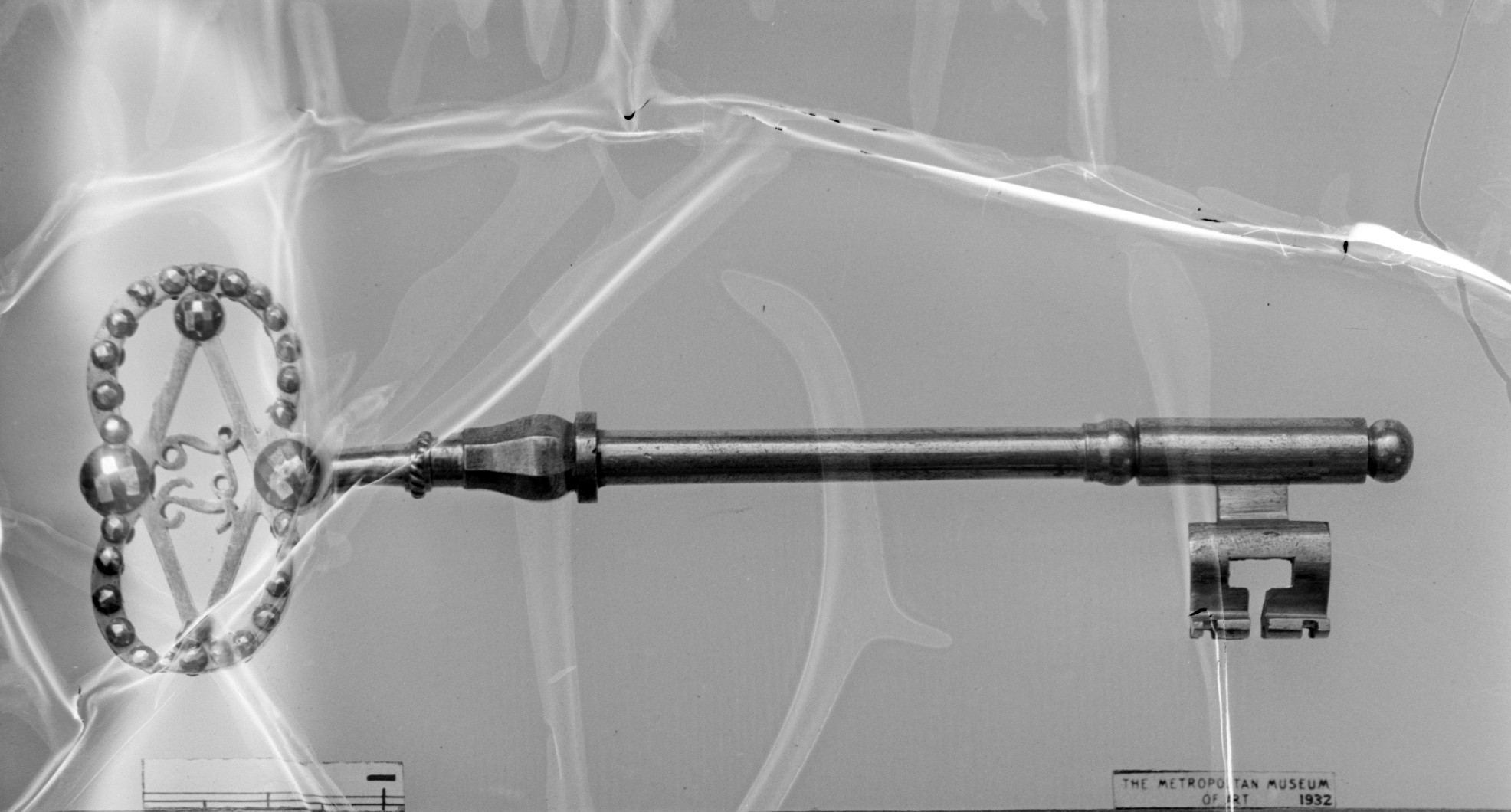
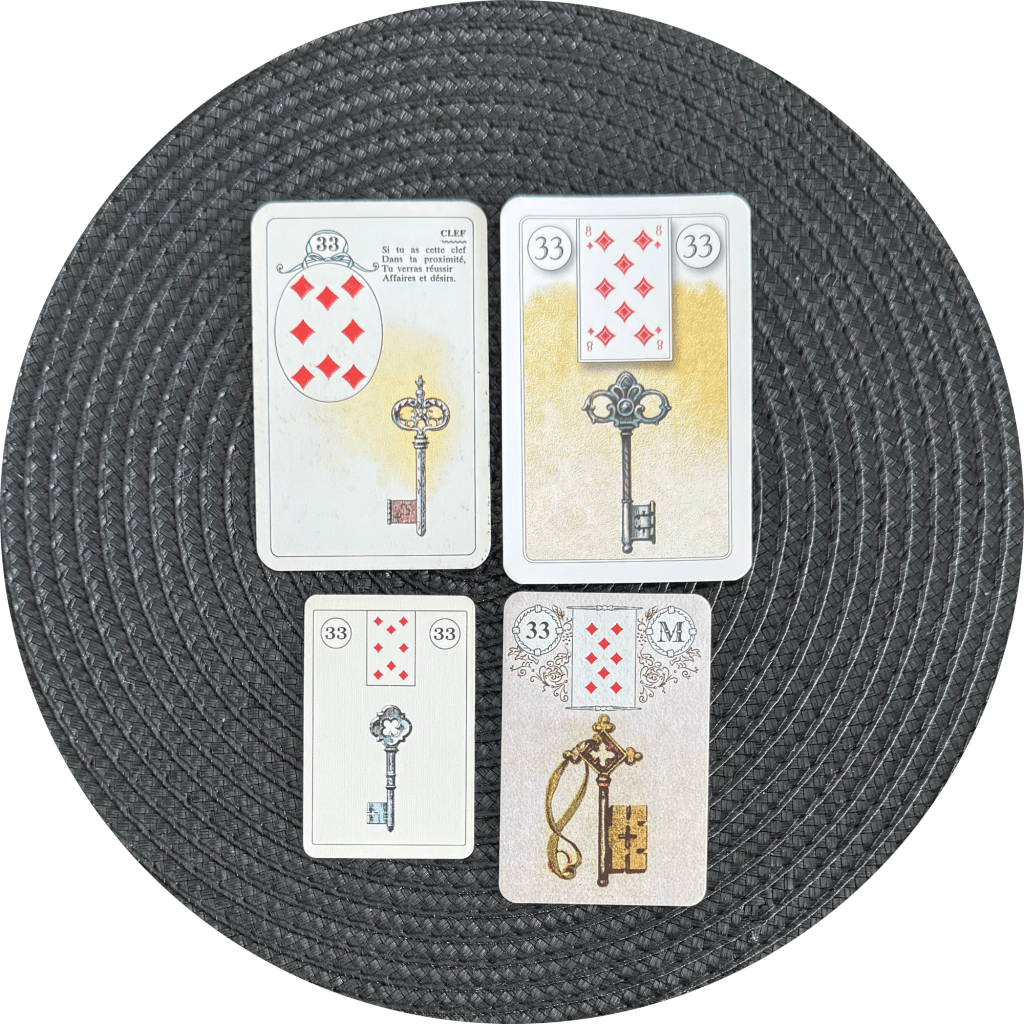
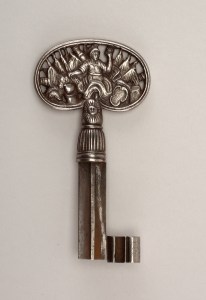
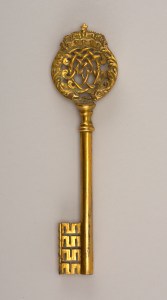
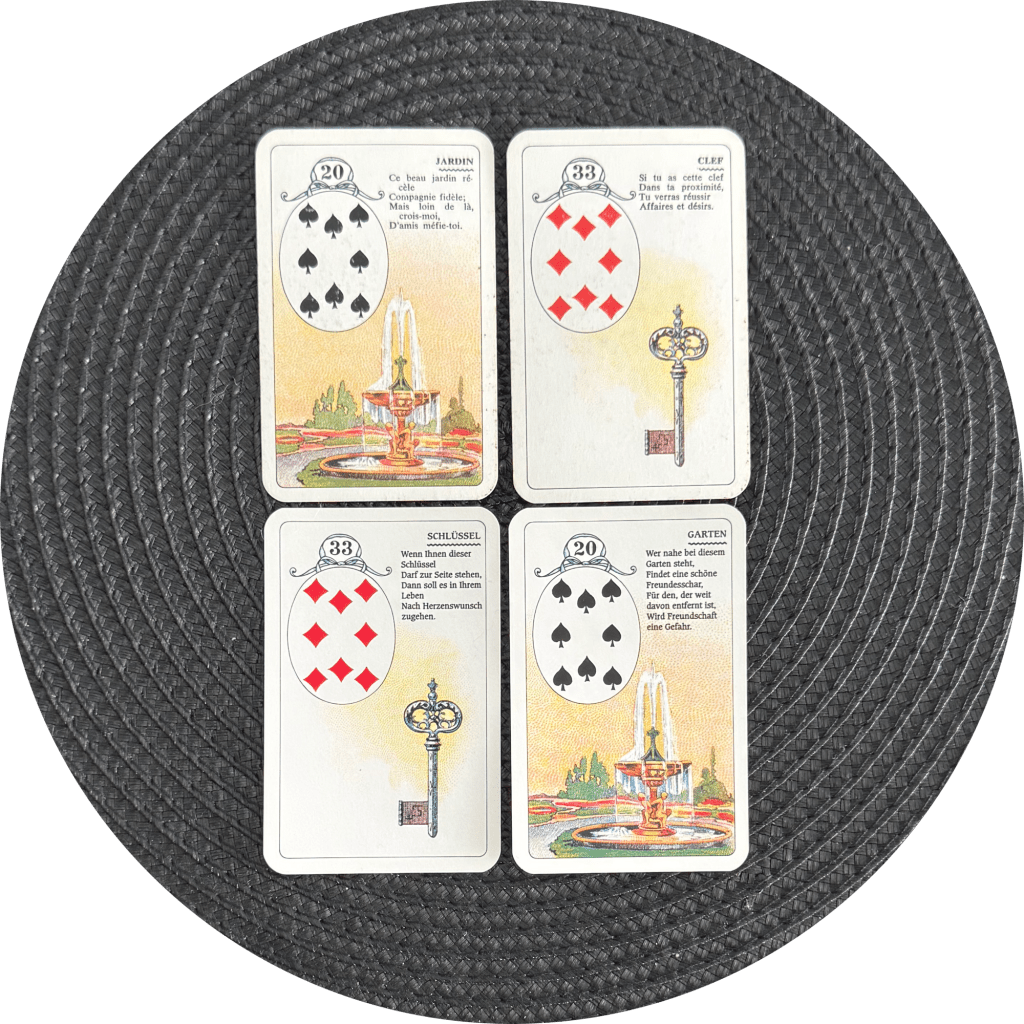
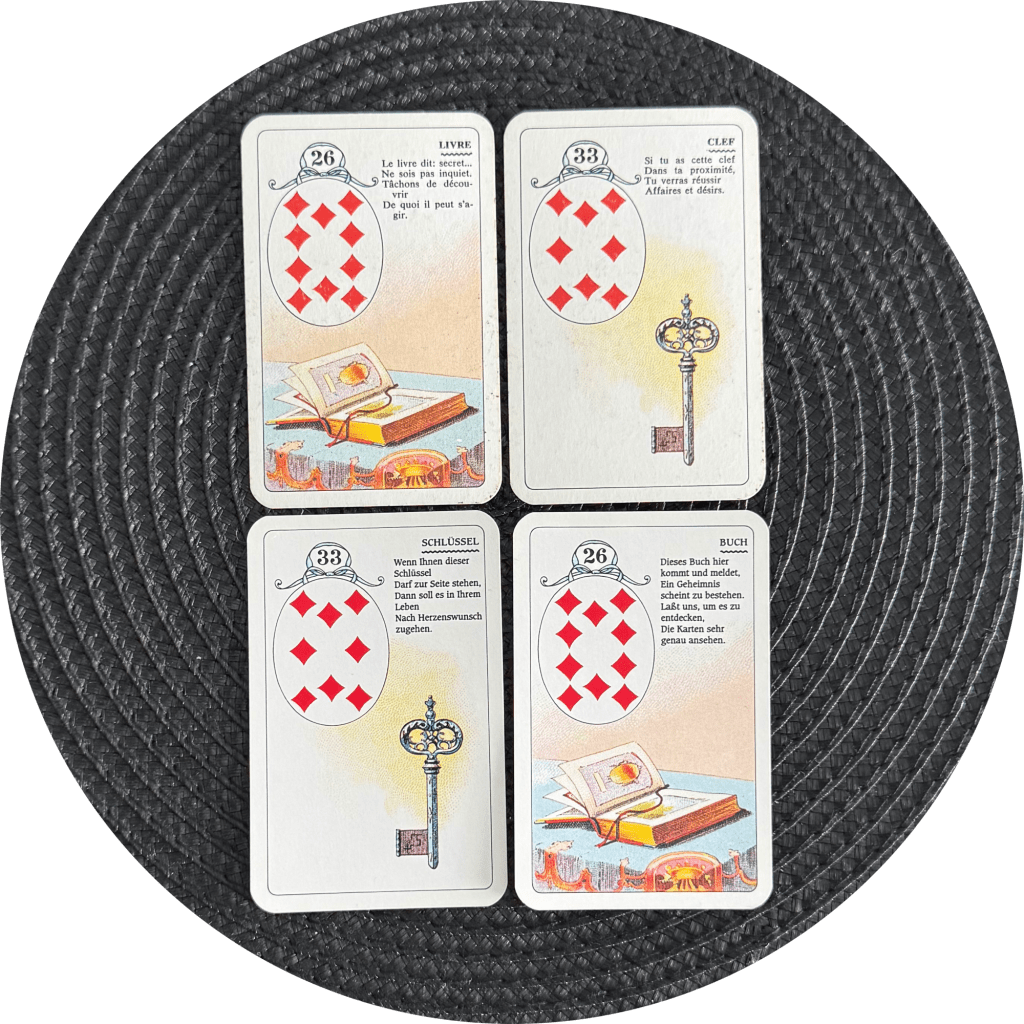
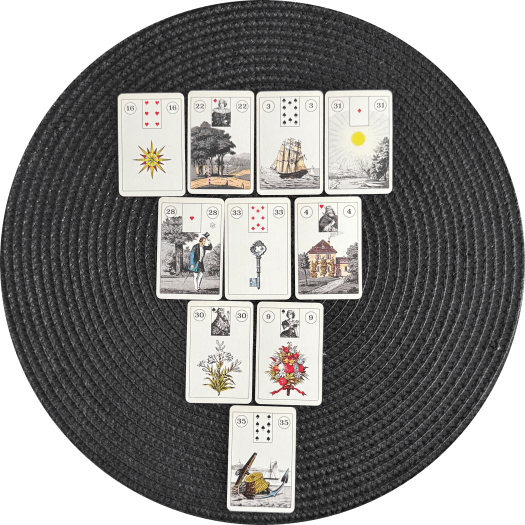
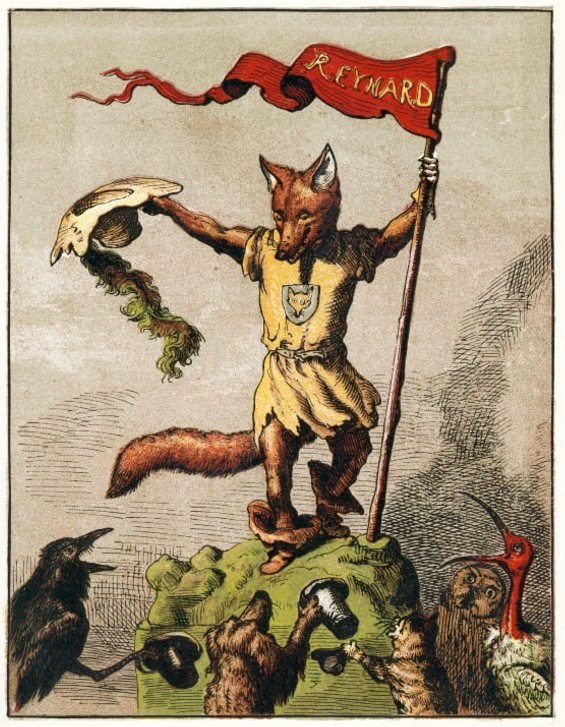
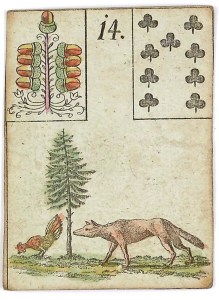
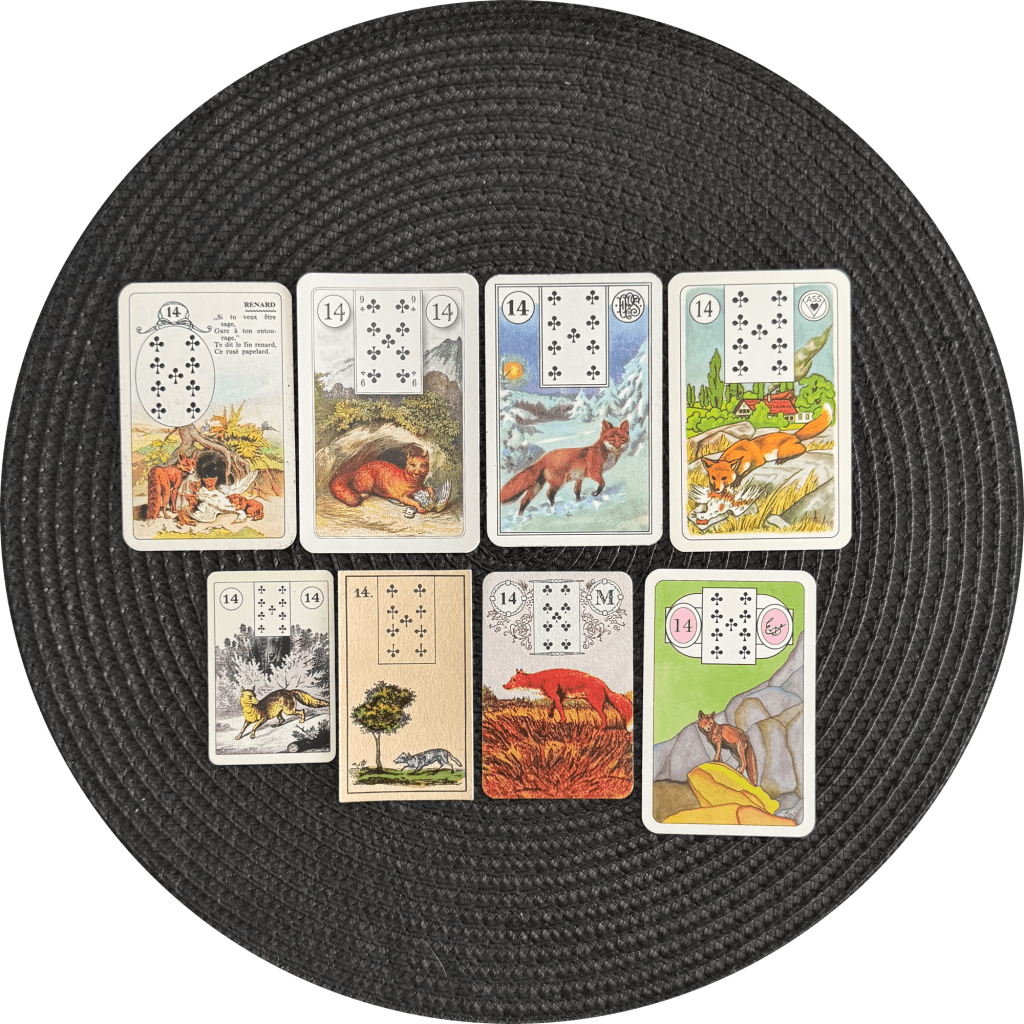
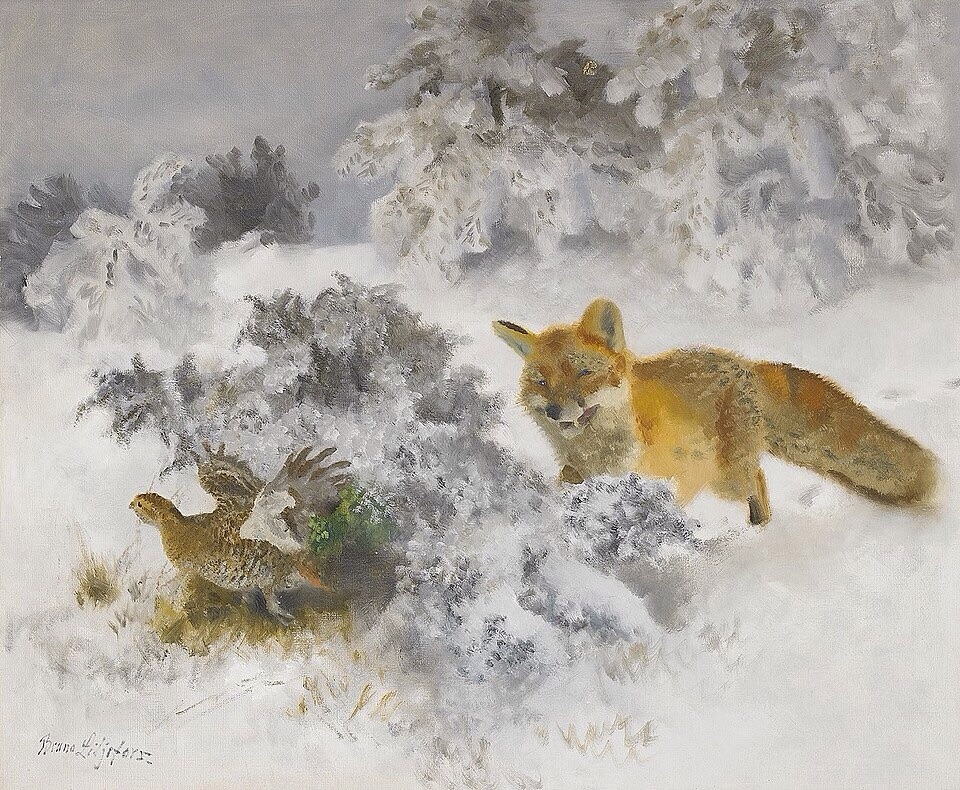
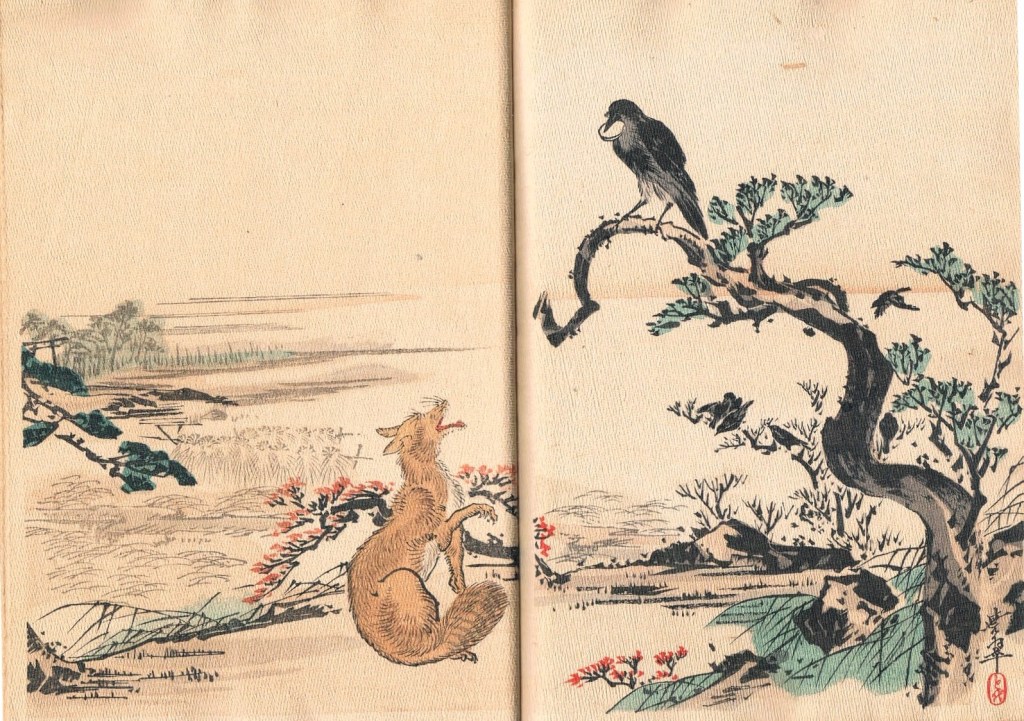

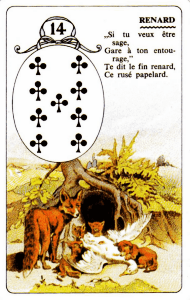
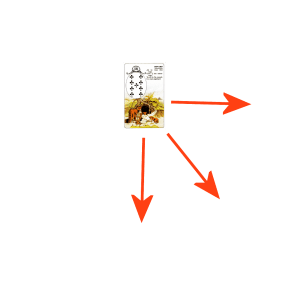
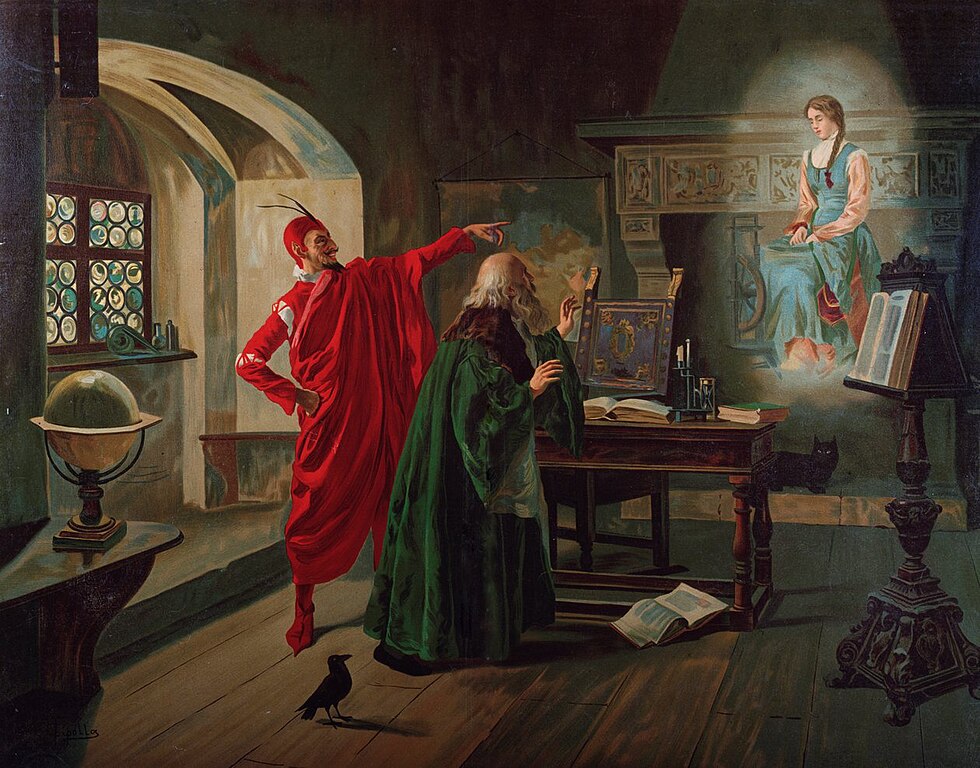
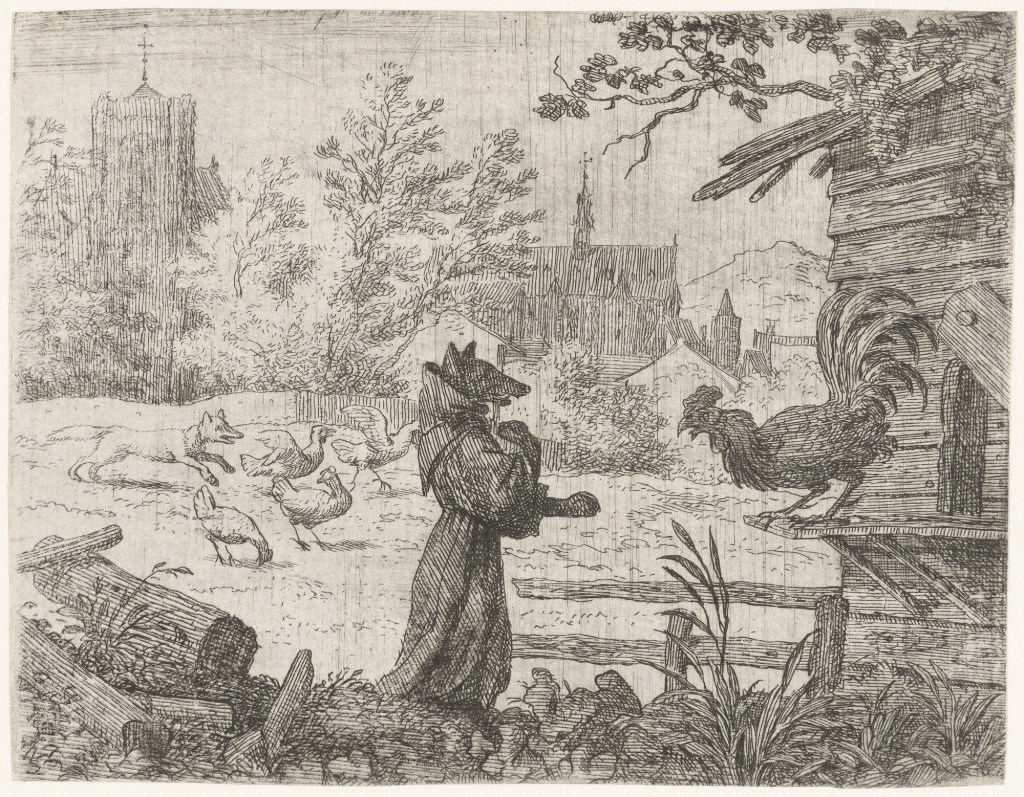
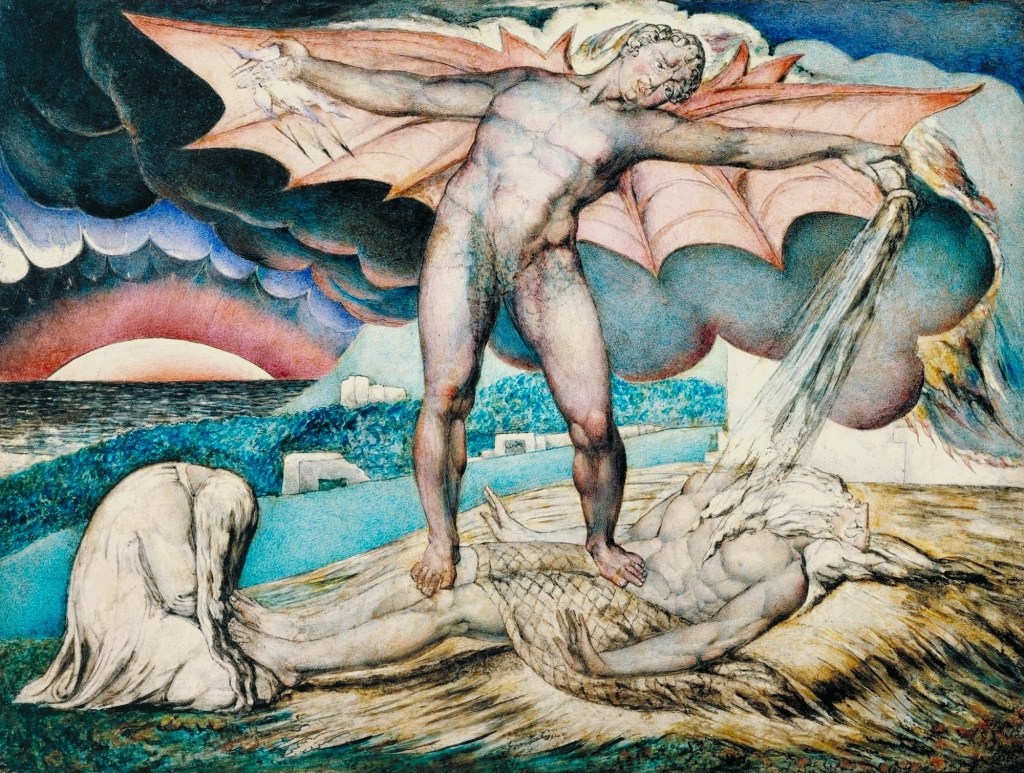
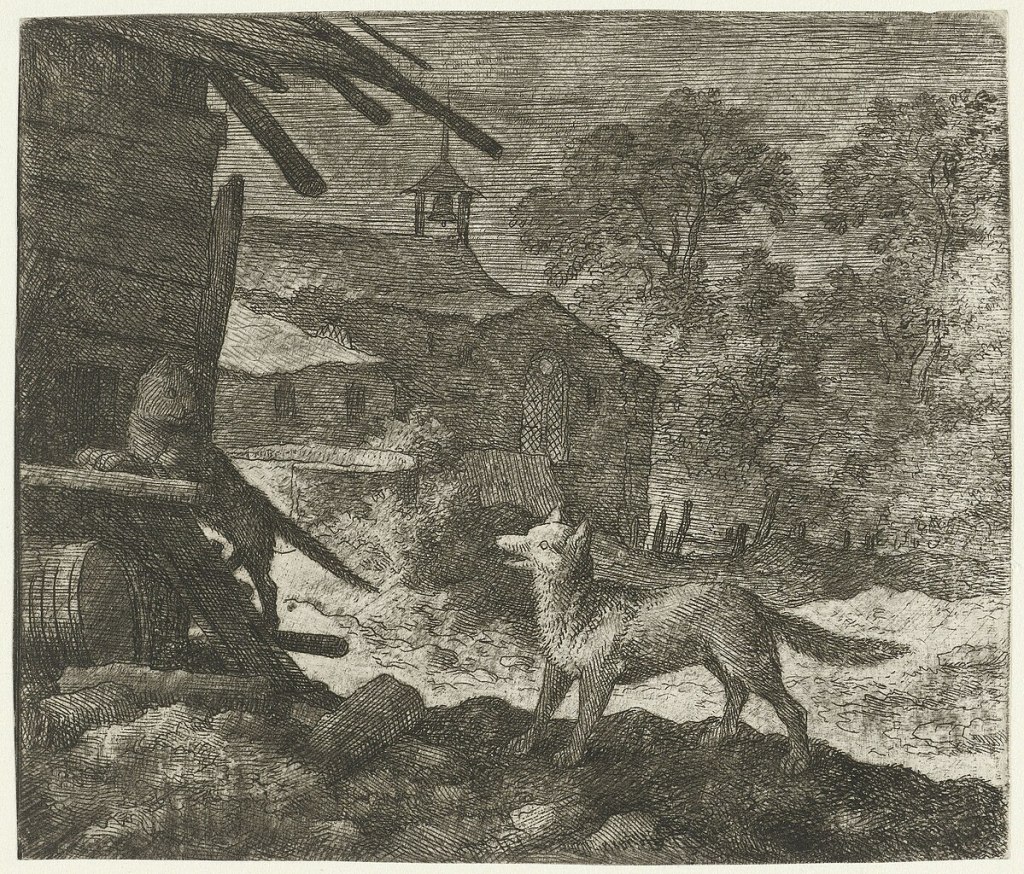
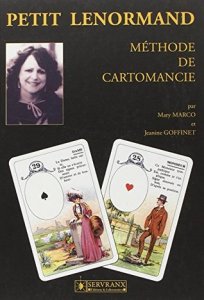
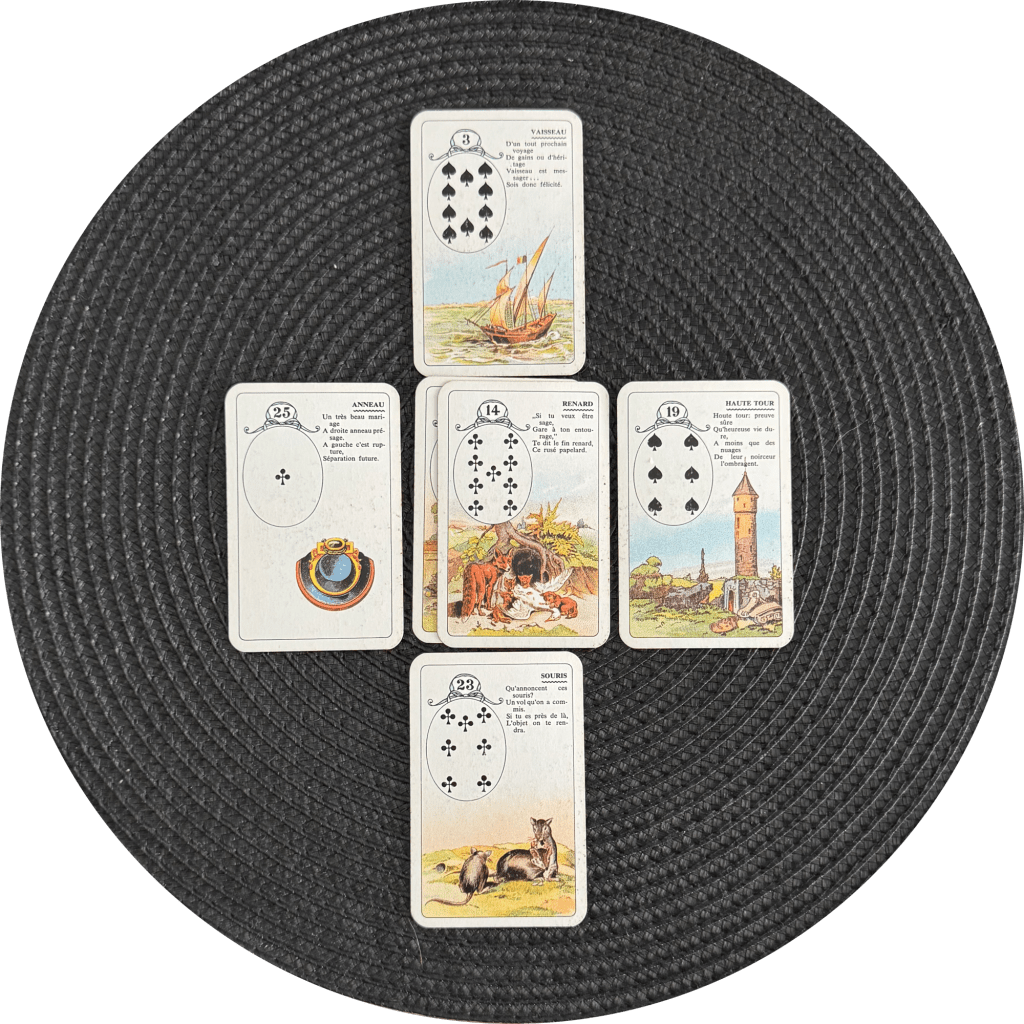
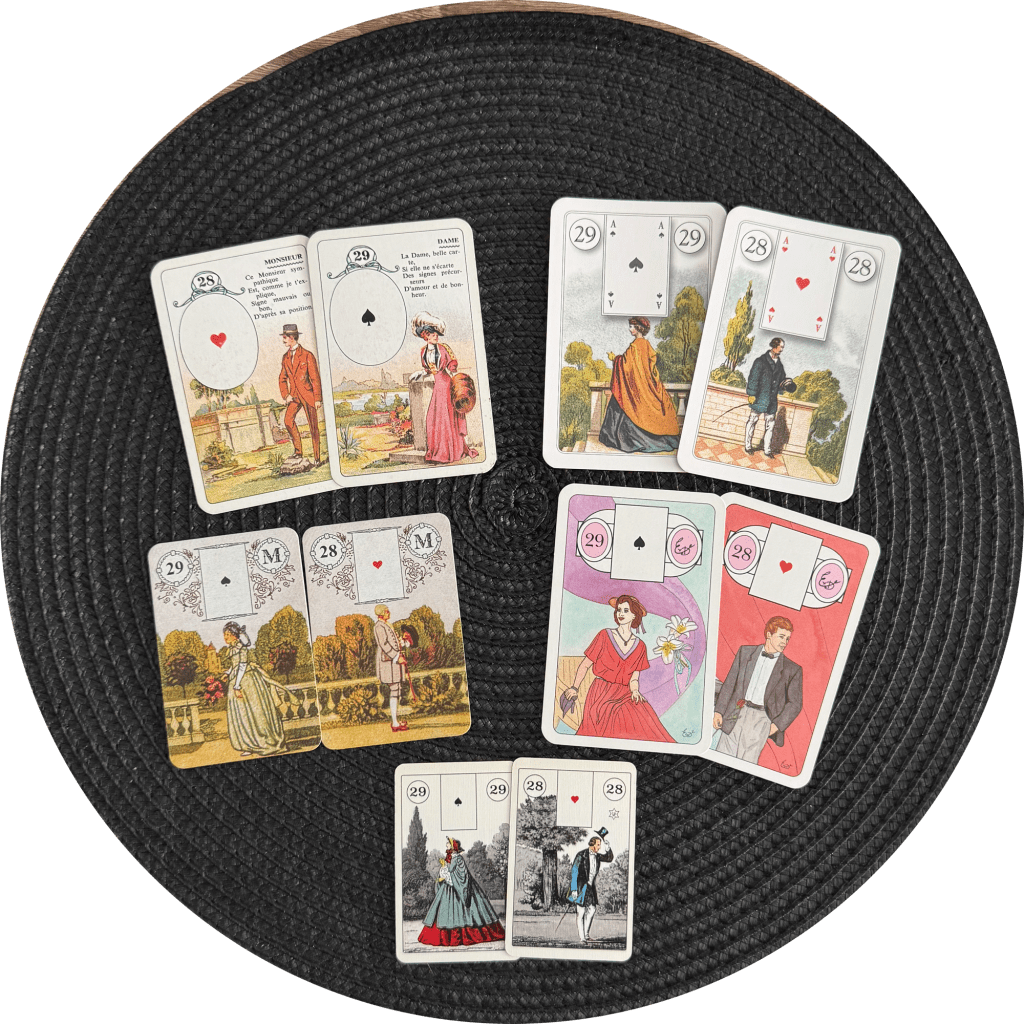
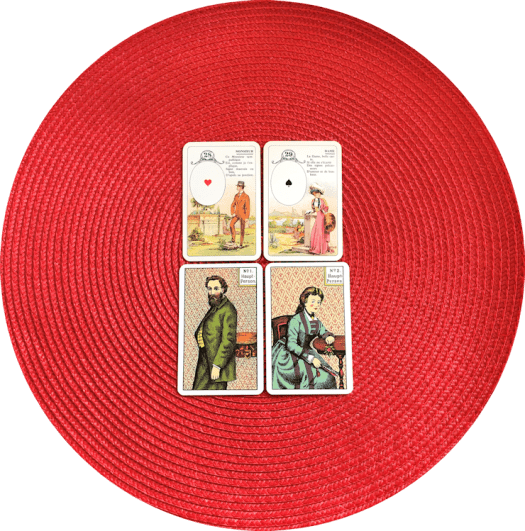
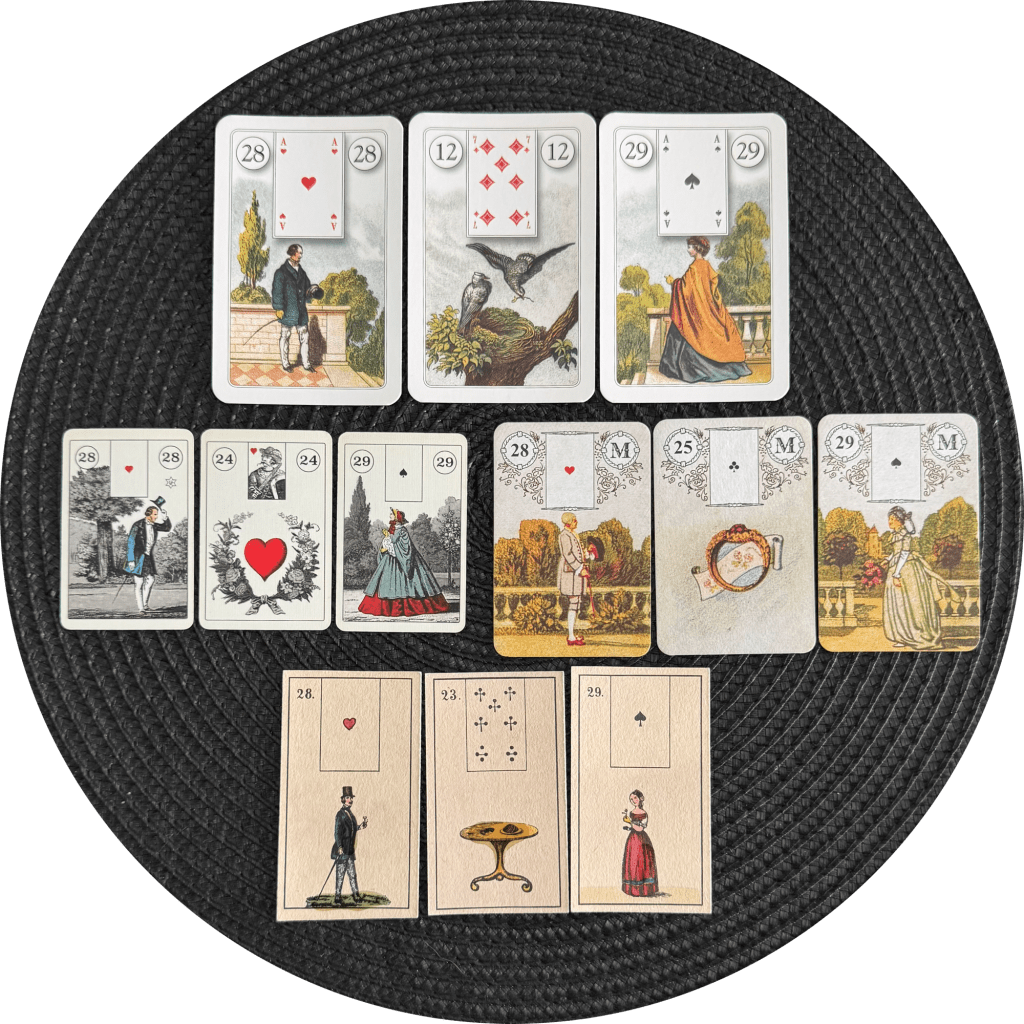
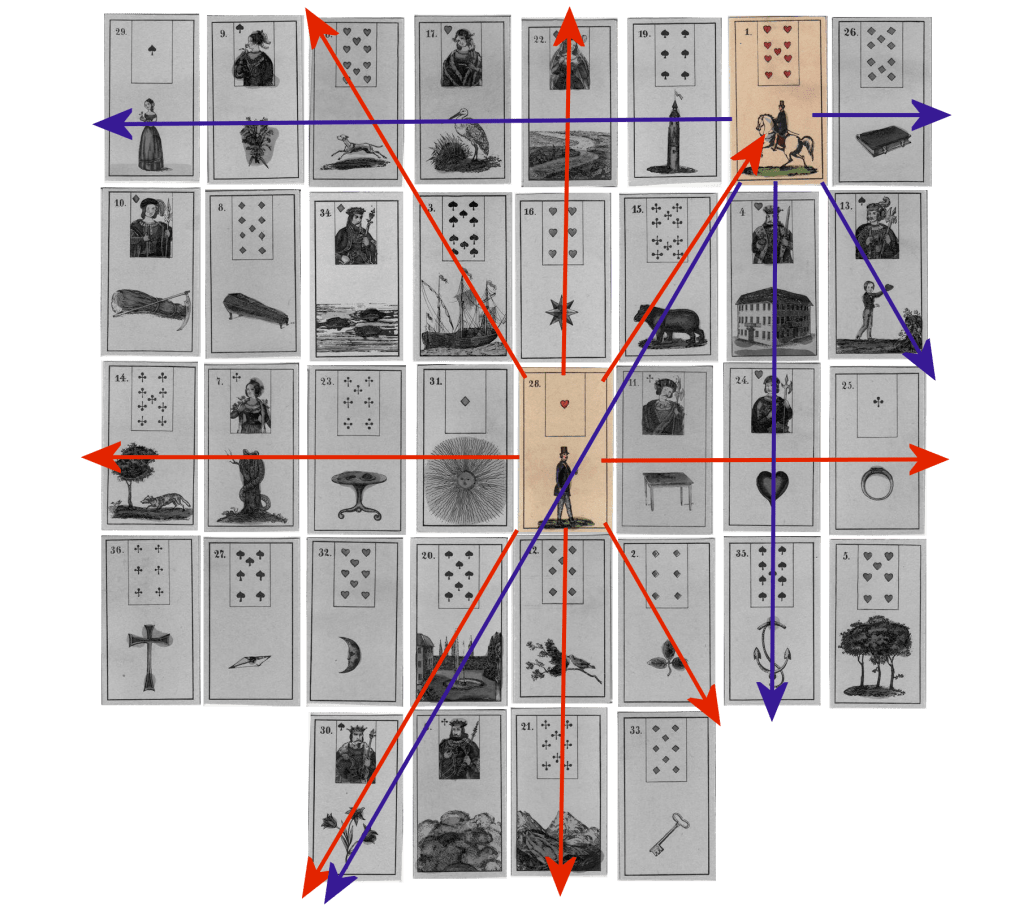
 Journal of a Cartomante
