God gives the lonely a home to live in; he leads the prisoners forth into freedom: but rebels must dwell in a parched land.
Psalm 67: 7, Grail Translation
In my Father’s house are many rooms; if it were not so, would I have told you that I go to prepare a place for you? And when I go and prepare a place for you, I will come again and will take you to myself, that where I am you may be also
John 14: 2 -3 (RSV CE)
Ah! there is nothing like staying at home for real comfort. Nobody can be more devoted to home than I am. I was quite a proverb for it at Maple Grove.
Emma, Jane Austen
The House, signifies success and prosperity in all enterprises, even if the present situation of the person is unfortunate, he can expect a better future. If this card is located in the middle of the game, below the person, it is a warning to be on their guard regarding their surroundings.
Original Instructions
Card No. 4 in the Petit Lenormand, the House, is represented by the King of Hearts. At first glance its meaning appears straightforward. Does the card simply signify houses, property, and real estate? If so, what of those who live in apartments, caravans, motor homes, or houseboats? Does it represent the building itself, the family within it, or something deeper?
The Essence and Function of the House
The traditional eikōn of the House is remarkably consistent across the various patterns. It typically depicts a fashionable residence reflecting the period in which the deck was produced. The Brepols pattern shows an elegant Belle Époque château, whilst the Dondorf presents a comfortable Biedermeier home. The famous Altenburger pattern depicts a more modern Art Deco residence. Despite the differences in architecture, the core symbolism remains unchanged. Each image presents a place of shelter, permanence, and domestic life.
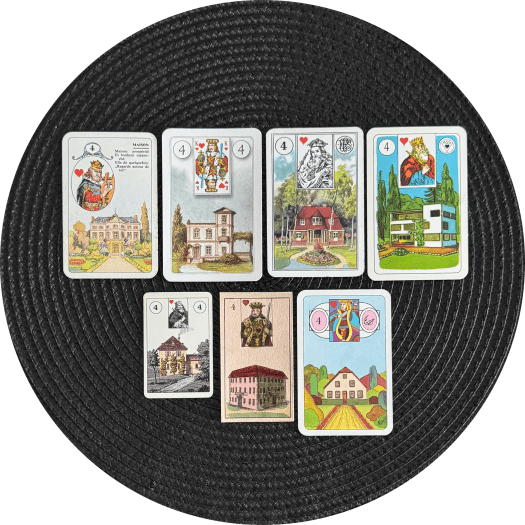
The essence of the House is home and its function is to shelter.
The House signifies the seeker’s home irrespective of its physical form. Whether one lives in a detached house, apartment, caravan, motor home, houseboat, or any other dwelling, it remains the place one returns to at the end of the day. If one lives there, it is one’s home and therefore falls naturally within the domain of the House.
For this reason, the House is often quite literal. When combined with other cards, it can reveal conditions affecting the home itself. Thus, House–Coffin may indicate rot, decay, mould, or structural deterioration. House–Mice frequently points towards vermin, infestations, or gradual damage to the property. House–Fishes may signify flooding, water ingress, subsidence, or drainage problems, whilst House–Clouds can indicate damage caused by storms, weather, or environmental conditions.
Conversely, House–Bouquet, House–Moon, House–Stars, and House–Sun frequently describe pleasant, attractive, or harmonious living environments. These combinations suggest a home that provides comfort, pride, security, and satisfaction.
Yet the House is not merely the building in which we live.
By extension, it governs domestic life itself. It reveals what is happening beneath the roof. Thus, House–Birds may indicate worry, stress, and agitation within the home, whilst House–Birch Rod often points towards arguments, tension, or conflict amongst those who live there. The card therefore tells us not only about the property, but also about the atmosphere within it.
This naturally leads to the people who share our home.
In many cases these individuals will be family members, but this is not always so. The House signifies those with whom we share a roof rather than those with whom we share blood. A student living in a dormitory, shared house, or sorority may therefore find their housemates represented by the House whilst their family appears elsewhere in the tableau.
Here it is useful to distinguish between the House, the Lilies, and the Tree. The House describes the household itself and those who live within it. The Lilies represents the family unit more generally, regardless of whether its members live together. The Tree reaches further still, signifying ancestry, genealogy, inherited characteristics, and the familial roots from which we descend.
At its deepest level, however, the House is not simply where we live but where we belong.
The card represents the conditions required for us to feel safe, secure, and at ease in the world. It is the place where we can lower our guard and be ourselves. This may be a physical location, but it can just as easily be a family, community, social circle, profession, or other environment that provides stability and acceptance.
For this reason, the House often appears in questions that have nothing to do with property. When a seeker feels adrift, disconnected, or uncertain of their place in the world, the House frequently reveals what is missing. The card asks what conditions are necessary for the individual to feel safe, secure, valued, and at home within their own life.
In this sense, the House is one of the deck’s most important indicators of personal stability. A well-supported House often shows that the seeker possesses strong foundations from which to build their life. Adverse cards may reveal instability, insecurity, or circumstances undermining their sense of safety and belonging.
A useful distinction may be drawn between the House and the High Tower. The High Tower concerns the broader course of life, our ambitions, and ultimately our legacy. The House concerns the foundation from which that journey is undertaken. The High Tower asks what we are building; the House asks where we belong whilst building it.
Indeed, I have often felt that every cartomantic system possesses a card that encapsulates its character and voice. For me, the House fulfils that role within the Petit Lenormand.
Part of this arises from the card’s tone. The House possesses an elder masculine quality that reminds me of a grandfather, uncle, or trusted mentor. This, to me, feels profoundly Lenormand.
Coda
At its heart, the House is a card of home, shelter, and belonging. It reveals not only where we live, but where we feel safe, accepted, and rooted. Whether it appears as a literal dwelling, a family, a community, or a way of life, the House describes the foundations that allow us to flourish.
Many cards in the Petit Lenormand encourage movement, change, ambition, or discovery. The House reminds us that such journeys are only meaningful when we know where we belong. It is the place from which we depart, the refuge to which we return, and the foundation upon which the rest of life is built.
Person and Description
Person
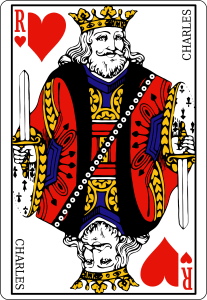
Although the House is not ordinarily a person card, it possesses an additional layer of symbolism through its association with the King of Hearts. In the folklore of the playing cards, this king is traditionally identified as Charlemagne. Consequently, the House can occasionally function as a male significator.
When appearing as a person, the House usually represents a man who is at least of the seeker’s generation and more often somewhat older. The card frequently signifies a father, stepfather, uncle, godfather, older brother, housemate, or another established male figure within the seeker’s life.
As Hearts is the suit associated with the Lord, the House often signifies a paternal relative or an important male member of the family. In readings for women, it can also occasionally point towards the husband’s family and, by extension, male in-laws.
When functioning in this capacity, however, the House largely sheds its domestic meanings. The card’s purpose is simply to identify the individual. One should therefore look to the surrounding cards to determine the person’s appearance, temperament, circumstances, and influence within the reading.
Interestingly, I have rarely found the House to signify a landlord. In matters relating to rented accommodation, that role is more commonly fulfilled by the Fishes in commercial arrangements or the Lilies when dealing with family property and inherited holdings. The House concerns those who dwell within the home rather than those who merely own it.
Physical Description
When contributing to a physical description, the House often imparts a distinctly square or solid appearance. The shoulders, chest, waist, and hips frequently appear proportionate, giving the person a relatively rectangular build. The face may likewise be broad or square in shape, particularly around the jaw and forehead.
The card tends towards conventional, respectable, and often conservative styles of dress. These individuals are rarely driven by fashion for its own sake. Instead, they generally prefer practical, tidy, and reliable clothing that is appropriate to the occasion.
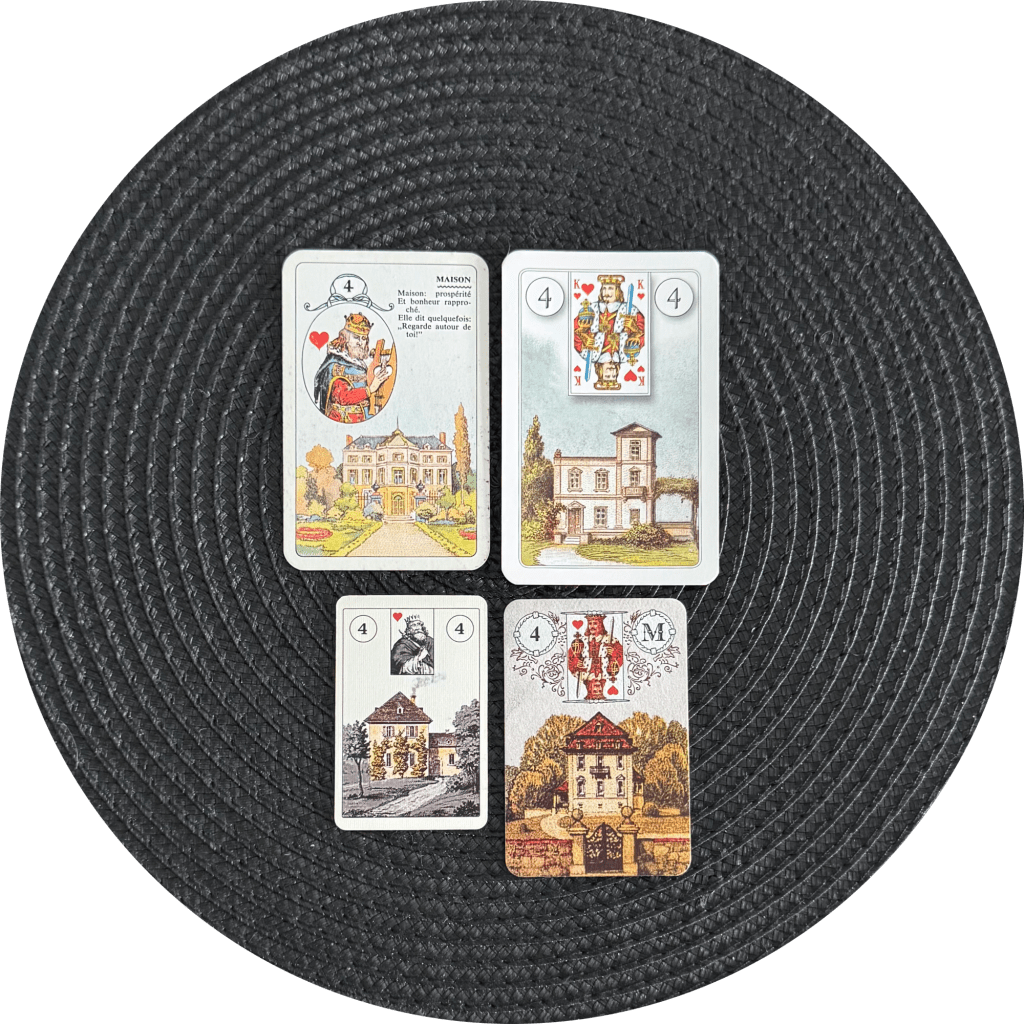
Interestingly, the colours appearing on the House itself can occasionally provide useful descriptive details. For example, the House in the Blaue Eule (above, bottom right) has accurately described a man wearing a brown suit with a cream-coloured shirt. Likewise, the Brepols House (above, top left) has repeatedly appeared in connection with blue and pink garments or shoes worn by either men or women. In my experience, these colours are more likely to manifest in clothing than in hair or eye colour.
For men, the House will often indicate some form of facial hair, whether a beard, moustache, or stubble. The card generally describes a healthy and established appearance, and unless strongly modified by surrounding cards, it is less likely to point towards thin or noticeably thinning hair.
Temperament
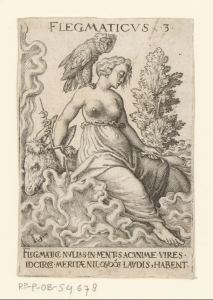
The House most closely corresponds to the traditional phlegmatic temperament. Such individuals are often calm, practical, dependable, and even-tempered. They value stability over excitement and generally prefer steady progress to sudden change.
There is frequently a frugal and cautious quality about them. House people tend to think carefully before acting, avoid unnecessary risks, and place considerable value upon security, routine, and the preservation of what has already been built.
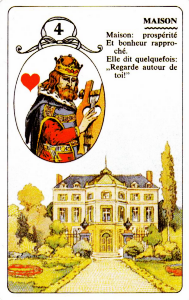
The card also possesses a conciliatory nature. These individuals often dislike conflict within their home, family, workplace, or social circle and will frequently attempt to maintain harmony through compromise and common sense.
Beneath this phlegmatic exterior, however, there is often a slight melancholic undertone. The person may be somewhat reserved in the expression of their emotions, cautious about revealing personal matters, or inclined towards nostalgia and reflection. This rarely manifests as overt sadness. Rather, it gives the individual a thoughtful and measured manner.
The House often describes someone as musical. They very often play an instrument and have a good singing voice.
Above all, the House describes someone who values stability, belonging, and continuity. Like the card itself, they are most comfortable when life rests upon firm foundations and familiar routines.
Special Features
The House in the Grand Tableau
In the original instructions for the game, sometimes referred to as the Philippe Lenormand sheet, the House is given a rather enigmatic two-part augury:
“The House signifies success and prosperity in all enterprises, even if the present situation of the person is unfortunate, he can expect a better future.
If this card is located in the middle of the game, below the person, it is a warning to be on their guard regarding their surroundings.”
Let us consider these two statements in turn.
Success and Prosperity
Earlier in this article, we discussed how the House can provide insight into what a seeker requires in order to feel secure, stable, and at home in the world. At first glance, the traditional promise of “success and prosperity in all enterprises” may seem difficult to reconcile with such meanings.
The answer lies in understanding that the House represents our foundations.
The House itself cannot guarantee prosperity. Indeed, in a Grand Tableau the card will always be present, and it would be illogical to assume that every seeker is therefore assured wealth and success. Rather, the House reveals the part of life over which the seeker possesses the greatest degree of influence and control. Through the cards surrounding it, we often discover what must be strengthened, repaired, protected, or developed in order to improve our circumstances.
For this reason, the House frequently reveals how a person can move beyond present difficulties and build a better future. It shows what may be done within the seeker’s own domain.
The traditional instruction becomes easier to understand when viewed within its historical context. During the period in which the Petit Lenormand emerged, the home was not merely a place of residence. Multiple generations frequently lived beneath the same roof and the household often functioned as the centre of economic, social, and family life. To possess a secure and prosperous household was therefore a genuine sign of success.
The House differs from the High Tower in this respect. The High Tower concerns the broader course of life, long-term ambitions, and ultimately legacy. The House concerns comfort, stability, security, and the foundations upon which that larger life is built.
The House in the Centre
The second instruction is often dismissed as obscure or nonsensical:
“If this card is located in the middle of the game, below the person, it is a warning to be on their guard regarding their surroundings.”
Yet I have found it remarkably insightful.
If a card occupies the centre of the Grand Tableau, it frequently forms the greatest number of combinations. Eight cards surround it directly, and this number can increase further when techniques such as knighting and mirroring are employed.
Why should this create difficulties for the House?
The answer is that the House is the most private card in the deck.
The House represents our personal domain. It is what occurs behind closed doors. It is our home life, our private affairs, and the aspects of life we prefer to keep sheltered from public scrutiny.
When numerous cards surround the House, there is often considerable activity within the seeker’s private sphere. Whilst this is not automatically negative, it frequently draws attention towards matters that would ordinarily remain personal.
In practical terms, this can indicate a need for caution, discretion, and sound judgement in dealings with neighbours, family members, colleagues, and anyone else operating in close proximity to the seeker’s private life.
The warning becomes more pronounced when the significator appears directly above the House.
As we have already seen, cards exert an influence upon those beneath them. When the significator stands above the House, the seeker’s own actions, choices, or behaviour often contribute to the circumstances affecting the domestic sphere. In such cases, restoring calm, balance, and stability frequently falls to the seeker themselves.
Importantly, I do not automatically regard this formation as negative.
Indeed, over the last decade I have encountered it repeatedly amongst individuals with a strong presence on social media. The issue is rarely secrecy. Rather, the boundaries between public and private life begin to erode. Personal matters become visible to too many people, and aspects of life that should remain sheltered are exposed unnecessarily.
For this reason, I increasingly associate this formation not with danger but with a need for discretion and common sense. The House reminds us that not everything must be shared and that some aspects of life flourish best when protected from excessive attention.
In this respect, the traditional warning remains entirely relevant. The issue is not secrecy. The issue is remembering that the House exists to shelter what belongs within it and not be outside it.
Due to this rule some assume that it is favourable to have the House at a distance. I disagree. While we do not wish to see the House in the middle and below the significator, it is best to see it nearby to provide the signifactor its shelter.
Privacy and the Private Life
The House and the Park form a natural pair of opposites within the Petit Lenormand. The Park describes life lived in public. Historically, parks were places where people gathered to socialise, attend concerts, take exercise, exchange news, and participate in community life. The card therefore governs social networks, public reputation, civic life, and those activities visible to the wider world.
The House, by contrast, governs life lived in private.
It is the domain that exists behind closed doors, beyond public scrutiny and observation. Whereas the Park asks what is shared with others, the House asks what remains within the home, family, or trusted circle. The distinction is not merely between a building and a public space, but between what is public and what is personal.
For this reason, the House frequently describes the seeker’s private life.
When cards such as the Birds or Birch Rod appear near the House, private matters may become the subject of discussion, speculation, criticism, or gossip. The Birds often indicates a stressful home life, chatter, and constant discussion, whilst the Birch Rod may point towards rumours, arguments, domestic disputes, or criticism emanating from those who are closest to us. In both cases, matters that would ordinarily remain within the House risk becoming more widely known.
This principle is particularly useful in relationship readings.
The House often reveals what is happening behind closed doors rather than what is visible to the outside world. Public appearances can be misleading, but the House frequently exposes the true dynamics operating beneath the surface.
Thus, House–Moon may indicate a relationship in which feelings, expectations, and intentions are openly (the Moon symbolises not the emotions but the visibility) expressed and understood. House–Ship often suggests that circumstances within the home or relationship are changing direction or entering a new phase. House–Heart points towards affection and emotional warmth within the domestic sphere, whilst House–Mountain may reveal emotional distance despite the individuals continuing to live under the same roof.
The same principle applies to family relationships. The House frequently reveals tensions, alliances, routines, responsibilities, and patterns of behaviour that remain largely invisible to outsiders but profoundly shape daily life.
On another level, the House can signify private membership of organisations, societies, and associations.
The defining characteristic here is not necessarily secrecy, but restricted access. Membership is often limited, controlled, or known only to those who belong. Thus, the card may occasionally indicate private clubs, lodges, covens, professional associations, invitation-only groups, fraternal organisations, or societies such as the Freemasons and the Magic Circle.
Ultimately, the House governs those aspects of life that remain sheltered from public view. Whether it concerns family affairs, romantic relationships, private memberships, or personal matters, the card reminds us that not everything belongs in the Park. Some things flourish best within the protection of the House.
Real Estate
The House is the Petit Lenormand’s natural significator of real estate and property. Whilst the card most obviously describes a house, its symbolism extends far beyond a particular type of dwelling. Apartments, cottages, caravans, motor homes, houseboats, farms, and other residential properties all fall naturally within its sphere. The House may also signify plots of land, rental properties, commercial premises, and other forms of real estate that can be purchased, rented, inherited, occupied, or otherwise belong to an individual, family, or organisation.
A useful distinction may be drawn between the House and the Park.
The House describes property that belongs to, or can belong to, an individual, family, or private body. The Park, by contrast, describes public spaces intended for communal use. If the property forms part of someone’s personal domain, it will generally be shown by the House. If it is public and accessible to all, the Park is usually the more appropriate card.
Because of this, the House is often invaluable when examining property matters. Whether a seeker is buying, selling, renting, relocating, renovating, or simply enquiring about their current residence, the House provides the anchor around which the interpretation may be built.
One of the most useful applications of the House is profiling property. By examining the cards surrounding it, the cartomante can often build a remarkably detailed picture of a residence, neighbourhood, or parcel of land before ever setting foot there.
For example, House–Ship–Sun frequently suggests a residence located some distance from the current home and generally to the south. The Ship implies movement beyond the immediate area, often to another city, county, state, canton, or region altogether, whilst the Sun provides the southern direction.
The Roads operates somewhat differently. Rather than indicating substantial distance, it more commonly points towards a move within the same town or city. The seeker changes location, but remains within the broader area they already know. In practical terms, this often translates to a different neighbourhood, district, or suburb rather than an entirely new region.
Other combinations allow us to construct an increasingly detailed profile.
- House–Moon may describe a well-known location, one frequently photographed or admired, a residence associated with performance or the arts, or a building characterised by pale, silver, or grey colouring.
- House–High Tower often indicates an old, tall, remote, or border property. Neighbours may be few and far between, and the residence frequently possesses a sense of history, longevity, or isolation.
- House–Anchor commonly signifies a long-term residence situated near the coast or often by a beach. The property is often somewhere the seeker intends to remain for a considerable period of time.
- House–Tree may point towards a rural property surrounded by woodland, mature trees, or countryside. It can also indicate a location connected to the seeker’s ancestral roots, family history, or genealogy.
- House-Ship may show a houseboat or a property on or near a marina or shipping port (Fishes would show by the sea).
By combining the House with neighbouring cards in this manner, it is often possible to build a surprisingly detailed profile of both the property itself and the environment in which it is situated.
In this respect, the House functions almost like a significator. The surrounding cards supply the details, revealing not only the appearance of the property but also its atmosphere, location, history, advantages, and challenges.
Whether the matter concerns a family home, rental property, retirement residence, holiday cottage, or parcel of land, the House ultimately asks a simple question: Is this somewhere in which you can truly feel at home?
Departments and Subdivisions
The House is often said to signify home working, home businesses, side projects, or self-employment. This is not entirely incorrect. However, these meanings arise from the House’s descriptive qualities rather than from any intrinsic connection with work itself. It is important to remember that no card in the Petit Lenormand specifically means employment. The Moon continues to describe professional status and reputation. The Anchor remains the principal indicator of job security. The Fox reveals competitors, rivals, and workplace politics, whilst the Hound often signifies colleagues, employees, and professional associates. These are not meanings but rather essence being read as function in a work context.
The House therefore modifies these matters rather than replacing them.
One particularly useful application of the card is its ability to describe departments, divisions, and subdivisions within a larger organisation. Just as the House represents a smaller domestic unit within a wider community, it can also signify a smaller unit within a broader institution.
For example, if a seeker works in a hospital, the Park may represent the hospital as a whole, whilst the House identifies a particular department, ward, clinic, or specialty. Likewise, within a university, the Park may describe the institution itself, whilst the House points towards a specific faculty or department.
The same principle applies to businesses, government agencies, military organisations, charities, and other large structures. The Park shows the wider organisation; the House identifies the part of it that the seeker inhabits directly.
This distinction can prove especially valuable when questions of employment arise. If a seeker is considering a career move and the House repeatedly appears, the card often suggests remaining within the existing organisation whilst changing departments, teams, offices, or responsibilities. Rather than leaving altogether, the cards may be indicating that the solution lies closer to home.
In this respect, the House once again performs its familiar function. It asks us to look first within our own domain before seeking answers elsewhere.
Timing
In matters of timing, the House is a steady card. Events unfold naturally and at an appropriate pace rather than being accelerated or delayed. The card favours routine, continuity, and gradual development.
Unlike cards such as the Ship, which introduces movement, or the Mountain, which imposes delay, the House generally signifies progress occurring in an orderly and predictable fashion. Matters develop as they should, neither rushing ahead nor falling significantly behind.
This reflects the card’s nature. Homes are not built overnight, yet neither do they remain entirely static. Life unfolds within them through the steady rhythms of daily existence. For this reason, the House is neither a particularly fast nor particularly slow card.
In longer readings, I generally find the House points towards developments occurring within the current season or quarter.
In shorter readings, the House frequently signifies a calendar month and is particularly associated with the month of March. This association arises through St Joseph, with March being his liturgical month, and who has long been regarded as the patron saint of homes, households, and property.
Health
Anatomically, the House is associated with the bones and skeletal system. The symbolism is straightforward. Just as a house provides structure, support, and protection, the skeleton performs the same function within the body. It gives shape to the individual and safeguards vital organs.
The surrounding cards refine this picture. Thus, House–Scythe may indicate fractures, breaks, or injuries involving the skeletal system. House–Mice can point towards osteoporosis, bone thinning, or the gradual deterioration of structural integrity.
A useful distinction may be drawn between the House and the Tree. The Tree governs vitality, constitution, and the body’s natural life force. The House concerns the body’s structure and framework.
More broadly, the House often comments upon how the individual maintains and cares for themselves. Because the card governs the place in which we live, it can also describe the body as the house in which we dwell throughout life. For example, House–Mountain may indicate stiffness, restricted movement, discomfort, or physical limitations. House–Bouquet, by contrast, often describes someone who takes pride in their appearance, pays attention to grooming and presentation, and makes a conscious effort to maintain their physical wellbeing. Here the emphasis is less upon health itself and more upon care, maintenance, and presentation.
Ultimately, the House asks a simple health question: How well are you maintaining the structure in which you live? Whether interpreted literally as the skeleton or more broadly as the body itself, the card emphasises maintenance, stability, and long-term care rather than quick remedies or dramatic interventions. In this respect, the House remains entirely true to its essence and function. Externally, it shelters the home; internally, it is reflected in the skeletal structure that shelters and supports the body itself.
The House in Action
This reading was performed for a female friend, Lottie, in November 2005. At the time, she was working as a teacher and was interested in how her life might develop over the coming months. I cast a traditional Grand Tableau, though for the purposes of this example we shall restrict ourselves to the relevant section of the layout.
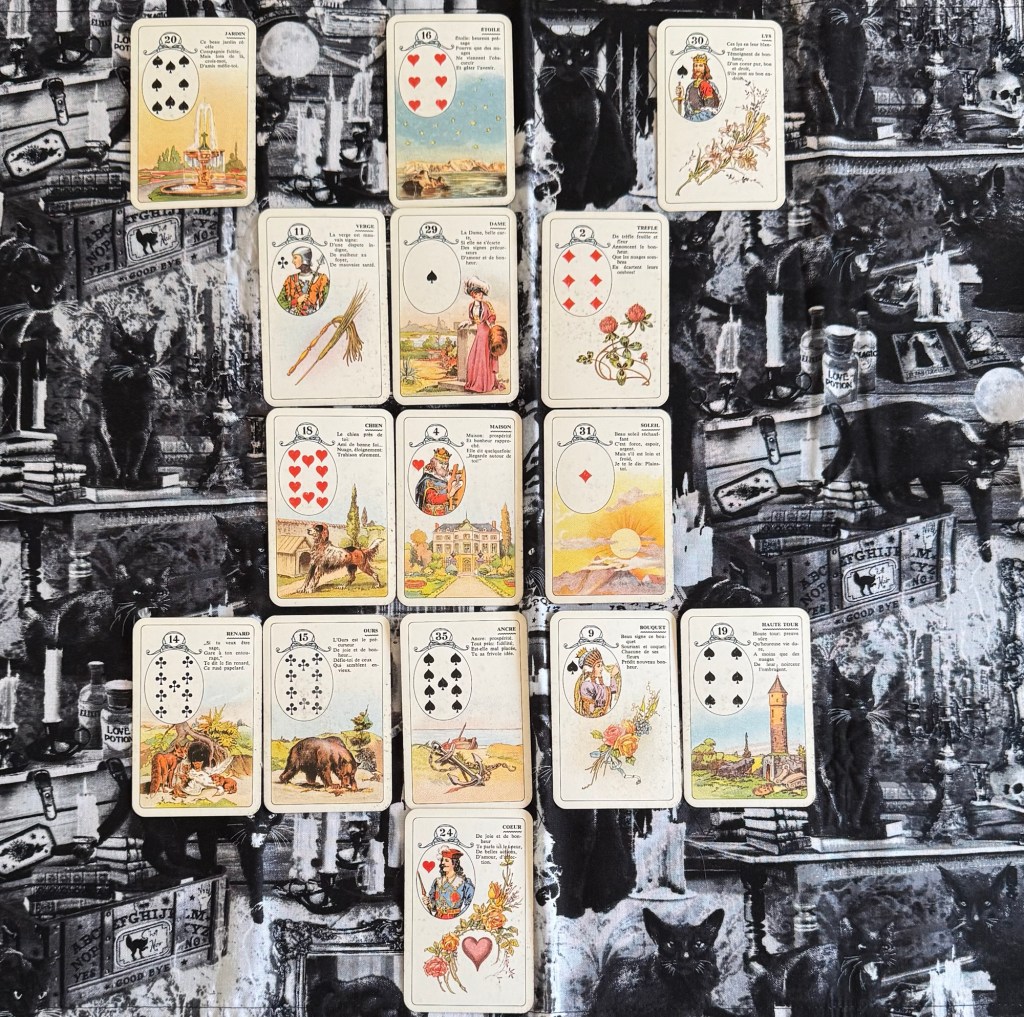
The first thing that immediately attracts attention is the position of the House. It falls in the centre of the Tableau, specifically in the House of the Park, with the Lady directly above it.
As discussed earlier in this article, the Lady immediately above the House was traditionally regarded as a warning that domestic matters would soon demand the seeker’s attention. Before assuming the worst, however, confirmation should always be sought from additional warning cards.
That confirmation is present here.
To the left of the House stands the Hound, which is connected to both the Fox and the Bear. Because the Bear follows the Fox, the Bear receives the Fox’s warning and becomes coloured by jealousy, resentment, and possessiveness which are the Bear’s negative attributes.
The Hound therefore becomes a red-flagged individual whose behaviour is motivated by envy.
Whilst the Hound commonly signifies friends and colleagues, the traditional eikōn depicts the dog beside its kennel within the grounds of its master’s home. The card therefore possesses a longstanding association with neighbours and those who live alongside us.
Combined with the nearby House, suspicion naturally falls upon somebody living close to the querent.
The question then becomes: why is this neighbour a concern? The answer is supplied by the Birch Rod, which crowns the Hound.
The issue is not merely the neighbour themselves but conflict with that neighbour.
The cards therefore warn of a dispute (Birch Rod) involving a dishonest or underhanded neighbour (Fox–Hound) whose actions are fuelled by jealousy or resentment (Fox–Bear).
Despite this warning, however, the Tableau also offered considerable reassurance.
Directly above the Lady stood the Stars, suggesting that Lottie would maintain clarity and avoid becoming overwhelmed by the situation.
Beneath the House stood the Anchor and Heart, indicating that domestic security and peace of mind would ultimately be preserved. To the right of the House appeared the Sun, strengthened further by the Cloverleaf above and the Bouquet beneath.
Together, these cards suggested a favourable outcome and the timely arrival of assistance.
At the time, I interpreted the Bouquet in conjunction with the nearby High Tower as describing an older woman whose advice, experience, or intervention would prove helpful. The Bouquet suggested good manners and goodwill, whilst the High Tower pointed towards seniority, maturity, or authority.
I remember telling Lottie that she would likely find herself involved in an unpleasant dispute affecting her home life, but that a fortunate opportunity (Cloverleaf) and assistance from an older woman (Bouquet, High Tower) would help bring the matter to a satisfactory and harmonious conclusion (Sun).
Events unfolded remarkably close to the cards.
A neighbour within the same house conversion became involved in a dispute regarding parking. The behaviour was very much in keeping with the Birch Rod, being argumentative, confrontational, and distinctly choleric in nature.
Fortunately, a long-term resident of the property was able to assist in finding a workable resolution (remember the Bouquet also signifies offers, pacts and compromises), reflecting the assistance shown by the Bouquet and High Tower.
Sadly, the matter did not end entirely without loss.
During the dispute, Lottie discovered that her car had been scratched. Whilst she was never able to prove who was responsible, the incident itself was highly suggestive of the combination we observed in the cards. The Birch Rod’s hostility combined with the Fox’s underhanded nature often manifests through spiteful acts (remember the Bear, too) designed to cause inconvenience whilst avoiding responsibility.
In the end, however, the more important promise of the cards proved correct.
Despite the tension, Lottie retained both her home and her peace of mind. The House remained secure, the Anchor held firm, and the conflict eventually
§
Images:
Featured Image:
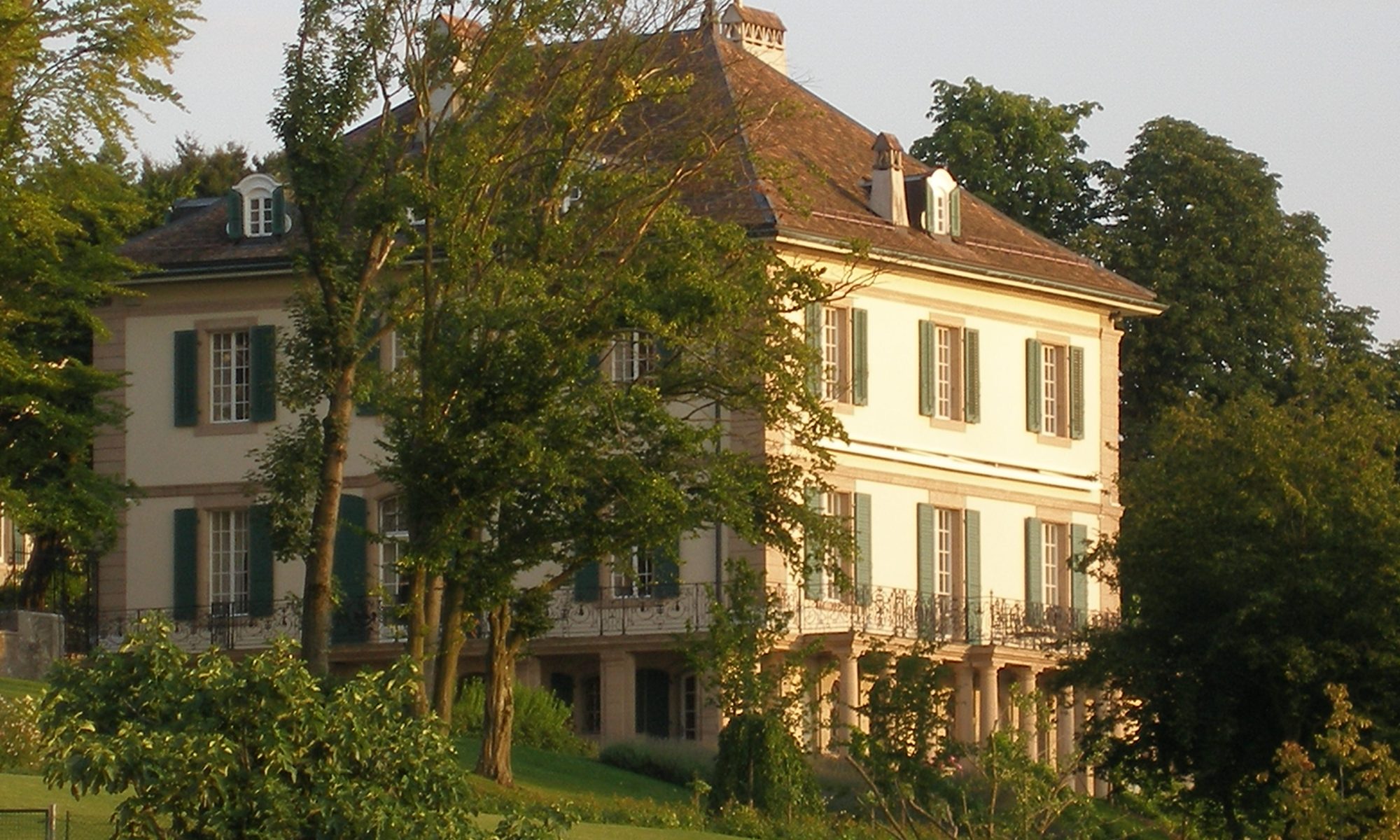
Robertgrassi, Public domain, via Wikimedia Commons
Cards:
Lenormand Cards: Jeu Lenormand © Cartamundi, WanderWüst © Jorge/Wandering Oracle, Lenormand Fortune-Telling Cards © Zao-Gelli, The Lenormand Oracle © Verlag für die Frau, Leipzig, Nieuwe Lenormand © Amber Studio/Erna Droesbeke, Lenormand 36 Orakelspielkarten © Königsfurt-Urania,
References:
Boroveshengra, A., 2013. Cartomantes’ Cabinet: The Petit Lenormand Course.
Boroveshengra, A., 2015. Lenormand Thirty Six cards. 2nd ed. Create Space.
George, R. 2014 The Essential Lenormand: Your Guide to Precise & Practical Fortunetelling. Woodbury, MN: Llewellyn Publications.
Ignatius Press (2005) Holy Bible RSVCE Compact Zipper. Ignatius Press.
Matthews, C. 2014 The Complete Lenormand Oracle Handbook: Reading the Language and Symbols of the Cards. Rochester, VT: Destiny Books.
Silvestre, C., 2003. Le Petit Lenormand. [Montpellier]: Gange éd.

