Woe to you lawyers! for you have taken away the key of knowledge; you did not enter yourselves, and you hindered those who were entering.
Luke 11:52 (RSV CE)
You’ve got the key to turn love loud
Turn it baby, let’s don’t stop,You’ve got the key to turn love loud
The Key, Four Tops
Just turn it, take it and turn it!
Key, when near it announces the successful end of the matter, but at a distance the opposite
Original Instructions
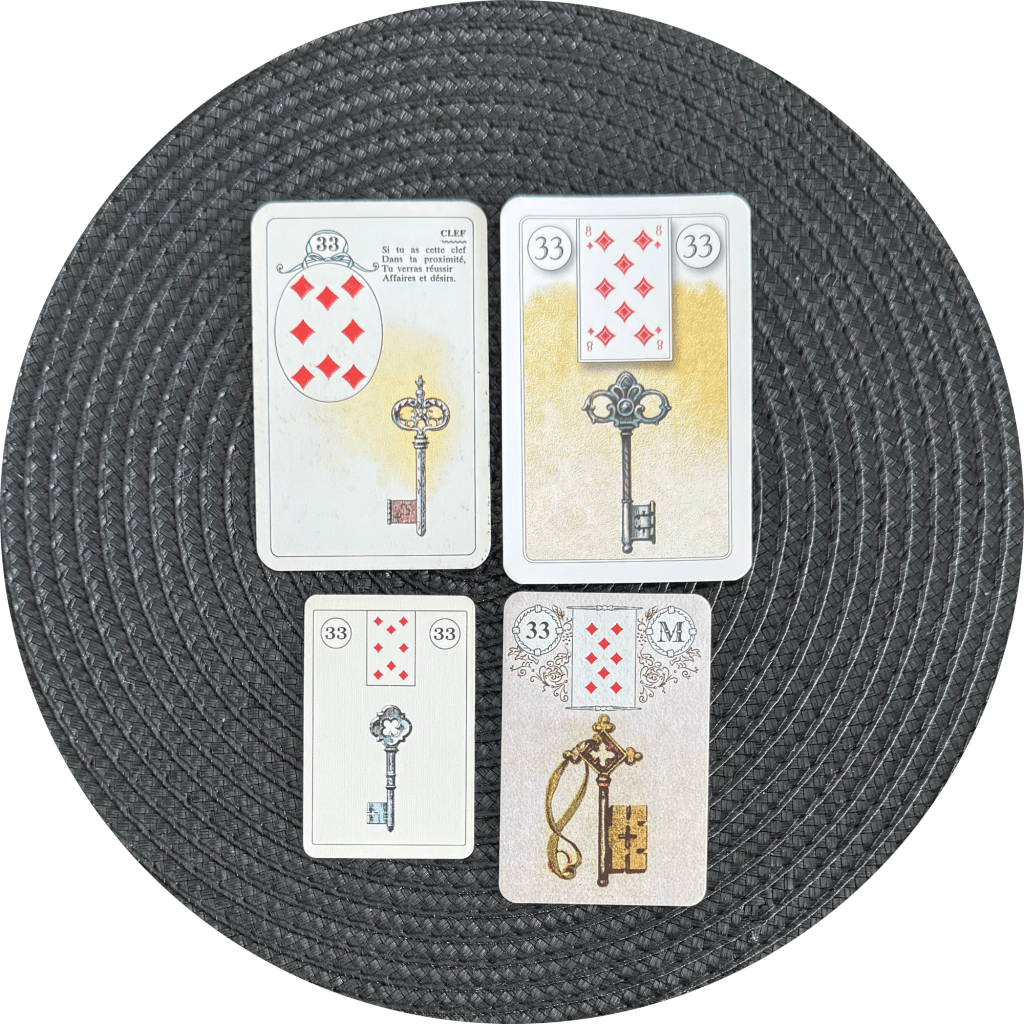
Card No. 33, the Key, is represented by the Eight of Diamonds. At first glance, it appears to be one of the most straightforward cards in the Petit Lenormand. Yet, despite its apparent simplicity, the Key is one of the most important cards within the deck, for it governs access to the very things the seeker hopes to obtain.
The Essence and Function of the Key
The traditional eikōn for card 33 is remarkably consistent. Most decks depict a single-bit key, often a mortice key. Depending upon the pattern, the key may be shown vertically, horizontally, or diagonally. More ornate decks depict a key of considerable craftsmanship, decorated with intricate metalwork and elaborate wards. Regardless of these artistic variations, the symbolism remains unchanged.
The essence of the Key is access and its function is to secure.
A key performs a dual role. With the correct key, one may lock a door or unlock it. One may grant access or deny it. This duality is central to understanding the card. The Key does not automatically promise success, nor does it merely signify an answer. Rather, it facilitates access to those circumstances, resources, opportunities, and forms of assistance required to achieve a desired outcome.
When the Key falls near the significator, it is often a strong indication that the seeker possesses—or will shortly acquire—the resources, time, support, and opportunities necessary to realise their aims. The door is open, or the means of opening it are readily available. Help is at hand. The necessary pieces are falling into place.
Conversely, when the Key falls at a distance from the significator, the inference is often that access is restricted. This does not necessarily mean failure. Indeed, I would seldom predict outright failure on the basis of the Key’s position alone. Rather, the card frequently suggests that the timing is not yet right, that some necessary resource remains unavailable, or that circumstances have not sufficiently matured. Attempts to force the matter often create additional complications which might otherwise have been avoided.
Over the years, I have found that time itself is frequently the missing key.
I recall a consultation during the latter half of 2019 with a lady who had recently become engaged. She was determined to marry on the same date upon which both her parents and maternal grandparents had wed. In the spread, the Key and Ring fell far from the Lady and were accompanied by the Scythe and the Cross. I advised caution and suggested that there might not be sufficient time for matters to unfold as she hoped.
Sadly, the wedding was later postponed as the intended date fell during the first COVID-19 lockdown. The issue was not a lack of commitment or desire. Rather, the necessary resources—the church, the hotel, and the practical arrangements required for the ceremony—had become inaccessible. The door was temporarily closed.
This example illustrates the central lesson of the Key. The card facilitates our access to the circumstances necessary to achieve a goal. Equally, it may reveal that such access is presently limited or unavailable.
It is important not to confuse the Key with the Cloverleaf. The Cloverleaf may bring opportunities, fortunate chances, and favourable circumstances, but the Key determines whether one can actually gain access to what is desired. Opportunity and access are not necessarily the same thing. A door may present itself, yet remain firmly locked.
In practice, the surrounding cards usually reveal precisely what the Key opens. In a general reading, the Key will often connect itself to the nearest carte maîtresse. The Key and Fishes may indicate access to money, income, or material resources. The Key and Heart can point towards opportunities in matters of love, affection, and relationships. The Key and House frequently signify access to property, domestic stability, or family matters. In each case, the Key acts as the means by which the relevant matter is opened, secured, obtained, or made available.
Coda
At its heart, the Key is a card of access, opportunity, and facilitation. It reveals whether the seeker possesses the resources, support, timing, and circumstances necessary to move forward. Above all, the Key reminds us that success rarely depends upon desire alone; one must also possess the means to unlock the door.
Person and Description
The Key is a particularly interesting card when it comes to description. In and of itself, it does not signify a person and is not ordinarily employed as a significator. Nevertheless, when it appears alongside a person card, it contributes an important layer of meaning, albeit in a manner somewhat different from most descriptive cards.
The principal function of the Key is emphasis. It tells us that the individual in question is significant and warrants close attention. Quite simply, that person is key to the matter under consideration, whether for good or ill. Whenever the Key appears in conjunction with a person card, the reader should immediately ask how that individual facilitates, restricts, opens, or secures the outcome.
For example, let us suppose the Hound and Key appear in a reading concerning a job interview. We may reasonably conclude that the person represented by the Hound will play an important role in determining the outcome. Thus, Fox–Hound–Key may indicate a rival whose actions prove decisive. I encountered precisely such a combination in a consultation for a client seeking a promotion. His colleague, represented by the Hound, was the other candidate and therefore a rival in the context of the Fox. The Key revealed that this individual would prove instrumental in the matter. Although the colleague had initially coached and advised the client, he ultimately manipulated the process to his own advantage and secured the promotion himself. The Key showed not merely who was present, but who possessed access to the mechanisms that determined the final result.
Physical Description
In the appendix to my book, I note that the Key does not provide a physical description in the conventional sense. This remains substantially true, though a small qualification should be made.
Rather than contributing a specific physical characteristic of its own, the Key tends to strengthen and refine the descriptions supplied by neighbouring cards. It adds a degree of emphasis and refinement, almost as though the features in question are brought into sharper focus. The effect is rather like polishing a piece of metal; the features are not changed, merely made more apparent.
Temperament
When describing temperament, the Key points towards someone who naturally facilitates solutions. These are individuals who know how to open doors, whether through knowledge, influence, expertise, or practical experience. They are often dependable, steadfast, and trustworthy, but it is their usefulness and effectiveness that most distinguishes them.
The Key person possesses a practical intelligence. Faced with a locked door, their instinct is to find the means of opening it rather than lamenting its existence. They are frequently resourceful, methodical, and capable of identifying solutions where others perceive only obstacles.
One curious observation from practice is that Key people are often multilingual. Whether through education, travel, profession, or simple intellectual curiosity, they frequently possess an ability to move between different worlds, cultures, and modes of communication with relative ease. More broadly, they tend to be knowledgeable individuals who enjoy acquiring skills and information that expand their capabilities.
The Key person is also frequently encountered in occupations or situations where they facilitate access for others. Teachers, consultants, advisers, brokers, translators, radiologists and radiographers, and various gatekeepers often fall under this card. The common thread is not authority itself, but possession of something another person requires in order to proceed.
Above all, the Key describes a person upon whom progress depends. They possess knowledge, influence, authority, resources, or connections that others require. Whether they choose to open the door or keep it locked is another matter entirely, but their significance to the outcome should never be underestimated.
Special Features
Lock or Unlock
Like the Clouds, the Scythe, and the Cross, the Key exerts a particular influence upon the cards immediately adjacent to it. Understanding this interaction is essential if one is to appreciate the card’s full significance.
Traditionally, cartomantes taught that the Key says “yes” to the card on its left, whilst rendering the card on its right certain or guaranteed. Whilst there is some truth in this, I have found it more useful to approach the matter through the card’s underlying symbolism. The card to the left of the Key has been opened; the card to the right has been secured.
The card to the left of the Key is therefore best understood as having been opened. Access has been facilitated. The matter is available, accessible, and capable of manifesting freely.
By contrast, the card to the right of the Key is locked. It is secured, protected, contained, or otherwise restricted from casual access.
Thus, when we encounter Park – Key, we have a public space that is open and accessible. It may indicate an open-door policy, free admission, unrestricted access, or a social environment in which participation is encouraged.
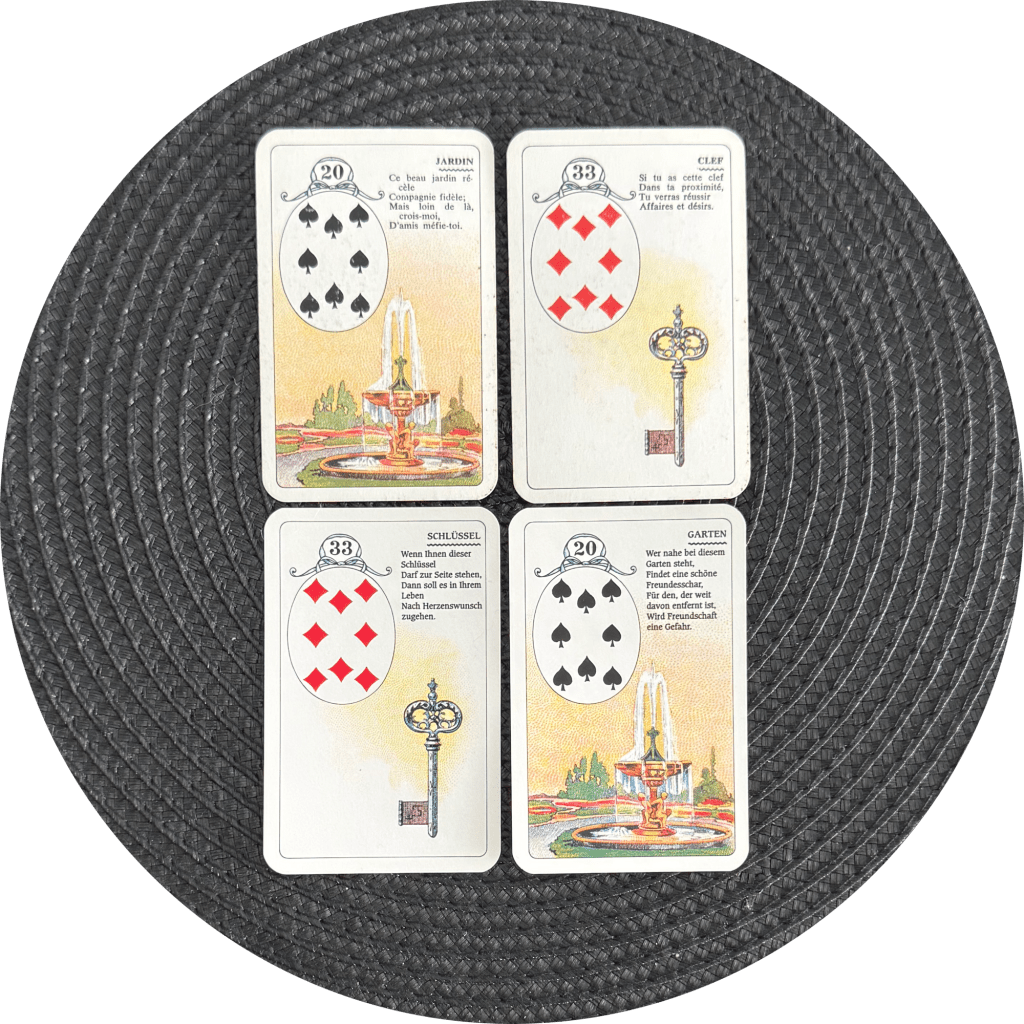
Conversely, Key – Park suggests that access to the public space is restricted. We may be dealing with a private club, members-only organisation, secure facility, or venue requiring authorisation or payment for entry.
The distinction becomes even clearer with Book – Key and Key – Book.
With Book – Key, knowledge has been opened. Information is shared freely, secrets are disclosed, passwords revealed, or confidential matters exposed. In modern contexts, one might even think of leaked documents, compromised security, or unauthorised disclosure.
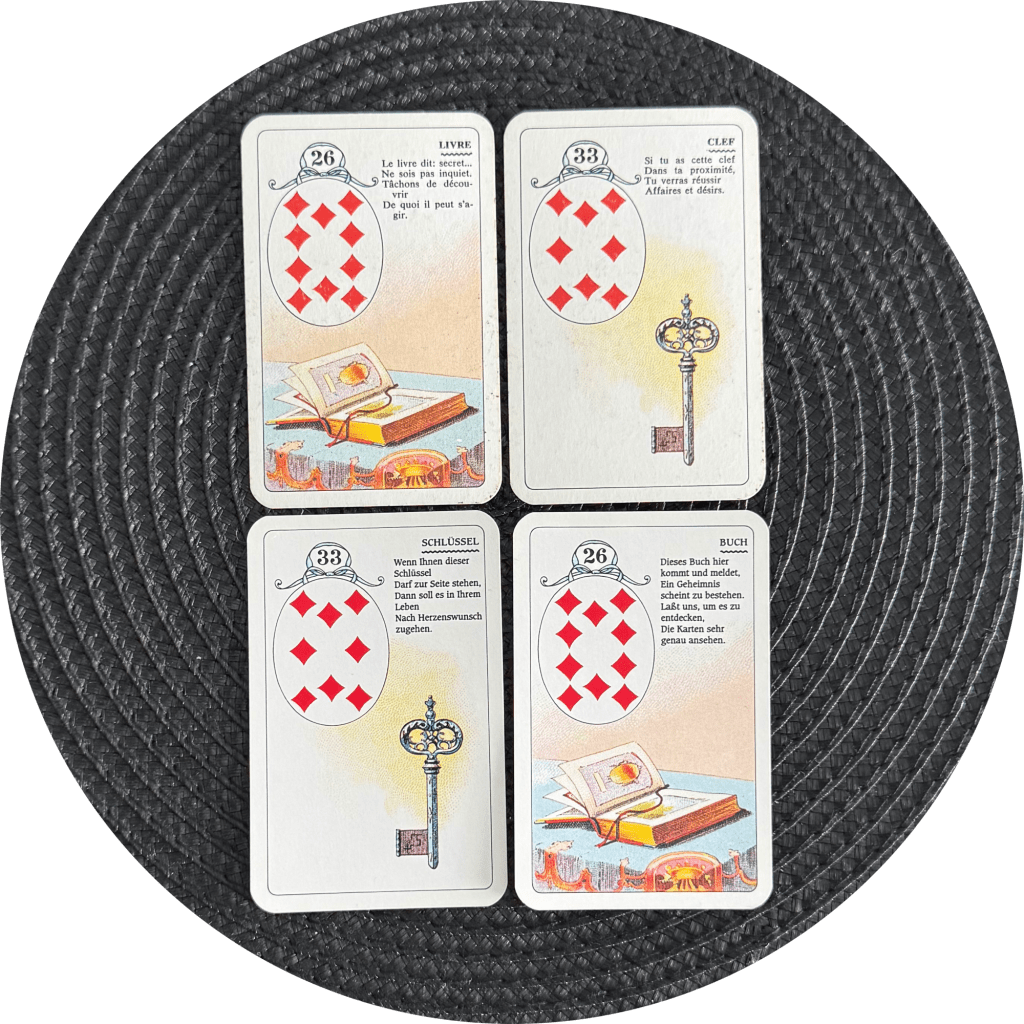
With Key – Book, the reverse applies. Information is secured and protected. We encounter confidentiality agreements, trade secrets, secure passwords, encryption, and need-to-know policies. The knowledge exists, but access to it has been restricted.
The principle remains the same regardless of the cards involved. The Key either facilitates access or secures the matter against intrusion. Understanding whether something has been opened or locked often reveals far more than simply reading the neighbouring cards in isolation.
Providence
Over time, it has become increasingly common to associate fate, destiny, and providence with the Cross. I have never found this interpretation entirely satisfactory. The Cross is a card of burdens, suffering, sacrifice, and endurance—qualities entirely consistent with its historical use as an instrument of torture and execution. It is better understood as a fateful card than a card of Providence.
Providence is more naturally encountered through the workings of the Key.
As we know, cards exert an influence upon those beneath them. When the Key crowns the significator, there is often a remarkable alignment of circumstances. The seeker encounters the right person, receives the necessary assistance, obtains the required information, or discovers the correct path forward. There is a sense that circumstances are co-operating rather than resisting.
In such situations, the Key can suggest that matters are unfolding as they should. Opportunities emerge at the proper moment, obstacles prove surmountable, and the next step becomes apparent. Whether one chooses to call this providence, destiny, or simply fortunate timing is largely a matter of personal philosophy.
The Exclamation Mark
The Key can also function rather like an exclamation mark.
When a particular issue dominates a reading, the Key often draws attention to the card immediately above it. In effect, the Key tells the reader, “Pay attention to this card.” In many instances, the card above will contain the answer, solution, or crucial piece of information needed to resolve the matter.
Over the years, I have found this especially useful when searching for missing or misplaced objects. In such cases, the card above the Key frequently provides a remarkably accurate indication of where the item may be found or the circumstances surrounding its disappearance.
More generally, whenever the Key appears beneath another card, one should pay close attention. The card above has often been elevated in importance and deserves careful consideration before the remainder of the spread is interpreted.
Timing
In matters of timing, the Key is generally a slow card. It emphasises that events occur at their appointed time and rarely before.
Unlike cards such as the Birds or Cavalier, which indicate rapid developments, the Key is concerned less with speed than with readiness. It asks whether the necessary conditions are present and whether the appropriate door can, in fact, be opened. The Key is not slow because it delays; rather, it waits until the necessary conditions are in place.
The card also has a tendency to reinforce the timing of neighbouring cards. Thus, when found with slower cards such as the Lilies or the Mountain, delays are often magnified. Events take longer to mature and progress proceeds cautiously. Conversely, when combined with cards such as the Cloverleaf or the Mice, developments may occur more quickly than expected.
Ultimately, the Key reminds us that timing is often a matter of access. A door may exist, but until it can be opened, progress remains deferred.
Health
Unlike many cards within the Petit Lenormand, the Key does not possess a specific anatomical correspondence. Instead, it governs the process by which answers are obtained and the investigations required to determine both diagnosis and treatment.
Consequently, the Key frequently appears whenever tests, examinations, assessments, or professional expertise are required. Depending upon the surrounding cards, this may include imaging studies such as X-rays, CT scans, or MRI examinations, particularly when supported by the Moon. With the Book, one may encounter screening questionnaires, psychological assessments, or investigations into developmental and communication disorders. With the Tree, the card may point towards genetic or DNA testing.
Other combinations can provide additional nuance. The Key and Scythe may indicate exploratory or keyhole surgery, whilst the Key and Serpent can suggest investigations involving the digestive tract, such as a colonoscopy.
From a practical standpoint, the appearance of the Key usually advises consultation with an appropriate professional and a willingness to submit to expert assessment. The card reminds us that answers are obtained through knowledge and investigation rather than conjecture.
Taken alone, the Key is generally a promising omen in health matters. It suggests that the expertise, information, and resources required to understand the problem are available and that appropriate investigation is likely to lead towards a constructive outcome.
The Key in Action
Pyramid spreads have long been popular amongst cartomantes, with antecedents stretching back to Etteilla. Over the years, numerous variations have emerged, differing in size, orientation, and method of interpretation.
Here we shall employ a simple inverted pyramid using ten cards. The spread is particularly useful when examining the development of a situation over time, as each row reveals a stage in the unfolding narrative, whilst the final card indicates the likely outcome.
The Inverted Pyramid
Shuffle and cut the cards. Then deal four cards in a row. Beneath these, deal a second row of three cards. Below the second row, deal a third row of two cards. Finally, place a tenth card beneath the third row.
The layout will appear as follows:
01 – 02 – 03 – 04
05 – 06 – 07
08 – 09
10
It will be noted that 4 + 3 + 2 + 1 = 10. The structure has roots in Neoplatonic and Pythagorean numerical concepts. Whilst this is an interesting historical feature, it has little practical significance during the reading itself. For our purposes, each row is simply read as a line within a story, gradually moving towards its conclusion.
Jessie’s Reading
Jessie consulted me during the spring of 2025. She had recently emerged from a long-term relationship that had ended in the autumn of the previous year. Since then, she had struggled to meet someone with whom she could build a serious future and was considering joining a dating application.
Her question was simple:
Would she meet someone suitable for a serious long-term relationship through the app?
The cards drawn were:
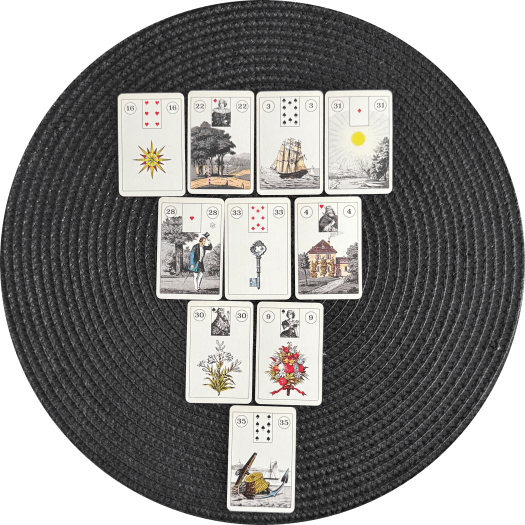
Stars – Roads – Ship – Sun
Lord – Key – House
Lilies – Bouquet
Anchor
At first glance, the spread appears highly encouraging.
The opening line immediately suggests a clear and positive course of action. The combination of Stars–Roads–Ship–Sun indicates a path forward that will broaden Jessie’s horizons and move her love life in a more favourable direction. The Stars provides clarity, the Roads presents a choice, the Ship introduces movement and expansion, and the Sun promises a positive outcome. Together, the cards strongly suggest that joining the application is a constructive decision.
The second line reveals why.
Here we find Lord–Key–House. As discussed earlier in this article, the Key facilitates access. It opens doors and makes resources available. In this instance, the Key acts between the Lord and the House. It opens the door to meeting a suitable man (Lord) and secures the possibility of building something stable and meaningful (House).
Whilst the House is naturally associated with property and domestic concerns, it also governs our private world, our personal lives, and those places where we feel safe, secure, and accepted. The combination therefore suggests a man who shares Jessie’s desire for stability, commitment, and a genuine home life.
The Key is particularly important here. Rather than simply promising success, it indicates that the dating application provides access to the sort of person Jessie wishes to meet. The opportunity exists, and the means of reaching it are readily available.
The third row, Lilies–Bouquet, describes the quality of the relationship itself. The dates (Bouquet) will be characterised by mutual respect (Lilies), kindness, and good manners (Lilies – Bouquet). There is both warmth and maturity present, suggesting a relationship capable of developing on a healthy foundation rather than one driven solely by passion or excitement.
Finally, the Anchor provides the outcome.
The Anchor is a card of stability, permanence, and faithfulness. As the culmination of the spread, it suggests that the relationship has the potential to develop into something serious and enduring. Rather than a brief romance or casual encounter, the cards point towards the possibility of building something lasting.
The spread therefore answered Jessie’s question quite clearly. Joining the app would provide access to new opportunities and place her in contact with someone whose goals and values aligned closely with her own. The relationship revealed by the cards possessed both warmth and stability, offering a realistic prospect of a long-term future together.
This proved to be an accurate assessment. Jessie met a gentleman through the app. At the time of writing, they are approaching their first anniversary together. Whilst only time will determine the ultimate outcome of the relationship, the cards correctly identified both the means by which they would meet and the serious long-term potential of the connection. In this respect, the Key performed exactly as expected: it did not create the relationship, but revealed the door through which Jessie needed to pass in order to find it.
§
Images:
Featured Image:
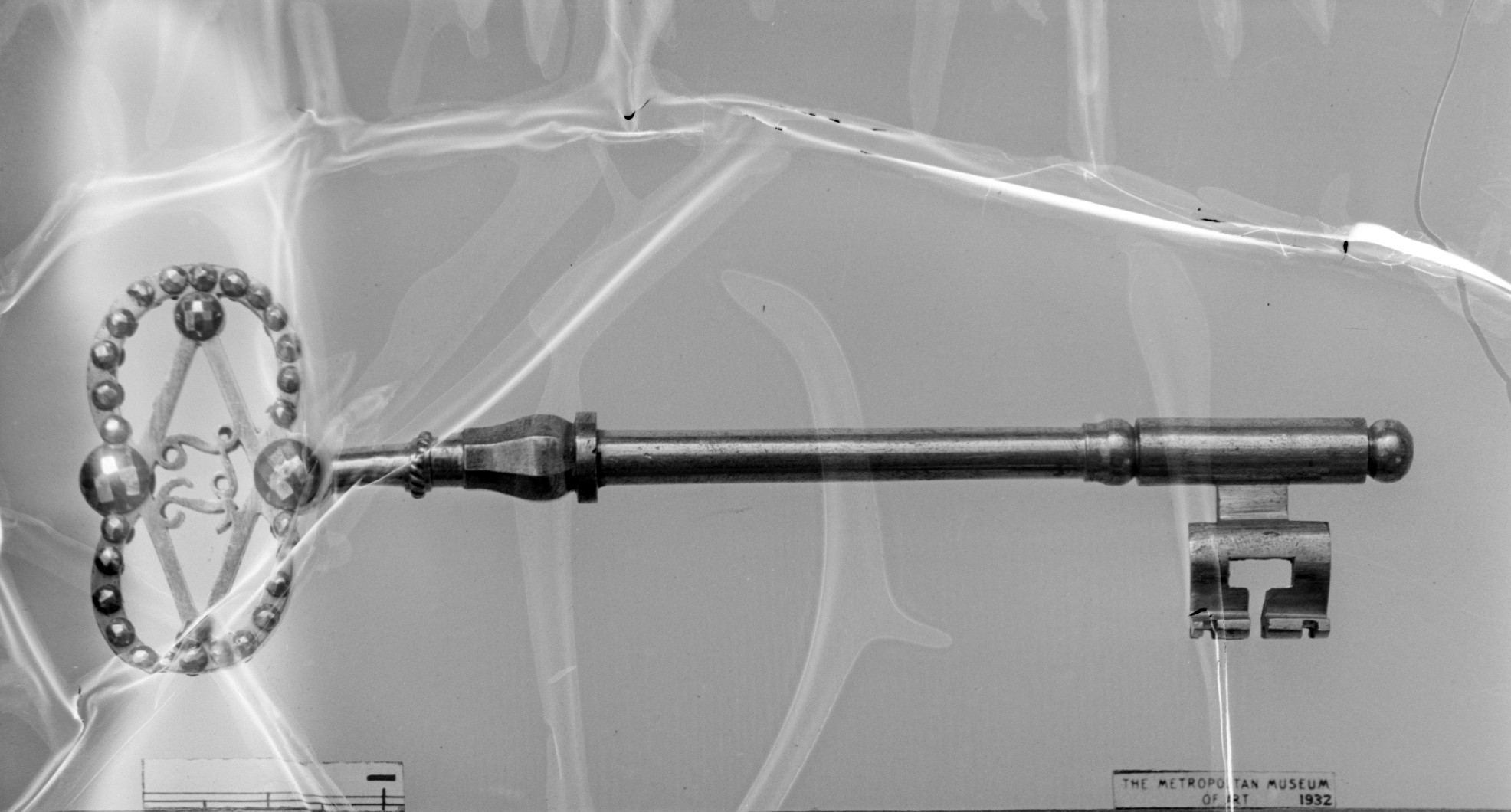
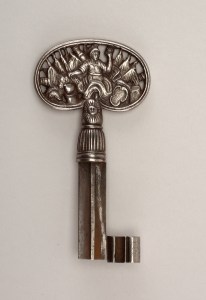
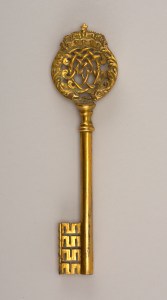
Key. Metropolitan Museum of Art, CC0, via Wikimedia Commons. https://commons.wikimedia.org/wiki/File:Key_MET_89201.jpg
Cards:
Lenormand Cards: Jeu Lenormand © Cartamundi, WanderWüst © Jorge/Wandering Oracle, Lenormand Fortune-Telling Cards © Zao-Gelli, The Lenormand Oracle © Verlag für die Frau, Leipzig, Nieuwe Lenormand © Amber Studio/Erna Droesbeke, Lenormand 36 Orakelspielkarten © Königsfurt-Urania
References:
Boroveshengra, A., 2013. Cartomantes’ Cabinet: The Petit Lenormand Course.
Boroveshengra, A., 2015. Lenormand Thirty Six cards. 2nd ed. Create Space.
George, R. (2014) The Essential Lenormand: Your Guide to Precise & Practical Fortunetelling. Woodbury, MN: Llewellyn Publications.
Ignatius Press (2005) Holy Bible RSVCE Compact Zipper. Ignatius Press.
Marco, M. and Goffinet, J., 1989. Petit Lenormand. Bruxelles: Servranx.
Silvestre, C., 2003. Le Petit Lenormand. [Montpellier]: Gange éd.


