Some sailed to the sea in ships to trade on mighty waters. These men have seen the Lord’s deeds, and wonders he does in the deep.
Psalm 106: 23 – 24, Grail Translation
And, just at the moment when someone says, “There, she is gone,”
Gone from my Sight, Henry Van Dyke
there are other eyes watching her coming, and other voices
ready to take up the glad shout, “Here she comes!”
Ship, indicates wealth obtained by commerce or by inheritance; it also means travel when it is located near the person.
Original Instructions
Card No. 3, the Ship or Boat, is represented by the Ten of Spades. At first glance, its meaning appears rather straightforward. Surely it signifies travel and little more? Yet, as with many Lenormand cards, a closer examination of the eikōn reveals a richer and more nuanced symbolism.
The Essence and Function of the Ship
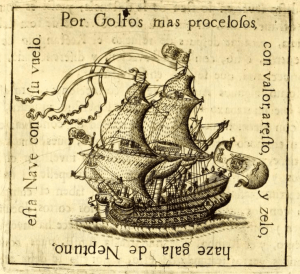
The traditional eikōn depicts a large sea-going vessel, usually a galleon, carrack, or merchant ship, its sails billowing as it makes its way across the ocean. Some decks show one or two additional vessels upon the horizon, reinforcing the impression of long-distance travel, commerce, and movement between distant places.
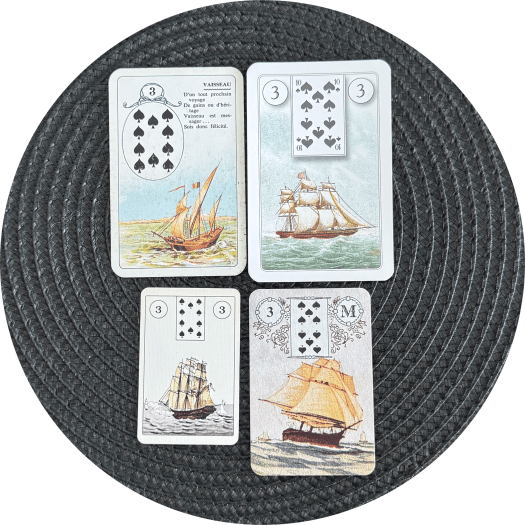
The essence of the Ship is movement and its function is transport.
To appreciate the significance of the card, one must remember the world from which the Petit Lenormand emerged. In the late eighteenth and early nineteenth centuries, most people never strayed particularly far from their place of birth. Long-distance travel was neither commonplace nor inexpensive. Journeys by sea were often arduous, time-consuming, and fraught with uncertainty. Nevertheless, ships remained essential. They connected nations, facilitated trade, transported goods, and enabled the exchange of ideas, cultures, and opportunities.
For this reason, the Ship’s most immediate and enduring significance remains travel. Whether by land, sea, or air, the card signifies the act of undertaking a journey and moving from one place to another. If the Ship appears prominently near the significator, one may often predict with confidence that the querent will soon travel or that a journey will play an important role in forthcoming events.
Yet the Ship should not be understood solely in a literal sense. Its symbolism extends beyond physical travel into the broader concept of movement itself. In a reading, the card often invites us to consider the course upon which the seeker presently finds themselves. Is their life progressing towards a destination, or have they drifted off course? Are they making steady progress, or are they becalmed and unable to advance? Such questions naturally arise when the Ship appears.
The card can also indicate expansion and the broadening of horizons. Just as a ship carries people and goods beyond the confines of their familiar surroundings, so too can it suggest the need to venture into new markets, acquire new experiences, or seek opportunities beyond one’s customary sphere. In this respect, the Ship can be particularly valuable in business readings.
For entrepreneurs and those engaged in commerce, the Ship frequently raises questions of distribution, reach, and growth. How might a product be transported to a wider audience? Which new market remains unexplored? What avenue of expansion has yet to be considered? In such instances, particular attention should be paid to the card towards which the Ship is travelling. That card may indicate precisely where one should look for new customers, fresh opportunities, or increased sales.
Ultimately, the Ship is a card of departure and progression. It rarely permits stagnation. Whether manifesting as a literal journey, a commercial venture, a personal development, or a widening of one’s horizons, the Ship encourages movement from the known towards the unknown, carrying the seeker beyond their present shores and towards new possibilities.
As always, the surrounding cards determine whether the movement represented by the Ship is functioning smoothly or encountering obstacles. A vessel sailing freely conveys a very different picture from one struggling against contrary winds and treacherous seas.
Coda:
Whether appearing in questions of travel, business, relationships, or personal growth, the Ship invariably signifies movement from one state to another. It is the card of journeys, horizons, and expansion; of leaving the familiar behind in pursuit of wider opportunities. Above all, the Ship reminds us that progress rarely occurs whilst we remain safely in harbour.
Person and Description
The Ship is not ordinarily employed as a significator. Nevertheless, when it appears alongside a person card, it can provide valuable information regarding both physical appearance and temperament.
Physical Appearance
Traditionally, the Ship introduces an element of foreignness or distinction into a person’s appearance. Such a description should be treated with caution, however, for what is considered foreign or exotic is often relative to the perceptions and experiences of the querent. In practice, it is usually safer to say that the individual possesses a distinctive appearance or stands out in some notable fashion.
The Ship frequently describes a taller individual, often with a lean or elongated frame. The hair tends towards darker shades and, particularly in men, may possess a slightly windswept or untidy quality, as though shaped by the elements. The eyes frequently tend towards blue or green, reflecting the maritime symbolism of the card.
As with all descriptive cards, the surrounding cards may refine or modify these indications.
Temperament
When describing character, the Ship corresponds most closely to the traditional sanguine temperament. Of the four classical temperaments, the sanguine is perhaps the most adventurous, optimistic, and outward-looking. Such individuals possess a natural curiosity about the wider world and are rarely content to confine themselves to a narrow sphere of experience.
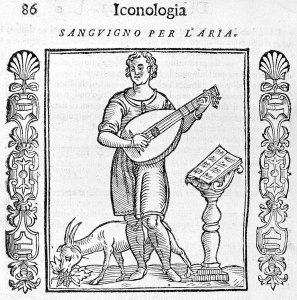
The Ship person enjoys discovering new places, meeting new people, and exchanging ideas. They are often sociable, friendly, and receptive to different perspectives. Just as the merchant vessel carries goods from one port to another, these individuals delight in making connections between people, places, and opportunities.
There is also a strongly enterprising quality to the Ship. The traditional eikōn is not merely a vessel of exploration but one of commerce. Consequently, those represented by the Ship frequently possess a commercial instinct and an eye for opportunity. They are inclined to look beyond familiar boundaries and may prosper through trade, travel, networking, importation, exportation, or other pursuits which broaden their horizons and extend their reach.
At their best, they are adaptable, optimistic, resourceful, and possessed of a genuine enthusiasm for life. Their willingness to embrace change often enables them to succeed where more cautious individuals hesitate.
At their worst, however, they may become restless, dreamy, unsettled, or perpetually in search of the next horizon. There can be a tendency to lose interest once the novelty of a situation has passed, or to pursue new opportunities before fully developing existing ones. Like the vessel depicted upon the card, they are seldom inclined to remain anchored in one harbour for long.
Special Features
Mode of Transport
Some cartomantes associate the Ship with all forms of transport, whether a motor car, bicycle, aeroplane, or boat. I have never found such a broad interpretation particularly convincing. For me, the Ship signifies only certain modes of transport.
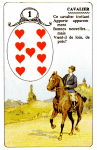
When the Petit Lenormand emerged, the most common means of personal transport were horses, carts, and carriages. In our own time, the motor car, motorcycle, and bicycle fulfil much the same role. The deck already contains a card depicting a rider upon a horse: the Cavalier. If we wish to signify personal transportation—a journey undertaken under one’s own control—the Cavalier frequently serves this purpose admirably.
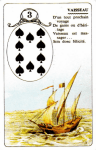
By contrast, the traditional eikōn of the Ship depicts a large sea-going vessel intended for long-distance travel and commerce. A galleon was not used for local errands or daily commuting. It carried people and goods across great distances and often beyond national frontiers.
For this reason, I associate the Ship with trains, coaches, buses, aeroplanes, ferries, cruise liners, and, naturally, ships themselves. The common thread is not merely transportation, but transportation over distance. Unlike the Cavalier, where the traveller directs his own mount, the Ship usually indicates a person being conveyed by a larger system of transport.
This distinction is important. The Ship concerns long-distance travel and those means of transport that carry us beyond our usual sphere. It is less about driving to the shops and more about crossing borders, horizons, and significant distances.
Longing
Beyond physical travel, the Ship can also signify longing. Just as the traveller gazes towards a distant shore, the card captures the feeling of desiring something that lies beyond one’s immediate reach.
This interpretation is most often encountered when the Ship appears with another person card. In such circumstances, the card frequently indicates that the individual is absent, distant, or otherwise unavailable. The separation may be geographical, emotional, or circumstantial, but the defining feature is the same: the absence is keenly felt and seldom forgotten.
The Ship therefore speaks of yearning, homesickness, missing a loved one, or desiring something that remains beyond one’s immediate grasp. In relationship readings, particularly for those seeking a partner, it can indicate a longing for companionship, romance, or a future not yet realised.
Inheritance
Inheritance may seem an unusual signification for the Ship until one reflects upon the card’s essential function. The Ship transports people and goods from one place to another. Inheritance can be understood in much the same way: the transfer of a legacy from one person or generation to the next.
For this reason, the Ship can occasionally signify an inheritance, legacy, bequest, or succession. This is by no means an everyday interpretation and one I have employed only on rare occasions. Nevertheless, in the appropriate context, particularly when supported by other cards, it can prove remarkably apt.
Timing
In matters of timing, the Ship operates at a measured pace. Unlike the rapid activity of the Birds or Moon, the Ship suggests a journey that takes time to complete. Consequently, it tends to operate in terms of months rather than days or weeks.
Over the years, I have also noticed an occasional association between the Ship and Stella Maris—Our Lady, Star of the Sea—whose feast is celebrated on 27 September. This is not a traditional Lenormand correspondence, but one that has appeared with sufficient regularity in my own practice to merit mention.
Health
In health matters, the Ship is associated anatomically with the liver, spleen, and gallbladder. In the appropriate context, combinations can provide further detail. For example, the Ship and Mountain may point towards obstruction within the gallbladder, including the possibility of gallstones.
More commonly, however, the Ship concerns movement and disorders associated with it. It can indicate disturbances of balance, co-ordination, motion, and spatial orientation. Likewise, it frequently appears in connection with travel sickness, seasickness, and anxieties associated with travel itself.
The Ship in Action
In early 2019, Joan consulted me regarding a business and enterprise course she was considering undertaking. Joan operated two businesses: a jewellery-making enterprise and a cleaning business run jointly with her husband. Her question was straightforward: what would she gain from taking the course?
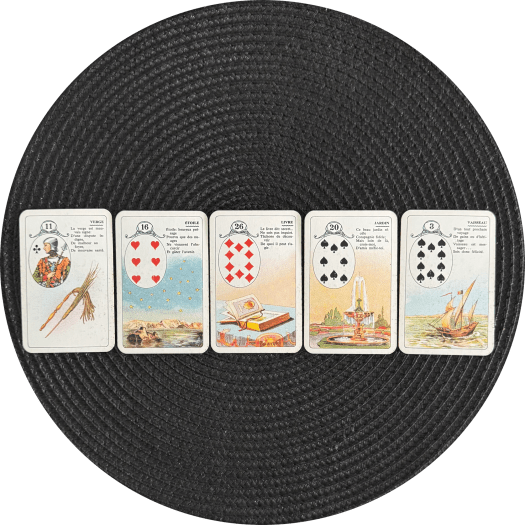
The cards drawn were the Birch Rod, the Stars, the Book, the Park, and the Ship.
The answer was remarkably clear. The greatest benefit would be a better understanding of how to grow her businesses and expand her market.
The Birch Rod occupies the first position. As we have already seen, the essence of the Birch Rod is correction and its function is to discipline. The course would therefore require Joan to scrutinise her existing practices, tighten her business plans, and address weaknesses that might otherwise have gone unnoticed. It was not simply a matter of learning something new; it was a matter of refining what already existed.
This process naturally led to the Stars. Greater discipline and organisation would provide Joan with clarity, direction, and a more focused vision of where her efforts ought to be concentrated.
The Book revealed that there was still much to learn. More importantly, it suggested opportunities, customers, and possibilities that had not yet been discovered. The knowledge required for further growth existed, but it had yet to be accessed.
The combination of Book–Park–Ship was especially striking. The Book pointed towards hidden or unexplored knowledge. The Park expanded this into the public sphere and marketplace. Finally, the Ship showed expansion beyond existing boundaries. Taken together, the cards indicated that the course would help Joan identify and reach a market she was not presently serving.
Here the Ship functions in its broader sense of expansion and extending one’s horizons. Armed with fresh knowledge and a clearer direction, Joan would be able to take her products and services into previously uncharted territory. The course would not merely teach her how to run her businesses more effectively; it would show her where growth could be found and how to reach people beyond her current customer base.
In practical terms, the reading suggested that the greatest value of the course would be neither the qualification nor the certificate itself. Rather, it would provide Joan with the knowledge, clarity, and direction necessary to unlock new opportunities and bring her businesses before a wider audience. The Ship showed that she would be able to expand her horizons and, in doing so, reach more people through markets and opportunities that had previously remained unexplored.
Forthcoming articles will cover the Cross, the Bear, the Key, the Hound, the Fishes, the Stars, the High Tower, and the House cards.
§
Images:
Featured Image:
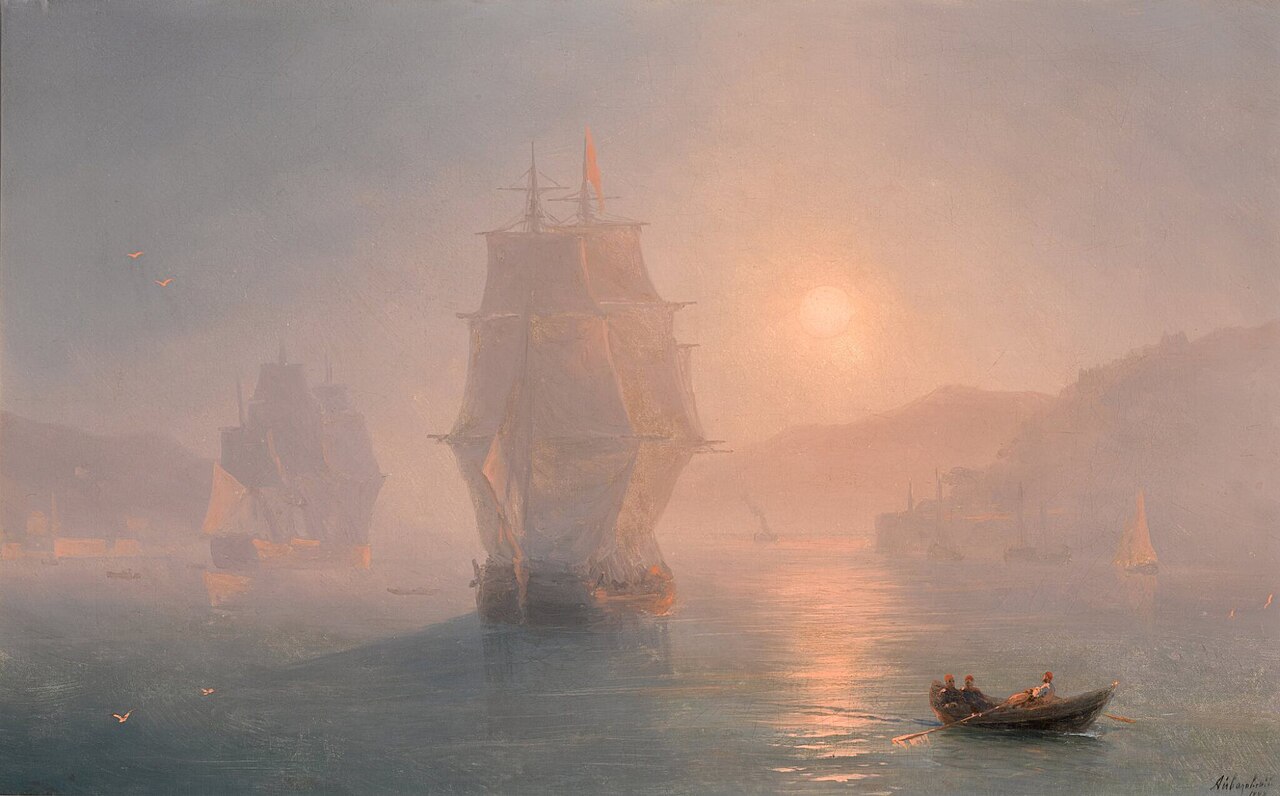
Ships on a Misty Morning. Ivan Aivazovsky. Public Domain via Wikipedia Commons.
Cards:
Lenormand Cards: Jeu Lenormand © Cartamundi, WanderWüst © Jorge/Wandering Oracle, Lenormand Fortune-Telling Cards © Zao-Gelli, The Lenormand Oracle © Verlag für die Frau, Leipzig, Nieuwe Lenormand © Amber Studio/Erna Droesbeke, Lenormand 36 Orakelspielkarten © Königsfurt-Urania
References:
Boroveshengra, A., 2013. Cartomantes’ Cabinet: The Petit Lenormand Course.
Boroveshengra, A., 2015. Lenormand Thirty Six cards. 2nd ed. Create Space.
Delclos, M., 2013. Le Livre du Petit Lenormand. 1st ed. Escalquens: Éd. Trajectoire.
Gelineau, J. (1985) The Grail Psalms: Translated from the Hebrew. London: Collins Liturgical Publications.
Marco, M. and Goffinet, J., 1989. Petit Lenormand. Bruxelles: Servranx.
Matthews, C. (2014) The Complete Lenormand Oracle Handbook: Reading the Language and Symbols of the Cards. Rochester, VT: Destiny Books.
Meuris, B., 2018. Petit Lenormand Encyclopaedia: Volume 1. Create Space.
Silvestre, C., 2003. Le Petit Lenormand. [Montpellier]: Gange éd.
 Journal of a Cartomante