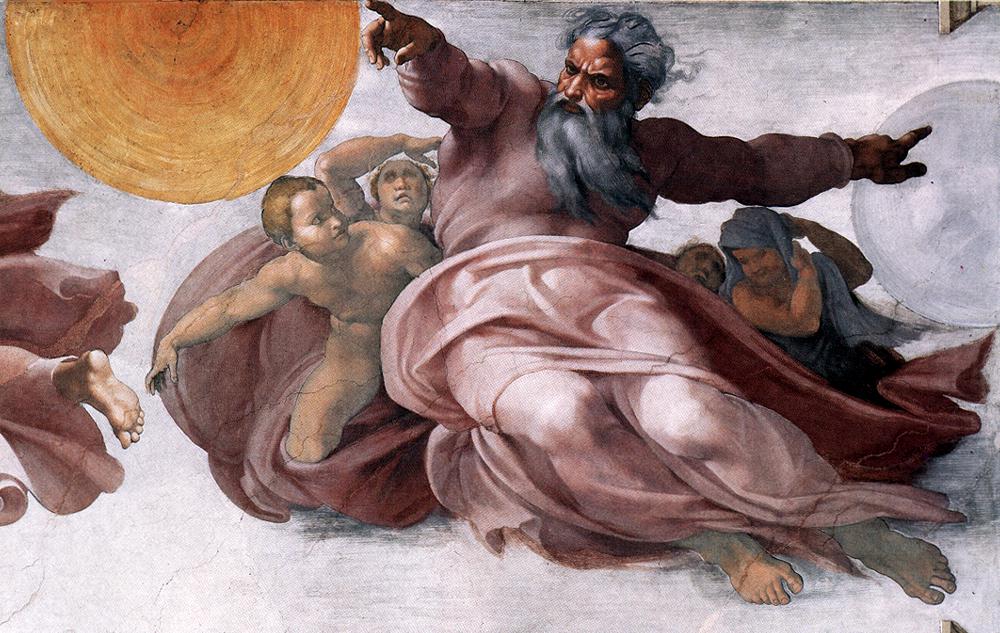
There he has placed a tent for the sun; it comes forth like a bridegroom coming from his tent, rejoices like a champion to run its course.
Psalm 18:6, The Grail Translation
Sun, near, you are enlightened by its rays and happiness grows, but if it is far away, all cools with discouragement in all enterprises and prepares for calamities
Original Instructions
When one turns to card no. 31 — the Ace of Diamonds, or the Sun — it can, at first sight, appear somewhat one‑dimensional, even a little uninspiring. Is it not merely a symbol of success? How does it differ from the Cloverleaf? And can this eikōn truly disperse the Clouds?
The Essence and Function of the Sun
The essence of the Sun card is illumination, and its function is to energise. Illumination, in this context, must be understood in its fullest breadth: physical, intellectual, spiritual, and indeed metaphysical.
Across the principal patterns, the traditional eikōn of the Sun remains strikingly consistent. The examples referenced here are drawn from decks published by Carta Mundi, Piatnik, the Wandering Oracle, and Zao‑Gelli.
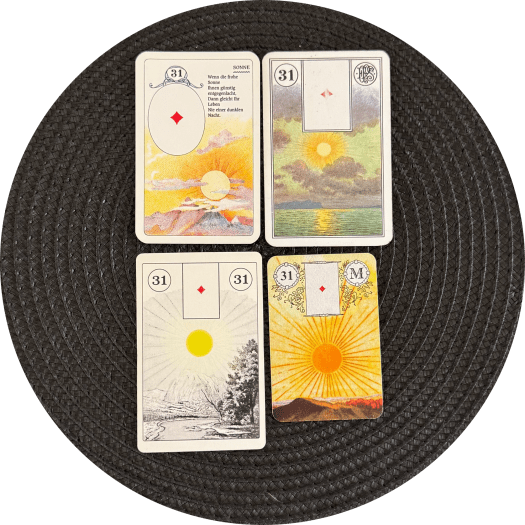
We behold the rising sun in splendour, its rays falling beneficently upon the landscape. Depending upon the artist’s preference, one may find bodies of water, rolling hills, or mountains. A particularly early and enduring detail is the presence of dispersing clouds — a feature to which we shall return in due course.
Interpretative Principles
The Sun is the brightest star and the gravitational centre of our solar system. It is indispensable for warmth, light, food energy, and the precipitation upon which all life depends. In the same way, the Sun card invigorates situations and provides the necessary conditions for success across every sphere of life, not merely the financial or professional.

From the earliest civilisations, the sun has held a central place in myth and ritual. Agrarian cultures, acutely aware of their dependence upon its light and warmth, marked the solstices with solemn observances, recognising in them the turning points of the agricultural year. These ancient intuitions are not lost to us: the winter solstice is crowned by the Great Feast of Christmas, when the Light enters the world, and the summer solstice by the Nativity of St John the Baptist, whose mission was to herald that Light and then diminish before it. The cosmic symbolism of the sun, therefore, still finds relevance in modern European culture.
Although the ancients lacked terms such as “dwarf star” or “photosynthesis”, they understood perfectly our dependence upon the sun for survival — and the dangers inherent in its power. For this reason, as attested by the great astrologers, the sun was regarded as the supreme luminary. It is the giver of light, heat, and life, and symbolises our vital energy, spirit, and soul. Through its beneficence of light, it grants the enlightenment and perception required to apprehend revealed truth.
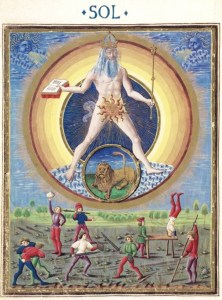
All these qualities are encoded within the eikōn: the rising sun as giver of light; the rays as vital force; the dispersing clouds as the dawning of perception; and the landscape as the world quickened by its warmth. The Sun card, therefore, is not merely a cipher for success but the animating principle that renders success possible — the life‑giving radiance without which nothing can flourish.
Coda
Ultimately, the Sun brings not only illumination but its life‑giving heat. Just as the natural sun quickens the earth and drives away the shadows, so too does this card energise circumstances, dissolve impediments, and break through situations that have grown dark or stagnant. It imparts a vital force to the reading as a whole: a renewed impetus, a confident drive towards success, and a sense of bonheur that restores optimism and forward movement.
In relationships, the Sun denotes bonds marked by genuine warmth, openness, and a wholesome delight in the other. It speaks of affection that is steady, generous, and life‑affirming — a warmth that strengthens, encourages, and sustains. In this way, the Sun stands as the card that brings vitality, clarity, and the invigorating heat in which people, plans, and possibilities can truly flourish.
Person and Description
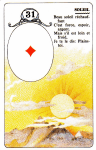
The Sun card, taken on its own, is not read as a person. It does not function as a significator in the way that the Lord, the Lady, Dog or Serpent cards do. However, when it appears in conjunction with a person card, it can offer a vivid and reliable description of both physical appearance and temperament. In this sense, the Sun acts as an enhancing influence, illuminating the qualities of the individual it accompanies.
Physical Description
Physically, the Sun card describes someone with a strong, well‑formed body and a healthy, ruddy complexion. The colouring indicated by the Sun ranges from olive to bronzed and, in some cases, distinctly dark. It is not uncommon for this card to point to striking or memorable eyes — whether notably large, or marked by a golden or amber hue. As ever, one should look for supporting testimony in neighbouring cards before drawing firm conclusions. The hair is often thick, sometimes luxuriant, and may have a warm or sun‑touched tone.
Temperament
In matters of temperament, the Sun card portrays an individual endowed with drive, determination, and a clear sense of purpose. This is someone who strives to see their vision realised and their aspirations fulfilled. They are frequently successful in their chosen field — and the surrounding cards will usually indicate the nature of that field with some precision. Such a person naturally gravitates towards leadership roles and tends to excel when placed at the forefront; they like to be at the top of their game and are seldom content with mediocrity.
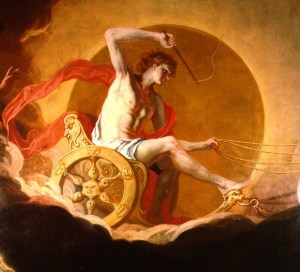
Yet this ambition is not cold or self‑serving. The Sun confers warmth, generosity, and a buoyant sense of bonheur. In love readings, it adds a splash of passion and a wholehearted delight in the relationship. This is a temperament that uplifts others, radiates confidence, and brings a steady, invigorating positivity to all it touches.
Special Features
Proximity
In the Lenormand tradition, proximity is a principle of considerable importance, and the Sun card offers a particularly clear demonstration of its effects. When the Sun falls close to the significator, it acts as a direct source of strength and vitality for the querent. Its nearness energises them, providing the determination, stamina, and inner fortitude required to pursue their aspirations with confidence. The cards immediately surrounding the Sun will often reveal the nature of the endeavours being activated or supported, and may indicate where the querent’s efforts are most likely to bear fruit.
When the Sun lies far from the significator, its influence cools. Opportunities become fewer, and those that do arise tend to be more complex or demanding. The querent may find that progress requires sustained effort, and that obstacles must be met with considerable resolve. In many cases, the distance of the Sun can signify a loss of mettle — not necessarily failure, but a period in which the querent feels depleted, overburdened, or unable to maintain the momentum needed to overcome the trials before them.
The Sun and the Clouds
Light and Its Absence
In most strands of folklore, the absence of light has long been regarded as ominous. Light reveals, clarifies, and brings truth into view; darkness obscures, conceals, and unsettles. Eclipses, in particular, were traditionally interpreted as malefic portents — moments when the natural order appeared to falter and the heavens themselves seemed troubled. This symbolic contrast between light and darkness lies at the heart of the Clouds card, and we shall explore it more fully in the dedicated article on that subject.

The Clouds’ Ability to Eclipse the Sun
Because of this ancient association, the Clouds card does indeed possess the capacity to eclipse the Sun. When this occurs, it traditionally signifies a reversal of fortune. Opportunities diminish, dividends fail to materialise, and relationships may cool or become strained. Matters that once seemed straightforward turn into uphill struggles, and the querent may find themselves labouring against unfavourable conditions. The Sun’s usual clarity and vigour are overshadowed, and progress becomes markedly more difficult.
When the Sun Lessens the Clouds’ Influence
There are, however, circumstances in which the Sun appears to ameliorate or soften the malevolence of the Clouds. This typically occurs when the Sun crowns the Clouds card, or when both the Sun and the significator fall together on the light side of the Clouds (or the Sun above the Clouds). In such configurations, the Sun’s influence can mitigate the severity of the storm, offering moments of respite, insight, or renewed strength. The challenges remain, but they are less overwhelming, and the querent may find that clarity returns more swiftly than expected.
Not a True Neutralisation
It is important to stress that this is not analogous to the Serpent neutralising the Mice. The Clouds are not dispelled; they still bring turbulence, confusion, and delay. What the Sun can do, in favourable positions, is lessen the impact and shorten the duration of the storm. The querent may still face trials, but the Sun ensures that these trials are not wholly debilitating, and that a path forward remains visible, however faintly.
The Sun and the Cloverleaf
Among readers drawing upon the Germanic literature, it is common to encounter the Sun described as großes Glück — “great good fortune” — and to see it contrasted with the Cloverleaf, often styled as “small luck.” While this distinction is not entirely misguided, it is rather more nuanced than a simple matter of scale.
The beneficence of the Sun operates on a broader and more enduring plane. Its radiance creates the conditions for long‑term improvement, illuminating opportunities that can lead to substantial and lasting betterment in the quality of one’s life. The Sun’s influence is expansive: its rays can touch every sphere — professional, financial, relational, and personal — and provide the clarity, vigour, and momentum required for genuine advancement.
The Cloverleaf, by contrast, represents a fortunate turn — a brief boon from Fortuna. It is the card of the lucky break, the unexpected windfall, the small but cheering stroke of chance. When combined with the Fishes, for example, the Cloverleaf might suggest a modest win on a scratch card or a fleeting financial perk. The Sun with the Fishes, however, speaks of something altogether more substantial: the creation of a nest egg, the establishment of security, or the emergence of a meaningful opportunity for long‑term prosperity.
For this reason, it is unhelpful to view the two cards merely in terms of “big” and “small.” The more accurate distinction lies between chance and opportunity. The Cloverleaf offers chance — a momentary stroke of luck. The Sun offers opportunity — the conditions in which meaningful success can be pursued, achieved, and sustained.
Timing
Within the folklore of the cards, the Sun carries several well‑attested timing associations. In terms of season, it naturally signifies summer — the period of greatest light, warmth, and activity. When the question concerns short time frames, the Sun points to the morning, the time of day when energy rises and undertakings begin. Over longer spans, it can denote a solar year, marking the full cycle of the sun’s passage.
Some readers also make use of the card number. From the “31”, one may, in certain contexts, derive a period of thirty‑one days, particularly when the surrounding cards support a numerical interpretation.
Through experience, I have found that the Sun can signify Sunday in very short‑term readings, such as a week‑ahead draw or the tirage du chien de pique. This is not a traditional association, but it has proved reliable in practice and is worth noting when the question is tightly bound to the days of the week.
Health
In matters of health, the Sun’s principal meaning is energy and vitality. When this force is impaired, the querent may feel lethargic, depleted, or spent. The Sun can also indicate drying out — dehydration, for instance — and, when paired with the Stars, it may point to dry skin or issues arising from lack of moisture.
Within the body, the Sun corresponds to the central nervous system, the core network through which impulses, responses, and vital signals are transmitted. Very occasionally, when combined with the Birds or the Serpent, the Sun may draw attention to the eyes, particularly issues relating to brightness, strain, or sensitivity.
The Sun Card in Action
In early 2025, Charlene was referred to me by a long‑standing client. She is a successful solicitor in her mid‑thirties who had, for almost a year, been seeing a man eleven years her junior. The relationship was, by her account, affectionate and companionable; however, he was markedly reticent when the subject of long‑term plans arose. Charlene, by contrast, was keen to settle and wished to know whether he was genuinely invested in a future together.
The significators were the Lord (her partner) and the Lady (Charlene). The cards drawn were: the Birds, the Cloverleaf, the Roads, the Clouds, and the Sun.
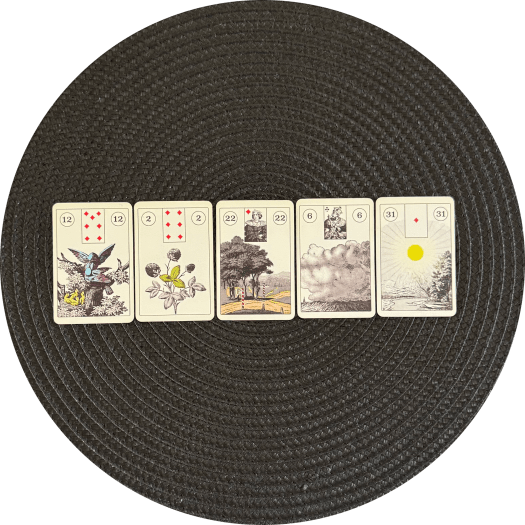
Some cartomantes, seeing a line conclude with the Sun, would be inclined to answer in the affirmative. After all, the Sun is a positive card and, in many contexts, brings matters to a favourable close. In this instance, however, the answer was sadly no. His initial enthusiasm had waned.
Let us examine the line. The Birds, in themselves, often indicate minor irritations, agitation, or a flutter of nervous energy. Yet, when paired with the Cloverleaf, the emphasis shifts towards excitement — a lively spark, but one that is short‑lived. Both the Birds and the Cloverleaf are transient eikōns; their influence is brief, their effects fleeting.
The Roads mark a turning point: the moment when the flurry of excitement subsides and the ardour cools. There is nothing in the line to suggest that the Lord is a poor character or ill‑intentioned. Rather, it shows a divergence of aims. Charlene possessed the desire and drive to pursue a long‑term future; he did not.
The Clouds confirm the cooling of sentiment and the onset of uncertainty. The Sun at the end does not revive the relationship; instead, it clarifies the situation. It reveals the truth plainly: he was not prepared to commit his time and energy, he just didn’t feel it.
In due course, the relationship ended, not through acrimony but because he was simply not ready to settle at that time.
The next article in this series will turn to the Moon card, a natural companion to the Sun. The two are intimately connected, and once their relationship is properly understood, the workings of the Moon in practical readings become far easier to grasp. By considering them together, one gains a clearer sense of how these paired forces operate within the Lenormand system.
§
Images:
Cards: Jeu Lenormand © Cartamundi, WanderWüst © Jorge/Wandering Oracle, Nr. 1941 Mlle Lenormand Wahrsagekarten © Piatnik, Lenormand Fortune-Telling Cards © Zao-Gelli
Featured Image: God Creates the Sun and Planets, Michelangelo, Sistine Chapel via Wiki Common.
References:
Boroveshengra, A., 2013. Cartomantes’ Cabinet: The Petit Lenormand Course.
Boroveshengra, A., 2015. Lenormand Thirty Six cards. 2nd ed. Create Space.
Delclos, M., 2013. Le Livre du Petit Lenormand. 1st ed. Escalquens: Éd. Trajectoire.
Marco, M. and Goffinet, J., 1989. Petit Lenormand. Bruxelles: Servranx.
Matthews, C. (2014) The Complete Lenormand Oracle Handbook: Reading the Language and Symbols of the Cards. Rochester, VT: Destiny Books.
Ptolemaeus, C. and Robbins, F.E. (2001) Tetrabiblos. Cambridge, MA: Harvard Univ. Press.
Silvestre, C., 2003. Le Petit Lenormand. [Montpellier]: Gange éd.
Valens, V. and Riley, M.T. (2022) The Anthology. Denver, CO: Amor Fati Publications.
 Journal of a Cartomante