Tarot de Marseille: The Picturebook of Fate: The Eights Part 1

This article continues my series examining the trumps of the Tarot de Marseille, adapted from my unpublished manuscript, Tarot de Marseille: The Picturebook of Fate. As throughout this series, the emphasis is placed upon the traditional eikōn of the card, its historical context, and the practical significations I have found useful through divinatory practice. The interpretations presented here reflect my own experience of working with the Tarot de Marseille and should be understood as a working method rather than a definitive authority.

The Eights: Justice and the Star

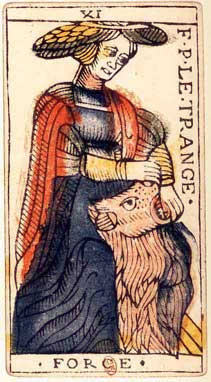
Trump VIII, La Justice, is one of the most familiar and enduring images of the Tarot. Yet does it concern only courts, contracts, and legal disputes? If it pertains to consequences and accountability, how does it differ from the purgatorial cleansing of the House of God? Does Justice simply demand that everyone receive equal treatment, or does it point towards a deeper principle of righteousness and right order?

The traditional eikōn of Justice is instantly recognisable. A richly dressed woman sits enthroned upon a great chair. Upon her head she wears a coronet adorned with a central jewel. In one hand she holds a double-edged sword; in the other, a balance. Together these symbols express the two essential aspects of justice: discernment and judgement. The scales weigh evidence and competing claims; the sword enforces the conclusion reached.

The essence of Justice is verity; its function is to balance. Justice begins with truth. Indeed, no just judgement is possible without first establishing the facts of the matter. The card therefore concerns objectivity, fairness, accountability, and the proper ordering of relationships, responsibilities, and obligations. Whilst the House of God purges what is disordered through correction and suffering, Justice seeks first to determine what is right and then restore equilibrium accordingly.

The imagery itself reinforces this principle. Unlike many later depictions of Justice, the Marseille figure wears no blindfold. She sees clearly. This is an important distinction. Justice is not ignorance, neutrality, or indifference. Before the scales can be balanced, the truth must be known. Her direct gaze reminds us that judgement requires observation, discernment, and understanding. The scales weigh the evidence; the sword enforces the verdict. So, watch how Justice balances the cards either side of her.

In the classical Christian tradition, Justice is one of the cardinal virtues and concerns rendering to each person their due. Importantly, this does not always mean giving everyone the same thing. Justice recognises distinctions of circumstance, responsibility, merit, and need. Traditionally, thinkers distinguished between commutative justice, governing obligations between individuals; distributive justice, concerning the allocation of benefits and burdens within society; and legal or social justice, through which individuals contribute to the common good. In every case, the objective remains the same: the establishment and maintenance of right order.

Justice is also a card of causality. Actions produce consequences. Decisions have effects. Causes generate results. The card reminds us that events do not simply arise from nowhere, but proceed from choices, obligations fulfilled or neglected, and the countless interactions that bind society together. Justice therefore asks not merely what happened? but also why did it happen? and what is now due as a result?

For this reason, Justice reminds us that human beings do not exist in isolation. We are members of families, communities, institutions, and societies. Our actions affect others and create obligations which cannot simply be ignored. The card therefore asks whether we have fulfilled our responsibilities, honoured our commitments, and acted with integrity towards those around us. It challenges us to look beyond personal preference and consider what fairness truly requires.

Justice frequently appears when important decisions must be made. Evidence must be gathered, facts established, competing claims weighed, and a conclusion reached. Hasty action is discouraged. The scales remind us that every matter should be examined carefully before judgement is rendered. Once that judgement is reached, however, the sword demands action. Justice does not deliberate indefinitely.

Naturally, the card governs legal matters of all kinds. Courts, contracts, mortgages, leases, wills, taxation, marriage, divorce, and other binding agreements fall within its domain. Yet its significance extends beyond formal legal processes. Whenever obligations, rights, responsibilities, or accountability are central to a situation, Justice is likely to be present. Ultimately, the card asks a simple but profound question: what is truly due in this situation, and how may balance be restored?

General: Righteousness, accountability, and the fair resolution of matters. Justice reminds us that actions have consequences and that causes inevitably produce effects. The card favours careful consideration, impartial judgement, and the weighing of evidence before decisions are reached. Whilst Justice renders what is due, it should not be confused with severity. True justice is tempered by mercy, for justice without mercy becomes cruelty, whilst mercy without justice ceases to be just.

Love: For those who are single, Justice seldom heralds the beginning of a significant new relationship. More often, it suggests that other responsibilities currently demand time, attention, and resources. Relationships that do begin under this card often prove secondary to other obligations and may struggle if practical realities have not been adequately considered. For established couples, Justice emphasises mutual responsibility, fairness, and commitment. Relationships require effort from both parties, and an imbalance of priorities will inevitably create difficulties. The card may also signify separation, divorce, or the equitable division of shared assets and responsibilities.

Career: Justice is naturally associated with the legal profession, including solicitors, barristers, judges, legal secretaries, and clerks. It also governs professions concerned with rules, regulation, and administration, such as human resources, local government, the civil service, compliance, and auditing. More generally, the card teaches that professional success depends upon diligence, reliability, and integrity. Poor timekeeping, failure to meet obligations, and neglect of responsibilities can result in sanctions or dismissal. Conversely, Justice rewards conscientious work and may indicate contracts, agreements, or offers being formally concluded.

Finance: Justice signifies finances that are properly accounted for and carefully balanced. Taxes, settlements, pensions, insurance claims, maintenance payments, and other financial obligations frequently fall under this card. Whilst it seldom promises sudden gains, it favours prudent management, steady savings, and investments approached with due care. Money is received or paid according to what is owed.

Health: Anatomically, Justice is associated with the lungs, kidneys, and urinary system. More broadly, it emphasises balance and personal responsibility in matters of health. Proper diet, exercise, and self-care are essential, whilst neglect and excess are likely to produce long-term consequences. Long-standing habits, whether beneficial or harmful, tend to yield their natural results under this card. Justice may also indicate colds, respiratory complaints, and chest infections, particularly when supported by cards such as the World.

Essence: Verity.
Function: Balance.
Polarity: Neutral.
Astrological Association: Libra.
Timing: October.

§

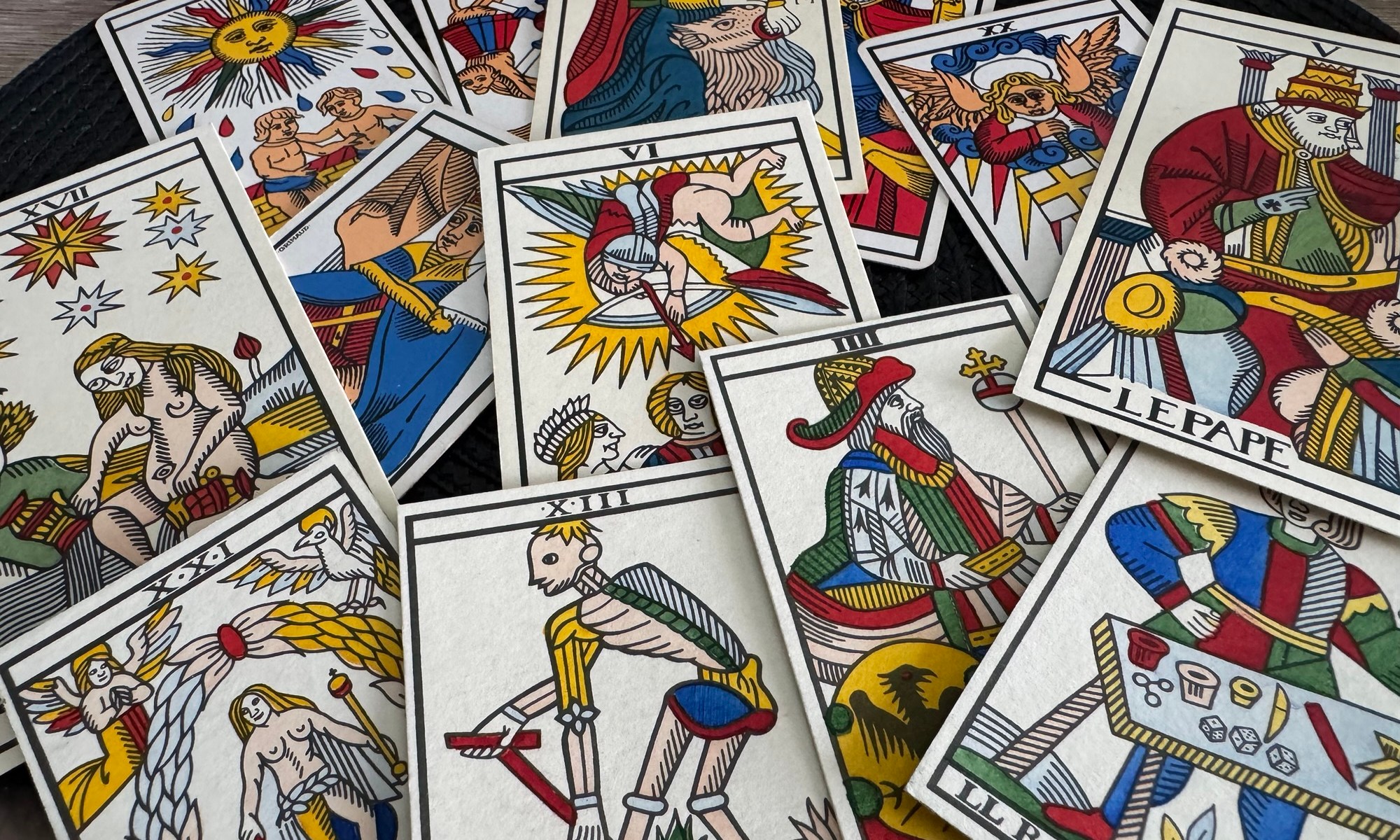
Tarot Cards: Jean Dodal Tarot via Wikipedia Commons. Public Domain.

Featured Image: Ancient Tarot Major Arcana © BP Grimaud/John Waddington Ltd, Leeds & London, Les Tarot de Marseille Jean Noblet, 1650 © Editions «letarot.com» (2001 [hand stencilled trumps]). Les Tarot de Marseille Jean Dodal, 1701 et 1715 © Editions «letarot.com» (2002 [hand stencilled trumps])
Tarot de Marseille: The Picturebook of Fate: The Sevens Part 3

This article continues my series examining the trumps of the Tarot de Marseille, adapted from my unpublished manuscript, Tarot de Marseille: The Picturebook of Fate. As throughout this series, the emphasis is placed upon the traditional eikōn of the card, its historical context, and the practical significations I have found useful through divinatory practice. The interpretations presented here reflect my own experience of working with the Tarot de Marseille and should be understood as a working method rather than a definitive authority.

The Sevens: The Charioteer and the House of God

Let us now review another reading and, in doing so, introduce a new spread.

The Mundane Cross

The Mundane Cross is a draw I utilise with all the card systems I work with, including the Tarot de Marseille, Petit Lenormand, Oracle Belline, Tarot Persan de Madame Indira, Oracle de la Triade, and the Victorian Flower Oracle. I developed the spread from certain conventions found in older cartomancy and eventually gave it its name because its layout resembles the traditional glyph of the Earth.

The spread is particularly well suited to questions focused upon a difficulty, obstacle, or challenge that the seeker either anticipates or is presently experiencing.

The 21 trumps and Madman card are shuffled, cut, and dealt in the following manner. The first card is placed at the centre. The second is placed below it, the third above it, the fourth to its left, and the fifth to its right. The resulting layout appears as follows:

03
04 01 05
02

  • Position 1: The Present.
  • Position 2: The Past.
  • Position 3: The Future.
  • Position 4: Unhelpful Influences or What to Avoid.
  • Position 5: Helpful Influences or How to Act.

These days, we are often encouraged to view the past on the left and the future on the right. Yet many older cartomantic methods employed a vertical axis instead. If one considers archaeology, the symbolism becomes rather intuitive: the past lies beneath us because it forms the foundation upon which the present rests. Likewise, the future appears above because it represents what is yet to be built.

A similar logic informs the horizontal axis. The Latin words for left and right are sinister and dexter respectively. Traditionally, the left-hand side was associated with difficulties, complications, and disruptive influences, whilst the right conveyed assistance, remedy, and favourable action.

The Mundane Cross retains these older associations.

The vertical line (Positions 2-1-3) describes the development of the situation from past through present into future. The horizontal line reveals what hinders and what helps. Even where the future appears difficult, the spread frequently reveals practical steps by which matters may be improved.

Stephen’s Reading

Ana is one of my oldest friends. Her eldest son, Stephen, had found himself in some trouble during his teenage years and made a number of foolish mistakes. He eventually dropped out of university and, now in his early twenties, was struggling to secure permanent employment.

Ana was less concerned with predicting exactly what would happen than with understanding how she could best help him move forwards.

The cards dealt were:

  • Position 1: The House of God
  • Position 2: The Juggler
  • Position 3: The Angel
  • Position 4: Death
  • Position 5: The Hermit

The reading begins with the Juggler in the position of the past. The card suggested wasted potential, poor judgement, and a tendency to treat serious matters too lightly. Stephen possessed ability and opportunity, but lacked clear direction. As a consequence, he made choices that drew the wrong sort of attention and closed doors that might otherwise have remained open.

The Juggler can be energetic and talented, but he is not always prudent. In Stephen’s case, the card seemed to describe someone experimenting with life without fully appreciating the consequences of his actions.

The present was represented by the House of God.

Stephen was now experiencing the consequences of his earlier decisions. Although uncomfortable, the process served a corrective purpose.

In my own work, I frequently associate the House of God with Purgatory. Contrary to popular imagination, Purgatory is not primarily concerned with punishment but with purification. It is the process by which what is disordered, harmful, or incomplete is gradually transformed and made ready for something better.

Seen in this light, the House of God suggested that Stephen was passing through a necessary period of correction. His mistakes were not being ignored, nor were they being permitted to define him forever. Rather, they were being exposed, confronted, and purified through experience.

Importantly, the card did not simply indicate change. It indicated visible change. It would not be enough for Stephen to claim that he had learned from his mistakes. He would need to demonstrate it through his actions and conduct. The House of God tears down what is unsound so that something stronger may eventually be built in its place.

Far from indicating destruction for its own sake, the card suggested that Stephen was in the middle of a transformative process. Much like Purgatory itself, the discomfort served a purpose: preparing him for the renewal promised by the Angel that follows.

The future was represented by the Angel, one of the most hopeful cards in the traditional tarot.

The Angel is a card of resurrection, restoration, and second chances. It suggests that something believed lost may yet be recovered. Opportunities previously squandered may return, provided the lessons of the past have genuinely been learned.

For this reason, I felt there was a strong possibility that Stephen would eventually return to education or training. More broadly, the card suggested a vocation or calling waiting to be rediscovered. Once the errors of the past had been corrected and put behind him, he would be free to move forwards.

The card in the position of what to avoid was Death.

In this context, Death did not represent literal endings but rather the temptation to abandon hope. The card warned against writing himself off, defining himself by his mistakes, or concluding that his future had already been determined by his past.
The danger represented by Death was the belief that it was all over. Stephen needed to avoid becoming trapped by regret, resentment, or self-condemnation. The card warned him not to abandon the struggle.

The card showing how to act was the Hermit.

The Hermit advised prudence, reflection, and careful consideration. Rather than applying for jobs indiscriminately, Stephen needed to think seriously about what he actually wanted to achieve and how best to reach that goal.

The card also suggested discernment in the opportunities he pursued. Simply seeking any employment without purpose or direction would do little to demonstrate maturity. The Hermit encouraged him to develop a plan, reflect upon his past mistakes, and identify a meaningful path forwards.

Patience was essential. The Hermit does not rush. He illuminates the road one step at a time.

Taken together, the spread tells a remarkably coherent story.

The Juggler represents youthful mistakes and wasted opportunities. The House of God shows those mistakes being exposed, corrected, and purified through difficult experience. The Angel reveals the possibility of restoration and a second chance. Death warns against despair, whilst the Hermit advises a deliberate and thoughtful approach to the future.

The vertical axis tells a story not of downfall, but of redemption. The Juggler represents youthful errors and wasted opportunities. The House of God shows those errors being purified and corrected through experience. The Angel then reveals the possibility of restoration and a second chance. Stephen’s difficulties were therefore not the end of his story, but the means by which he was being prepared for a better one.

This example illustrates one of the great strengths of the Mundane Cross. The spread not only reveals the challenge itself but also identifies both the principal danger and the most effective remedy. Even when circumstances appear difficult, it often points towards a constructive path forward.

§

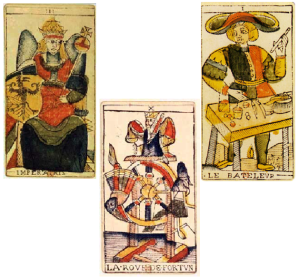
Tarot Cards: Jean Dodal Tarot via Wikipedia Commons. Public Domain.

Featured Image: Ancient Tarot Major Arcana © BP Grimaud/John Waddington Ltd, Leeds & London, Les Tarot de Marseille Jean Noblet, 1650 © Editions «letarot.com» (2001 [hand stencilled trumps]). Les Tarot de Marseille Jean Dodal, 1701 et 1715 © Editions «letarot.com» (2002 [hand stencilled trumps])
Tarot de Marseille: The Picturebook of Fate: The Sevens Part 2

This article continues my series examining the trumps of the Tarot de Marseille, adapted from my unpublished manuscript, Tarot de Marseille: The Picturebook of Fate. As throughout this series, the emphasis is placed upon the traditional eikōn of the card, its historical context, and the practical significations I have found useful through divinatory practice. The interpretations presented here reflect my own experience of working with the Tarot de Marseille and should be understood as a working method rather than a definitive authority.

The Sevens: The Charioteer and the House of God

Trump XVI, Le Maison Dieu, the House of God, or the Tower, is one of the most fascinating and unsettling cards of the Marseille Tarot. Why is it called the House of God? Is it the Tower of Babel brought low through pride? Sodom and Gomorrah destroyed by “brimstone and fire”? Does it depict divine punishment raining down from heaven? Why has the card become associated with hospitals, accidents, and sudden reversals? Or might its strange imagery point towards something altogether different: purification through suffering?

The traditional eikōn of the House of God is both dramatic and enigmatic. We see a stone tower with three windows. From above, flaming tongues descend from a burning sun and strike the structure. Its crown-shaped turret is dislodged and falls away. Two figures appear to tumble from the building, whilst flames or debris rain from the heavens. It is a powerful image of disruption, upheaval, and exposure.

The essence of the House of God is expiation; its function is to purge. The card therefore concerns the removal of what is harmful, disordered, or in need of correction. Whilst this process may be painful, its purpose is ultimately restorative. Something must be cleansed before it can be made whole.

Because of its imagery, many readers associate the card with the Tower of Babel. Certainly, hubris, arrogance, and self-aggrandisement can lead to the sort of dramatic reversals represented here. From this perspective, the House of God serves as a warning that actions have consequences and that no structure built upon faulty foundations can endure indefinitely.

Yet the unusual title invites another interpretation. Several early and later Tarot images depict a fiery tower or gateway from which figures attempt to emerge. Medieval and early modern audiences would have recognised similar imagery from representations of Purgatory. A particularly beautiful example may be found in the Très Riches Heures du Duc de Berry, where souls are shown undergoing purification through cleansing fire.

Folio 113v ©Photo. R.M.N. / R.-G. OjŽda. Wikipedia Commons

This is where the doctrine of Purgatory becomes helpful. Contrary to popular misconception, Purgatory is not a second Hell. Rather, it is a state of purification undergone by those destined for salvation but not yet fully prepared for the Beatific Vision. The image has deep roots within Christian thought. The Book of Wisdom speaks of souls being tested as gold in a furnace1. Saint Paul describes a person being saved “it will be as one who has gone through fire.”2 Saint Augustine, writing in The City of God, likewise discusses a purifying fire distinct from eternal punishment3. In each case, the purpose is correction rather than destruction.

At the time the forerunners of the Marseille Tarot emerged, such teachings were the subject of fierce controversy. Yet the notion that imperfections must be purged before perfection can be attained stretches back to the early Church Fathers. Seen in this light, the House of God is not principally a card of catastrophe, but of purification. It reveals those things which must be corrected before true progress can occur.

For this reason, the House of God possesses an interesting relationship with the Hanged Man. Both cards involve suffering, but for different reasons. The Hanged Man suffers from dishonour, damaged reputation, or circumstances that suspend progress. The House of God, by contrast, brings correction, redress, and reparation. When it appears in a reading, previous mistakes, indiscretions, or poor decisions often come to light. The querent may be required to face uncomfortable truths, make restitution, accept responsibility, or endure the consequences of earlier actions. The purpose, however, is ultimately restorative rather than punitive.

The card can therefore manifest through legal difficulties, disciplinary proceedings, formal warnings, examinations, audits, or any circumstance in which faults are exposed and corrected. The process is seldom pleasant, but it serves a necessary purpose. The fire burns away what should not remain.

On a more literal level, the House of God often signifies accidents, disasters, and damage to property. Fire is a particularly strong association, whether through electrical faults, chimney fires, arson, or other causes. The card can also manifest through storms, hurricanes, flooding, lightning strikes, structural failures, and similar events that suddenly disrupt what had previously appeared secure. In such cases, the card does not necessarily imply wrongdoing or punishment. Rather, it reflects the destructive and purgative force already present within the image itself: something is broken down, swept away, or rendered unusable so that a period of repair and rebuilding must follow. For this reason, the House of God frequently appears when accidents are likely to play an important role in the matter under consideration. These may be minor mishaps or more serious incidents involving vehicles, workplaces, homes, or public spaces. The common thread is disruption. Life is interrupted, plans are derailed, and attention is forcibly directed towards addressing the consequences.

The imagery also lends itself naturally to weather and natural disasters. Lightning strikes, fires, storms, structural damage, and other disruptive events frequently fall within the card’s domain. Here again, we see a force that strips away what had previously appeared secure.

Finally, the House of God is a longstanding significator of hospitals and medical treatment. At first glance, the association may seem unusual. Yet treatment itself is often a form of expiation. Surgery, rehabilitation, physiotherapy, chemotherapy, and other interventions can be painful and disruptive, but their purpose is to remove illness and restore health. In much the same way, the House of God depicts the difficult but necessary process by which something harmful is exposed, confronted, and ultimately purged.

General: A period of atonement, correction, or reckoning as past actions and decisions return to demand attention. The card frequently signifies conflict, disputes, and relationships entering a turbulent phase. It may indicate hospitals, prisons, disciplinary proceedings, or significant disruption to one’s circumstances. Property damage, fires, flooding, storms, and other severe weather events also fall within its sphere.

Love: When the House of God is prominent, disagreements, accusations, and confrontations can place considerable strain upon a relationship. Secrets, lies, and matters long concealed often come to light, forcing both parties to address uncomfortable truths. When supported by cards such as Death or the Hanged Man, separations and periods of estrangement may occur. For those who are single, the card is generally unfavourable for new relationships and often signifies loneliness, isolation, or the need to work through unresolved issues before moving forward.

Career: The House of God is associated with the fire and rescue service, paramedics, emergency medicine, and, to a lesser extent, the police. Other occupations include construction, demolition, disaster recovery, and humanitarian or aid work. More generally, the card often heralds instability in professional life. Disciplinary action, redundancy, restructuring, or project failure may disrupt established plans. Progress is delayed whilst necessary corrections are made.

Finance: Financial hardship is a common manifestation of the House of God. Penalties, fines, sanctions, or unexpected expenses may place considerable strain upon resources. Property and vehicle repairs can prove particularly burdensome. In more severe cases, loss of income, mounting debt, eviction, repossession, or foreclosure may become pressing concerns. The card reflects a period in which finances require urgent attention and difficult sacrifices.

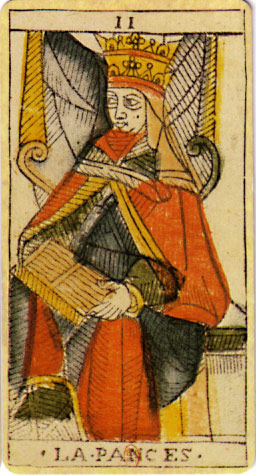
Health: The House of God is one of the principal significators of hospitals and medical treatment. With the Popess, it may indicate investigations, tests, and diagnostic procedures; with the Hanged Man, admission or an extended stay. The card is also associated with accidents, injuries, physical trauma, and pain more generally. Whilst often difficult, the treatment or intervention shown by the card usually serves a corrective purpose.

Essence: Expiation.
Function: Purge.
Polarity: Negative.
Astrological Association: Mars.
Timing: Tuesday. Within two years. It may also indicate All Souls’ Day.

§

Tarot Cards: Jean Dodal Tarot via Wikipedia Commons. Public Domain.

Featured Image: Ancient Tarot Major Arcana © BP Grimaud/John Waddington Ltd, Leeds & London, Les Tarot de Marseille Jean Noblet, 1650 © Editions «letarot.com» (2001 [hand stencilled trumps]). Les Tarot de Marseille Jean Dodal, 1701 et 1715 © Editions «letarot.com» (2002 [hand stencilled trumps])

  1. But the souls of the virtuous are in the hands of God, no torment shall ever touch them. In the eyes of the unwise, they did appear to die, their going looked like a disaster, their leaving us, like annihilation; but they are in peace. If they experienced punishment as men see it, their hope was rich with immortality; slight was their affliction, great will their blessings be. God has put them to the test and proved them worthy to be with him; he has tested them like gold in a furnace and accept them as a holocaust. Wisdom 3: 1 – 6 ↩︎
  2. That day will begin with fire, and the fire will test the quality of each man’s work. If his structure stands up to it, he will get his wages; if it is burnt down, he will be the loser, and though he is saved himself, it will be as one who has gone through fire. 1 Corinthians 3: 14 – 15 ↩︎
  3. But temporary punishments are suffered by some in this life only, by others after death, by others both now and then; but all of them before that last and strictest judgment. But of those who suffer temporary punishments after death, all are not doomed to those everlasting pains which are to follow that judgment; for to some, as we have already said, what is not remitted in this world is remitted in the next, that is, they are not punished with the eternal punishment of the world to come. City of God. Vol II. Book XXI. Chapter 13. St Augustine. ↩︎