The following article has been revised and expanded, incorporating additional material and restructured to provide a more coherent exploration of the card.
Now the serpent was more subtle than any other wild creature that the Lord God had made. He said to the woman, “Did God say, ‘You shall not eat of any tree of the garden’?” And the woman said to the serpent, “We may eat of the fruit of the trees of the garden; but God said, ‘You shall not eat of the fruit of the tree which is in the midst of the garden, neither shall you touch it, lest you die.’” But the serpent said to the woman, “You will not die. For God knows that when you eat of it your eyes will be opened, and you will be like God, knowing good and evil.”
Genesis 3:1 – 5 (RSV CE)
You serpents, you brood of vipers, how are you to escape being sentenced to hell?
Matthew 23: 33 (RSV CE)
And the great dragon was thrown down, that ancient serpent, who is called the Devil and Satan, the deceiver of the whole world—he was thrown down to the earth, and his angels were thrown down with him
Revelation 12:9 (RSV CE)
When he had carefully locked the door, he lifted up the cover, and saw a white snake lying on the dish. But when he saw it he could not deny himself the pleasure of tasting it, so he cut off a little bit and put it into his mouth. No sooner had it touched his tongue than he heard a strange whispering of little voices outside his window. He went and listened, and then noticed that it was the sparrows who were chattering together, and telling one another of all kinds of things which they had seen in the fields and woods. Eating the snake had given him power of understanding the language of animals.
The White Snake, the Brothers’ Grimm
Snake, is a sign of misfortunes, which is gauged by the distance of the card to that of person, but always brings hypocrisy, betrayal and loss.
Original Instructions
Card no. 7, the Queen of Clubs or the Serpent card, has a notorious reputation. Is this picture the “big bad” of the deck? Perhaps she is a feminine woman, mother or grandmother? Or could this card represent tutelary forces and mother wit?
The Essence and Function of the Serpent
The traditional eikōn of the Serpent varies little across the historical patterns. We typically see a snake lurking either within the branches of a broken or bare tree or hidden amongst grass and vegetation. The former appears in Das Spiel der Hoffnung, the Dondorf pattern, Brepols & Dierckx, C. L. Wüst, and the so-called Leipzig Lenormand. The Blaue and Rote Eule patterns generally favour the latter motif.
Regardless of the artistic variation, the message remains unchanged.
Something dangerous is concealed nearby.
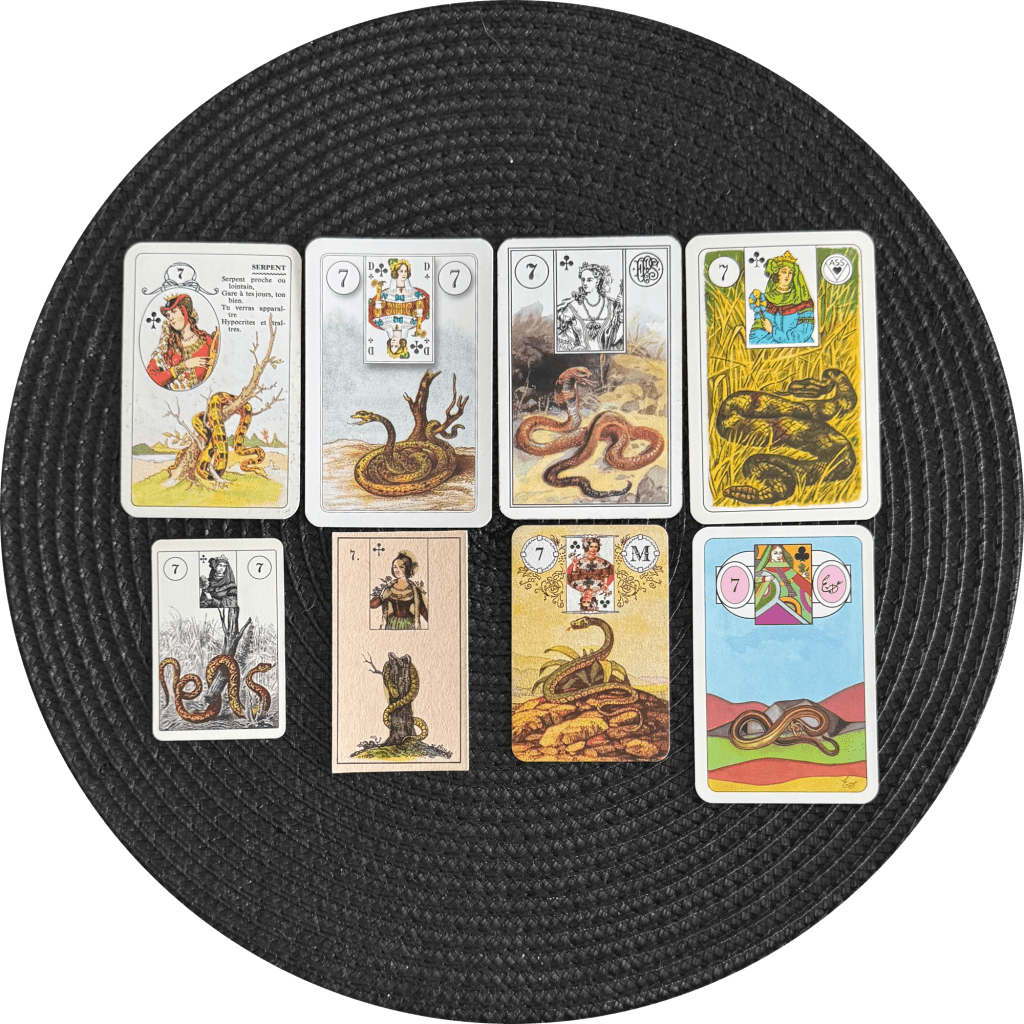
The essence of the Serpent is toxicity and its function is to induce.
The Serpent is a warning card which marks an area of life requiring extreme caution. Unlike some difficult cards, the Serpent rarely attacks openly. Instead, she tempts, entices, encourages, manipulates, and persuades. Only once the victim has been drawn close enough does the venom take effect.
To understand the Serpent fully, we must examine both the creature itself and the folklore that surrounds it.
It is not uncommon to encounter words such as constriction, entanglement, or strangulation in modern descriptions of the card. These interpretations often assume a large constrictor such as a boa or python.
Such an interpretation is difficult to reconcile with the geographical origins of the deck.
Whilst several species of snake existed throughout eighteenth and nineteenth-century Europe, large constrictors did not. The cards emerged from a culture that would have been far more familiar with vipers than boas.
The most likely inspiration is therefore a venomous snake such as the Vipera aspis, the European asp viper and its relatives, which were well known throughout regions connected to the deck’s development.

Unlike a constrictor, the viper strikes quickly. Its venom serves both defensive and predatory purposes. Small in size but potent in effect, it bites and allows the venom to do the work.
This distinction is important.
The Serpent’s danger does not arise from strength.
It arises from toxicity.
Snake folklore is ancient, rich, and often contradictory. Throughout Europe and the Near East, serpents were simultaneously feared and revered. They could appear as symbols of wisdom, healing, hidden knowledge, fertility, renewal, death, temptation, and the underworld.

Agricultural communities encountered snakes regularly. They observed that some were venomous and potentially deadly. Their habit of disappearing beneath the earth and re-emerging later connected them symbolically with the underworld, the dead, and hidden forces operating beneath the surface of ordinary life.
The snake’s unblinking gaze also gave rise to associations with wisdom, perception, and unusual knowledge. These ideas survive in tales such as the Grimm Brothers’ The White Snake, where the serpent grants a form of clairaudient understanding.
Yet there is another side to the serpent.
The snake keeps its belly close to the earth.
It does not hesitate to act indirectly, exploit weaknesses, or employ underhanded methods. Wisdom can become cunning. Knowledge can become manipulation.
Of all the serpent traditions likely to have influenced the Petit Lenormand, none is more significant than the serpent in the Garden of Eden.
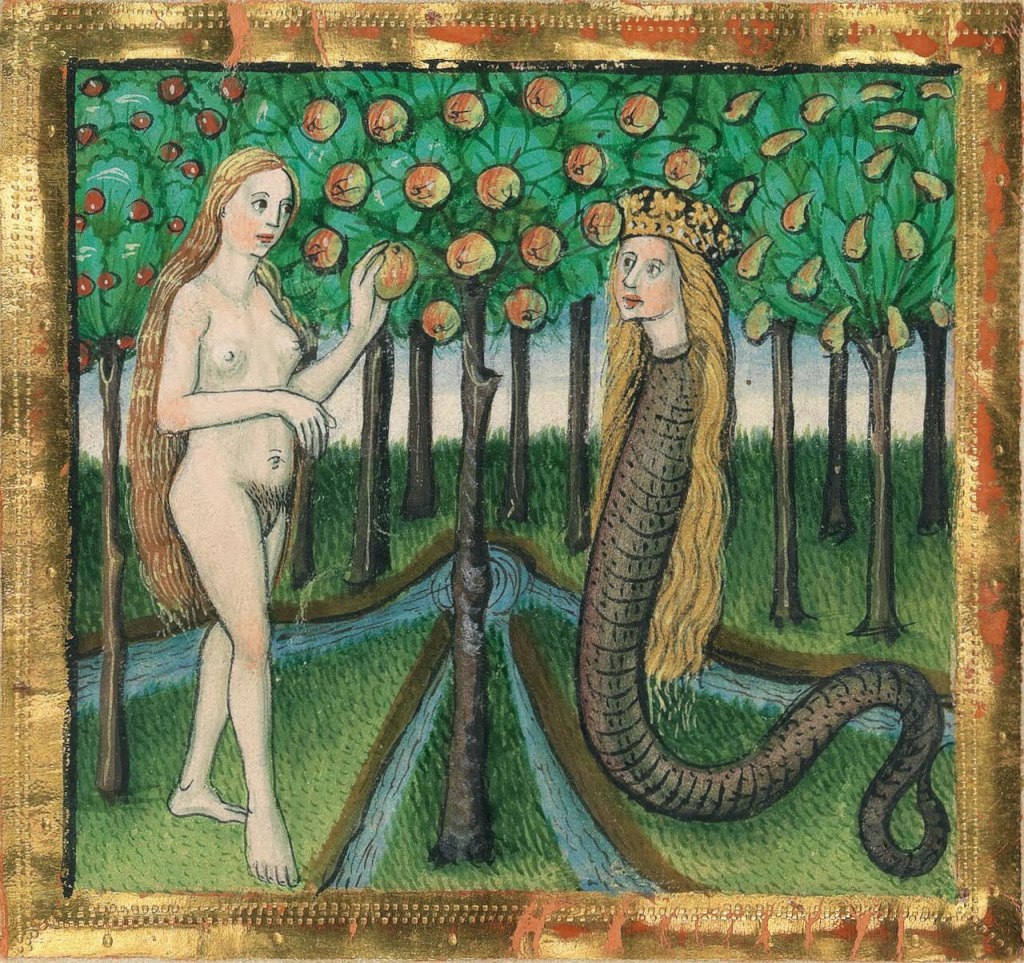
Christian tradition transformed the serpent into the archetype of temptation, betrayal, and moral corruption.
Importantly, the serpent does not steal the forbidden fruit. Instead, she persuades Eve to take it herself and Adam to follow.
The first temptation was not theft.
It was inducement.
Through suggestion, persuasion, and temptation, the serpent encourages another person to participate willingly in their own downfall.
Within both the Latin and Eastern tradition, the serpent of Eden came to be understood as Satan acting through the creature. The temptation of Eve was therefore not merely an act of deception but an act of rebellion. Having fallen through pride and turned against our Creator, the Adversary sought to entice mankind into the same disobedience. The serpent’s actions were thus interpreted as both temptation and betrayal: a betrayal of humanity through deceit and a continuation of the rebellion against God. This act originated Ancestral or Original Sin which is often likened to an illness or wound that infects.
This aspect of the tradition is particularly important for understanding the Serpent card. Unlike the Fox, who usually seeks advantage for himself, the Serpent often acts from spite, jealousy, resentment, or a desire to corrupt what is good. Her objective is not simply to obtain something.
It is to draw others into difficulty, temptation, or downfall alongside her.
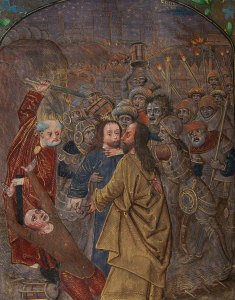
The same theme appears repeatedly throughout Christian tradition and finds a powerful echo in the betrayal of Christ by Judas through a kiss. In both instances, the injury comes not from a distant enemy but from one who has gained proximity, trust, and access. This idea of betrayal through closeness remains one of the defining characteristics of the Serpent card.
The venom comes afterwards.
First, the Serpent must convince her victim to draw near.
Perhaps the most important distinction between the Serpent and the Fox lies in motive.
The Fox generally seeks advantage for himself. His deception is practical and self-serving. He wants the cheese, the chicken, the contract, the promotion, or the opportunity.
The Serpent operates differently.
Her actions are frequently motivated by jealousy, spite, resentment, revenge, temptation, or a desire to corrupt what is good. There is often something deeply personal about her behaviour.
The Fox wants what you have.
The Serpent wants to poison it.
Nowhere is this lesson illustrated more clearly than in the old tale of The Farmer and the Viper.
One winter, a farmer discovered a frozen viper lying motionless in his field. Recognising the creature’s dangerous nature, he nevertheless acted compassionately. He placed the snake inside his coat and carried it close to his chest.
Gradually, the serpent recovered its strength.
Once sufficiently revived, it bit the farmer and delivered its venom.
As he lay dying, the farmer warned those around him not to repeat his mistake.
The story is often cited as the origin of the expression “nursing a snake at one’s bosom.”
Its lesson is profound. The farmer’s error was not kindness. The farmer’s error was proximity. He allowed the viper close enough to strike. He had failed to exercise reason.
This relationship between proximity and injury sits at the very heart of the Serpent card.
A stranger rarely betrays us.
To inflict real harm, the Serpent usually requires access. Friends, relatives, lovers, colleagues, trusted advisers, and other familiar figures appear frequently under this card because they possess something a stranger does not: opportunity.
The Serpent therefore often manifests through people who have gained sufficient closeness to influence, manipulate, betray, tempt, or undermine.
This explains why so many traditional meanings associated with the card involve treachery, jealousy, affairs, spitefulness, and personal betrayal.
The Serpent must first become part of your world.
Only then can she strike.
Coda
The Serpent is a warning card.
Where she falls marks an area of life that can become toxic. Through temptation, inducement, jealousy, resentment, manipulation, or betrayal, she introduces complications that rarely resolve easily.
Her venom creates difficulties, personal losses, toxic situations, and painful lessons.
Unlike the Fox, whose deception is often motivated by self-interest, the Serpent’s actions are frequently personal.
To be injured by the Serpent, she must be close enough to bite. Remember that.
The card’s greatest danger is not the venom itself.
It is failing to recognise the snake before it strikes.
Person and Description
Person
As the Serpent is also the Queen of Clubs, it can occasionally represent a woman.
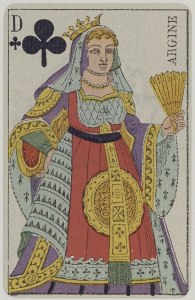
This function most commonly emerges when the card appears alongside social cards such as the House, Hound, or Park, or when the Queen of Clubs has been selected as a significator prior to the reading.
When functioning as a court card, the Serpent loses much of its inherently toxic character. Rather than automatically representing betrayal, jealousy, or treachery, it becomes a person whose nature must be determined from the surrounding cards.
The neighbouring cards therefore reveal which face of the Queen is being presented.
In the folklore and traditional literature of the playing cards, the Queen of Clubs has been variously associated with Argia and Marie d’Anjou. Such associations are primarily of historical interest today but help illustrate the Queen’s long-standing connection with intelligence, influence, and female authority.
If the Queen of Clubs appears alongside the King of Clubs (Clouds) or Knave of Clubs (Birch Rod), the cards often identify a meaningful social relationship.
- Queen + King of Clubs may indicate a couple.
- Queen + Knave of Clubs often points towards a mother and child.
- All three together frequently identify a family unit.
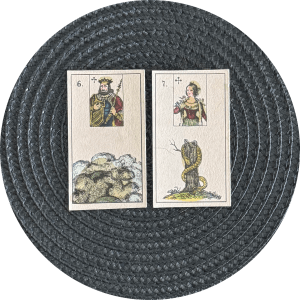
Some cartomantes and authors, including the French writer Marie Delclos, utilise the Queen of Clubs as a significator for a married brunette. Personally, I prefer to use the Child, Lord, and Lady cards as primary significators.
Likewise, several respected readers, including Moony and Stella Waldvogel, employ the Queen of Clubs as a significator for mothers. Explanations vary. Some derive the association from the Queen herself, whilst others draw symbolic parallels between serpents and the umbilical cord. Whilst I acknowledge the association and have seen it employed successfully by others, it is not one I personally use.
In my own practice, I frequently utilise the Queen of Clubs as the female partner card for lesbian and bisexual women. Likewise, it can effectively signify a female former partner, female rival, or stepmother where additional differentiation is required.
Physical Description
The Serpent generally describes a person with dark colouring.
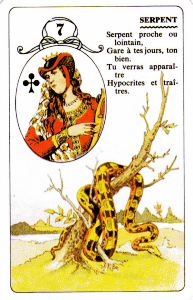
Brown and black hair are particularly common, often worn longer than average. Green and hazel eyes occur frequently, although surrounding cards should always be taken into account and will modify the description.
The face is often long, oval, or slightly narrow in shape.
Traditional sources frequently describe the Queen as attractive, elegant, and distinctly feminine in appearance. There is often a graceful quality about the individual, regardless of whether they are male or female.
Colours associated with the Serpent include green, brown, and red, and these frequently appear in the person’s clothing, jewellery, or accessories.
A number of practical observations are also worth mentioning.
Over time, I have repeatedly observed the Serpent appearing in connection with spectacles, contact lenses, or other forms of corrective eyewear. Likewise, the card occasionally describes individuals with a slight lisp, whispery speech pattern, breathy voice, or manner of speaking that feels soft yet deliberate.
Temperament
The Serpent corresponds most closely to a melancholic temperament with sanguine undertones.
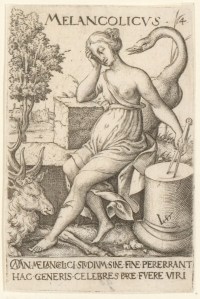
The melancholic element contributes depth, sensitivity, intelligence, caution, and a tendency to remember both injuries and slights for a very long time.
The sanguine influence introduces charm, sociability, persuasion, and an ability to engage others with apparent warmth and friendliness.
This combination creates a fascinating imbalance.
The Serpent is rarely as emotionally detached as the Fox. She often feels things deeply. The difficulty is that hurt, jealousy, resentment, and disappointment can become internalised and eventually expressed indirectly.
At her best, the Serpent is perceptive, insightful, persuasive, intelligent, and capable of remarkable wisdom. She sees beneath the surface of situations, identifies hidden motives, and possesses a keen understanding of human nature.

At her worst, these same gifts become manipulation, envy, intrigue, spite, resentment, and toxic behaviour.
From an astrological perspective, one might alternatively describe the card as possessing a blend of Saturnian and Mercurial qualities. Saturn contributes patience, memory, caution, and bitterness, whilst Mercury supplies cleverness, adaptability, strategy, and persuasion.
This produces an individual who seldom acts impulsively.
Like the serpent itself, she waits.
She observes.
She studies.
And when she finally acts, her actions are usually deliberate rather than spontaneous.
The card often indicates someone who is bilingual or multilingual.
A Note On Order
Particular care should be exercised whenever the Serpent combines with a person card.
When the Serpent precedes a person card, she transfers her venom to that individual. The person becomes a source of toxicity, betrayal, temptation, manipulation, or complication within the matter under consideration. Thus, Serpent – Hound frequently describes a backstabbing friend, disloyal colleague, or trusted individual who ultimately proves unreliable. The exact form the danger takes will depend upon the surrounding cards, but the warning should be taken seriously. In such combinations, the Serpent’s more harmful qualities are brought to the forefront.
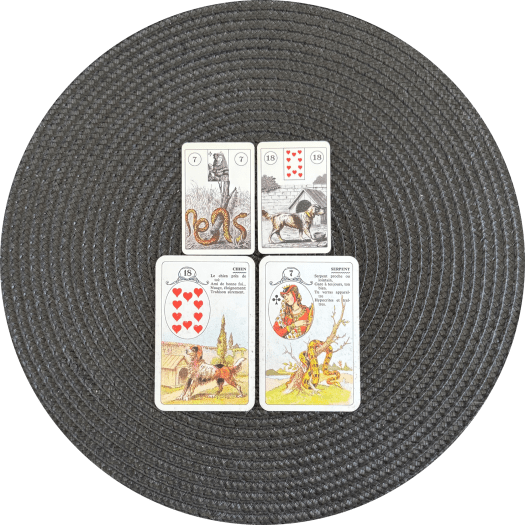
The reverse combination often behaves quite differently. When the Serpent follows a person card, the individual tends to receive the Serpent’s more constructive attributes rather than her venomous ones. So Hound – Serpent would be someone who is intelligent, perceptive, cautious, and psychologically complex. They rarely act impulsively and generally prefer to observe, analyse, and understand a situation before committing themselves. Whilst they may not always be easy to understand, or particularly likeable, they are not necessarily dangerous or malicious.
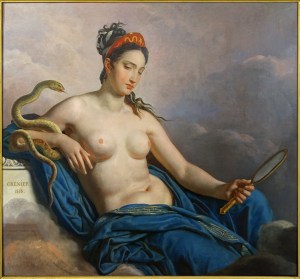
One quality frequently overlooked in modern interpretations is prudence. Throughout European art and symbolism, Prudence is often depicted holding or accompanied by a serpent. The association derives in part from Christ’s instruction to be “as wise as serpents and innocent as doves.” In this context, the snake symbolises foresight, caution, discernment, and the ability to recognise danger before it manifests. These qualities often become more visible when the Serpent follows a person card.
Thus, a person accompanied by the Serpent on their right may be shrewd, thoughtful, discerning, and difficult to deceive. They understand that appearances can be misleading and that caution is sometimes the better part of wisdom. The challenge for the cartomante is determining whether one is dealing with the Serpent’s wisdom or her venom. As so often in the Petit Lenormand, the surrounding cards provide the answer.
Special Features
The Serpent in the Grand Tableau
To understand the Serpent in the Grand Tableau, we must first understand proximity.
Often dismissed as archaic, the traditional distinction between near and far is based upon a simple and logical principle: cards engage most strongly with those they are closest to. The nearer a card falls to the significator, the more directly its influence is experienced. The further away it falls, the less immediate its effect becomes.
Few cards demonstrate this principle more clearly than the Serpent.
The Serpent cannot bite unless she is close enough to strike.
The original instructions state that the Serpent is:
“…a sign of misfortunes, which is gauged by the distance of the card to that of person, but always brings hypocrisy, betrayal and loss.”
At first glance, this may sound rather dramatic. Yet when considered alongside the card’s essence and function, the instruction becomes remarkably sensible.
The Serpent’s toxicity only matters if it can reach its target.
When the Serpent falls close to the significator, it acts as a serious warning. The card identifies an area of life where jealousy, manipulation, spite, betrayal, temptation, or other toxic influences may become active.
The “misfortune” mentioned in the traditional instructions should therefore not be understood as random bad luck.
Rather, it is the consequence of toxicity entering a particular area of life.
Particular attention should be given whenever the Serpent falls near one of the cartes maîtresses. These identify the areas most vulnerable to a nasty bite.
For example:
- Serpent + Heart may indicate a toxic emotional attachment, temptation, jealousy, or betrayal.
- Serpent + House may reveal domestic tensions, toxic building materials or unhealthy influences within the home.
- Serpent + Moon frequently points towards professional intrigue, envy, manipulation, slander or toxic workplace dynamics.
- Serpent + Fishes can indicate problematic financial arrangements, exploitation, or financial temptation.
The Serpent’s poison may be delivered in many different forms:
- Betrayal.
- Exploitation.
- Manipulation.
- Temptation.
- Hypocrisy.
- Two-faced behaviour.
Camouflaged and difficult to detect, snakes are skilled at concealing themselves. Consequently, when the Serpent strikes, people are often as shocked by who inflicted the injury as by the injury itself.
This is why the traditional meanings of hypocrisy and betrayal are so important.
The deepest wound is often not the act itself, but the realisation that the danger came from a person or situation that should have been safe.
The Serpent frequently teaches us that trust has been misplaced.
When the Serpent stands at a distance, however, the situation changes considerably.
Like the Fox, distance does not remove the Serpent’s negative qualities. The card remains toxic. The threat still exists.
What changes is access.
The danger has less opportunity to reach the querent directly.
A distant Serpent often indicates that the threat can be recognised, circumvented, worked around, or neutralised before serious harm occurs. For this reason, a distant Serpent frequently becomes an encouraging indicator that difficulties can be overcome.
The snake still exists. The difference is that she is no longer close enough to strike effectively.
This does not mean the seeker can simply ignore the Serpent.
Even at a distance, caution remains necessary.
The card continues to identify an area of potential toxicity, temptation, betrayal, or complication. The difference is that the consequences are generally less immediate and more manageable than when the Serpent stands close to the significator.
Interestingly, I have often observed a distant Serpent manifesting through delays, detours, and unnecessarily complicated situations. Rather than suffering a direct bite, the seeker finds themselves forced to navigate around an obstacle, deal with hidden complications, or pursue a more circuitous route towards their goal.
This is entirely consistent with the nature of the snake itself.
One does not walk directly through a patch of ground known to contain vipers. One proceeds carefully, alters one’s route, or waits for the danger to pass.
In this respect, a distant Serpent frequently creates inconvenience rather than catastrophe. Progress remains possible, but rarely by the most direct path.
As with the Clouds and Fox, the Serpent cannot affect every card in the Tableau simultaneously. Her direct influence is largely restricted to those cards with which she comes into contact.
Most importantly, her venom is directed towards cards she precedes.
In other words, when the Serpent functions as Card A in an A + B (+ C) formation.
I personally prefer Petit Lenormand decks that depict a right-facing Serpent. In such patterns, the snake’s head serves as a useful visual aide-mémoire.
Look where she is facing.
That is often where the danger lies.
A card overcome by the Serpent frequently represents something the querent strongly desires. This is one of the reasons the card can be so difficult to navigate.
Unlike the Coffin, which simply announces an ending, or the Scythe, which cuts abruptly, the Serpent frequently invites participation.
The temptation comes first.
The venom follows afterwards.
What initially appears attractive often proves costly later.
If the Serpent is ignored, the affected area may become damaging, complicated, or difficult to repair. This is especially true when the card involved is a carte maîtresse.
One example I have encountered repeatedly is Serpent + Moon near the significator.
Time and again, a seemingly wonderful job offer, promotion, project, or professional opportunity appears. Everything looks ideal.
Unfortunately, it usually is too good to be true.
The seeker may inherit a poisoned chalice, find themselves working under toxic management, or become entangled in workplace politics and jealousy. To make matters worse, leaving quickly may create professional complications of its own.
The opportunity appears attractive.
The venom is hidden.
Similarly, Serpent + Lilies can indicate an individual who abuses a position of trust, authority, expertise, or duty of care.
Serpent + Birch Rod often illustrates inducement perfectly. Here the seeker may be groomed, encouraged, pressured, persuaded, or coaxed into behaviour they would not ordinarily consider.
The difficulty with the Serpent is that she is often hard to resist.
The temptation usually contains a grain of truth or genuine attraction.
Nevertheless, the topic affected by the Serpent is often best left alone for a time. The detour may feel frustrating and may even delay progress. Yet such delays frequently prove protective in hindsight.
Ultimately, the severity of the Serpent is judged through proximity.
The closer she stands to the significator, the more immediate and personal the danger becomes.
Yet the Serpent’s greatest threat is rarely the venom itself.
It is that she seldom appears frightening at first.
She tempts before she harms.
She induces before she strikes.
And she often reveals her true nature only after the victim has drawn close enough to be bitten.
Fox and the Serpent
Because both the Fox and Serpent signify deception, dishonesty, and manipulation, they are frequently confused with one another. In practice, however, they describe very different types of danger.
The Fox is fundamentally impersonal.
He deceives because it benefits him. He seeks a tangible advantage and will happily employ cunning, manipulation, half-truths, or misdirection if it helps him obtain what he wants. His actions are pragmatic and self-serving:
- The Fox wants the job.
- The contract.
- The promotion.
- The customer.
- The opportunity.
- The money.
- The possessions.
He is a rival competing for the same resources as the querent.
The Serpent is different.
The Serpent is personal:
- We trust her.
- We welcome her.
- We often like her.
Yet she is the one who ultimately betrays us.
For this reason, the Serpent is far more closely associated with jealousy, spite, resentment, treachery, and emotional injury. Whilst the Fox may simply view us as an obstacle standing in the way of his objective, the Serpent frequently wants us to suffer.
The Fox takes what belongs to us.
The Serpent poisons it.
The Fox is a competitor.
The Serpent is a traitor.
Fox – Serpent
Particular care should be exercised whenever these two cards appear together.
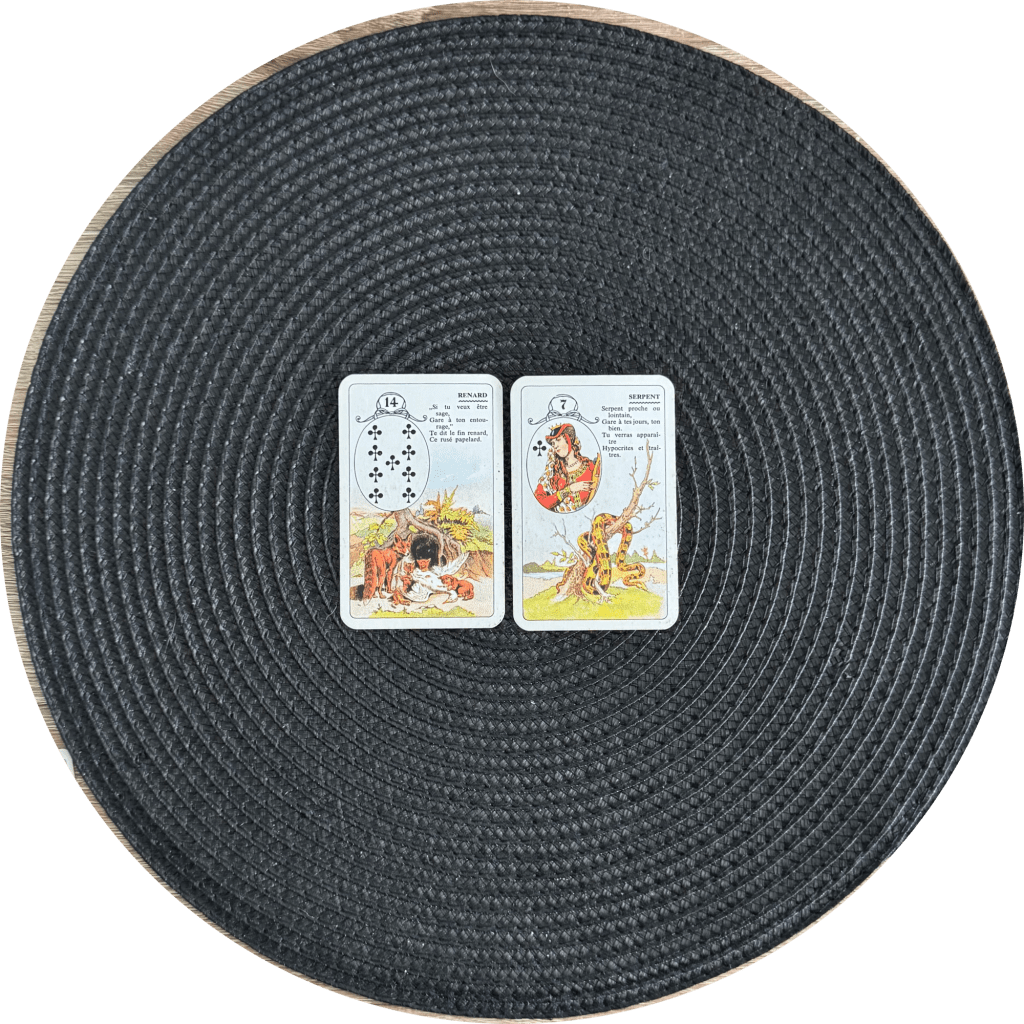
When the Fox precedes the Serpent, the Serpent becomes red-flagged.
Traditionally, this combination was often read as a treacherous woman or a deceitful female rival. Historically this interpretation arose through the Serpent’s association with the Queen of Clubs.
In recent years, however, I have repeatedly observed this combination referring to men as well as women.
For this reason, unless the Queen of Clubs is functioning as a predetermined significator, I strongly recommend keeping an open mind regarding gender and allowing the surrounding cards to clarify the identity of the individual involved.
The important point is not sex but character.
The person is dishonest, manipulative, and potentially dangerous.
Serpent – Fox
The reverse combination often behaves rather differently.
Here the Serpent may be understood as turning her venom towards the Fox.
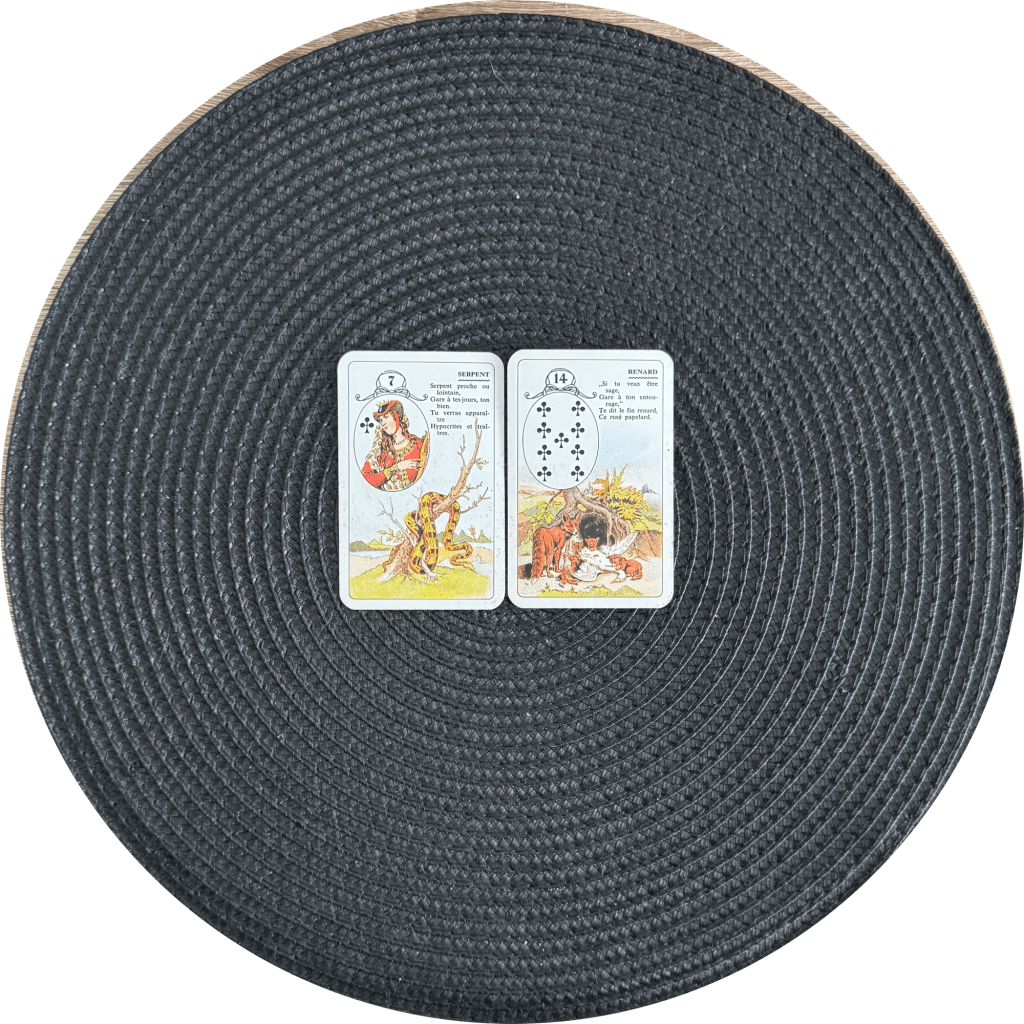
Rather than creating a major red flag, the combination frequently suggests that the danger has been contained, neutralised, or significantly reduced.
One may still feel uncomfortable around the person described by these cards. They may be unpleasant, untrustworthy, manipulative, or difficult to like. Yet they often prove far less dangerous than the preceding combination.
The poison remains present.
But it has largely lost its target.
Order
In the Red and Blue Owl pattern, both the Serpent and the Fox are shown facing left. My second teacher favoured this pattern. To remember the above rule she would say, of the Fox – Serpent combination, that the snake bites at the fox’s heel. She remembered Serpent – Fox as the Fox had sniffed out a snake.
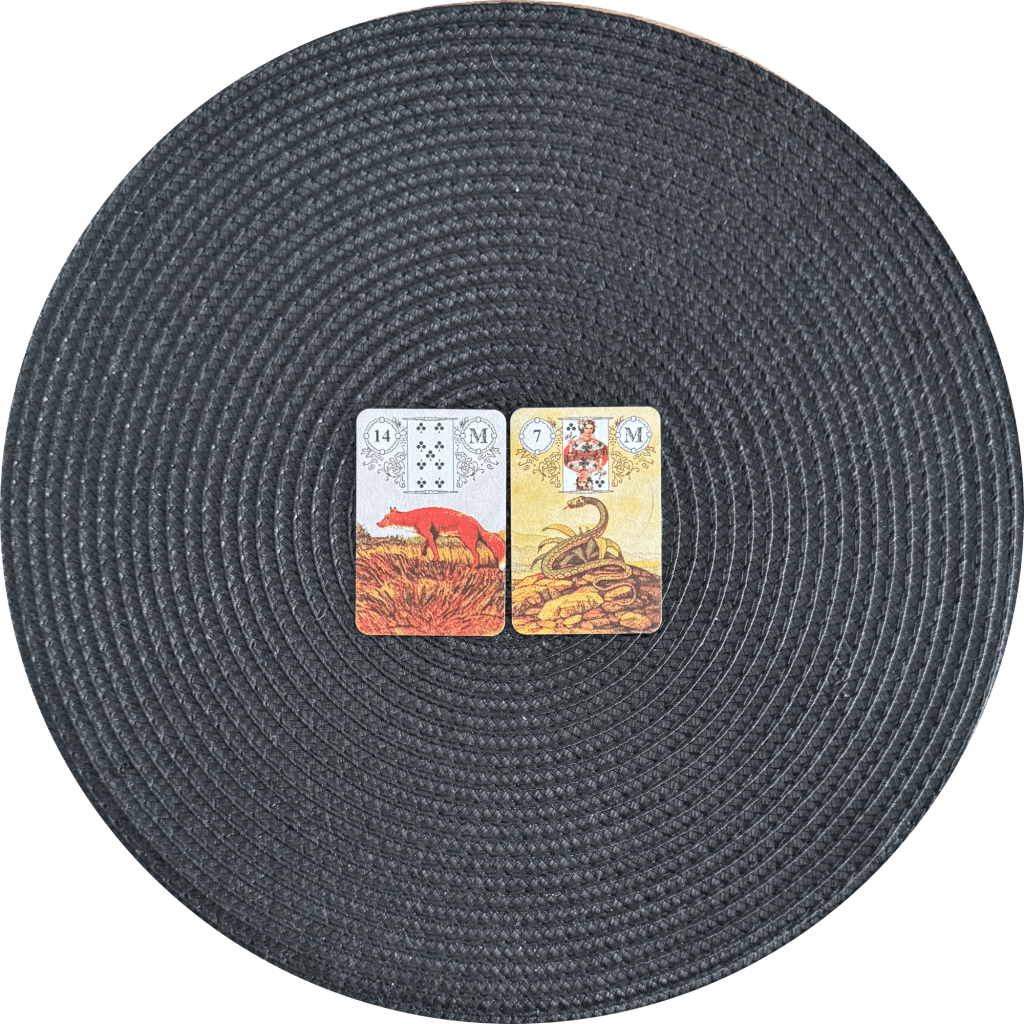
However, it is important to note that the Fox – Serpent and Serpent- Fox rule is rule based on order, rather than the iconography. These little sayings were just ways she remembered the folklore.
Vertical and Diagonal Combinations
Whenever the Fox and Serpent appear together vertically or diagonally, I generally proceed with caution.
Most often, the combination indicates competing agendas, rivalries, hidden tensions, or multiple individuals pursuing conflicting interests.
In practical terms, I frequently see this formation when two rivals are present within the same matter.
In a professional question, it may indicate competing candidates or office politics.
In financial matters, it may suggest competing interests operating behind the scenes.
In relationship readings, it often points towards rival romantic interests, jealousy, or interpersonal intrigue.
Whatever the subject, the appearance of both cards together should encourage the cartomante to examine the situation carefully.
One rival is difficult enough.
Two rivals rarely simplify matters.
Two Warnings, Not One
It is important to remember that both the Fox and the Serpent are fundamentally warning cards.
Since the late 1990s, much of the Petit Lenormand literature has tended to minimise the threat posed by one card whilst emphasising the danger of the other. This is often a consequence of interpreting the Fox primarily as a work card or focusing heavily upon the Serpent’s role as the Queen of Clubs and a female significator.
In practice, neither approach fully captures the nature of the cards.
Both belong to the suit of Clubs, which contains some of the most challenging and difficult cards within the Petit Lenormand. Both possess inherent dangers that can undermine the seeker’s interests if not recognised and addressed appropriately.
This does not make either card evil.
Rather, they are considered negative because they fail to facilitate the seeker’s objectives.
The Fox introduces competition, deception, exploitation, and self-interest.
The Serpent introduces toxicity, temptation, betrayal, and treachery.
The trend these days is to dismiss polarity and reject concepts of positive and negative cards. However, if properly understood in terms of facilitation, rather than simply good or bad, polarity is not just useful but grounded in common sense.
Both therefore deserve careful attention whenever they appear.
Particular caution should be exercised when either card falls close to the significator, where their influence is felt most directly.
Likewise, both become considerably more problematic when associated with the Clouds, whose darkness can conceal motives, obscure dangers, and prevent the seeker from recognising the threat until it has already begun to take effect.
The wise cartomante therefore treats both cards with respect.
The Fox may be after your chicken.
The Serpent may be waiting in the grass.
In either case, carelessness is rarely rewarded.
The Serpent and Adultery
Few meanings have become as firmly attached to the Serpent as adultery.
The association is understandable. The Serpent is a card of temptation, secrecy, betrayal, and toxic entanglements. In matters of the heart, these themes naturally raise questions concerning faithfulness and trust.
Yet great care should be exercised before leaping to conclusions.
The Serpent does not automatically indicate infidelity.
More often than not, the Serpent appearing near the Heart or Ring reveals complicated emotions, unhealthy relationship dynamics, jealousy, temptation, resentment, manipulation, or interpersonal toxicity. Sometimes these difficulties develop into adultery. Often they do not.
The distinction is important.
People are capable of experiencing attraction, temptation, emotional conflict, or dissatisfaction without ever acting upon those feelings.
For this reason, I strongly recommend seeking additional confirmation before making any pronouncement regarding an affair.
Particular attention should be paid to cards such as:
- Anchor, which frequently raises questions of loyalty, stability, and faithfulness.
- Lilies, which can reveal honour, mutual respect, and values, or their absence.
- Fox, which introduces deception, concealment, and dishonesty.
- Roads, which may indicate division, competing romantic interests, or a relationship reaching a crossroads.
- Mice, which often shows the gradual erosion of trust.
- Coffin, which can indicate the death of intimacy or the ending of a relationship.
Most importantly, there should generally be a meaningful connection between the Serpent and the partner’s significator. Chains, intersections, proximity, knighting, and orientation all become important. Houses do not provide such a connection. If the partner-card is in the House of the Serpent, or vice versa, it would not support such an interpretation.
The card must have an opportunity to strike.
Another common mistake is assuming that the Serpent can only represent a mistress.
This interpretation confuses the Queen of Clubs with the Serpent’s essential symbolism.
The association between the Serpent and temptation derives from the eikōn and its folklore, particularly the traditions surrounding Eden. It does not arise simply because the card may function as a female court card.
Certainly, there are occasions when the Queen of Clubs may be used as a known mistress, female rival, former partner, or specific woman. However, this is a specialised predetermined function of the Queen and should not be confused with the card’s essence.
When the Serpent appears as a romantic rival, the individual may be of either sex. Even Marco and Goffinet1 observed that the Serpent can be a male or female lover.
The card signifies temptation, betrayal, and intrusion into the relationship.
Gender is a secondary consideration that must be determined through the surrounding cards and the wider context of the reading.
The essential question is not: who is the Serpent? but rather: has the temptation become action?
The surrounding cards will provide the answer.
Trumping and Natural Enemies
One of the more interesting features of the Serpent is that it can occasionally be trumped by other cards.
By trumping, I mean that one card’s symbolism overcomes, neutralises, or substantially weakens the influence of another. This principle derives from the eikōn itself and is most effective when supported by the direction in which the cards face.
Whilst such relationships should never be applied mechanically, they can prove remarkably insightful when they appear naturally within a reading.
The Serpent and the Mice
The most common example involves the Serpent and the Mice. In patterns such as Brepols, Dierckx, C. L. Wüst and Piatnik the Serpent faces towards the right. Consequently:
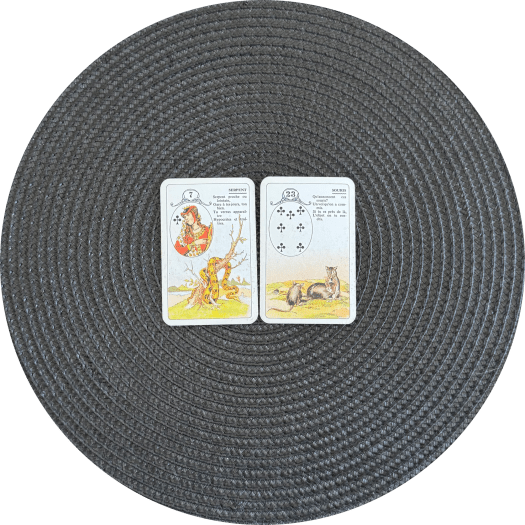
Serpent – Mice
…may be interpreted as the Serpent striking or consuming the Mice.
This significantly alters the character of the combination.
Ordinarily, the Mice signify erosion, depletion, and gradual loss. Here, however, the source of that loss is itself being removed.
The Mice are no longer free to gnaw away at the situation because they have become the Serpent’s prey.
An additional layer of folklore may also be considered.
Serpents tend to become considerably less active after feeding. Having secured a meal, the snake is often content to conserve energy rather than continue hunting.
Thus, the Serpent not only removes the Mice but frequently becomes less dangerous herself.
The toxicity remains, but its ability to cause further damage is often greatly reduced.
The Stork and the Serpent
The Stork provides another interesting example.
Many older Petit Lenormand patterns depict the Stork carrying a frog, newt, or other small creature in its beak. In nature, storks consume amphibians, rodents, fish, and reptiles, including snakes.
Consequently, when the Stork appears alongside the Serpent and faces towards it, the Stork may be understood as overcoming or devouring the Serpent.
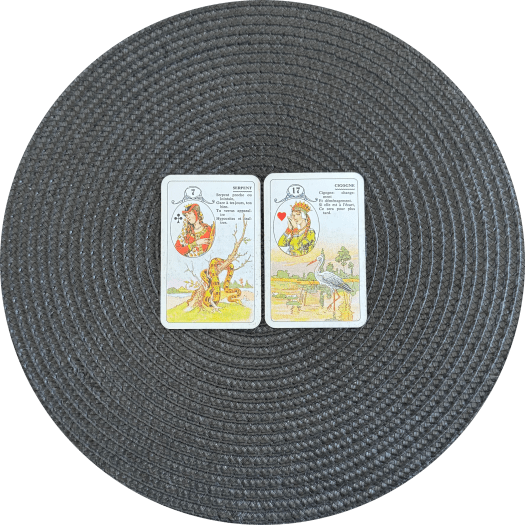
The symbolism is straightforward and directly from Nature, who is the oldest oracle.
On an allegorical level we can say: what appeared dangerous loses much of its power because circumstances are changing before the Serpent can strike effectively.
In practical readings, this often manifests as a person escaping a toxic environment, leaving a harmful relationship, changing jobs before workplace politics develop further, or otherwise moving beyond a situation that might have caused considerable problems had it remained unchanged.
A Word of Caution
These relationships should be viewed as refinements rather than absolute rules.
The Serpent does not suddenly become a positive card merely because the Mice or Stork appear nearby. Rather, the natural symbolism of the cards suggests that the danger may be reduced, redirected, or neutralised.
As always, the wider context of the reading remains paramount.
Nevertheless, when such combinations appear, they often remind us that even the serpent has natural enemies and that not every threat is destined to triumph.
Serpentine Forms
The Serpent frequently signifies things that resemble a snake in shape or movement.
Long, winding, flexible, twisting, and sinuous objects often fall naturally under its influence. This meaning arises directly from the eikōn and is particularly useful in practical readings concerning locations, lost objects, property, and household matters.
Rivers and Waterways
One of the most common manifestations of this symbolism is water.
The Serpent can indicate rivers, streams, brooks, creeks, canals, and other winding waterways. The resemblance between a snake and a meandering river is an ancient one and appears in folklore throughout the world.
The card can also indicate ponds, ditches, and stagnant bodies of water, particularly when supported by cards such as the Fishes.
In practical readings, these meanings most frequently appear when identifying locations. A proposed property may be situated close to a river, creek, canal, or other body of water. Likewise, a missing object may be located near water, a pond, or a garden feature containing water.
Cables, Pipes, and Wires
The same principle extends naturally to modern objects.
Electrical cables, wiring, extension leads, pipes, hoses, cords, strings, shoelaces, and similar objects often fall under the Serpent’s domain. Their long, flexible, and winding form mirrors that of the snake itself.
These meanings are especially useful in property and maintenance questions.
For example:
- House + Serpent + Sun may indicate an issue involving electrical wiring, cables, or electrical systems.
- House + Serpent + Fishes often points towards plumbing, pipes, drainage systems, leaks, or water-related infrastructure.
The presence of either the Scythe or the Coffin may indicate that such systems have failed, require repair, or are causing disruption.
As always, the surrounding cards reveal the precise nature of the problem.
The important lesson is that the Serpent does not always signify a person.
Sometimes a snake is simply a snake.
Or something that looks remarkably like one.
The Indirect Path
One of the more subtle manifestations of the Serpent is her tendency to introduce detours, diversions, and indirect routes.
Some cartomantes interpret the card as a warning that the querent is approaching a situation incorrectly and should seek another method. Whilst this certainly occurs, I have more often observed the Serpent indicating that circumstances themselves force a change of direction.
The distinction is important.
The Mountain blocks the road.
The Serpent changes it.
When confronted with a venomous snake, one does not usually continue walking towards it. One pauses, reassesses the situation, and finds another way forward. The original destination remains unchanged, but the route taken to reach it becomes considerably less direct.
This is how the Serpent frequently operates in practice.
The seeker still obtains what they desire, but first they must navigate complications, deal with hidden issues, avoid a toxic influence, or resolve another matter that unexpectedly emerges along the way.
For this reason, the Serpent often introduces delay.
Unlike the Tree, whose delays arise through slow growth, or the Mountain, whose delays arise through obstruction, the Serpent delays because the most obvious route proves unsafe.
A diversion becomes necessary.
Interestingly, these detours are often beneficial in hindsight. What initially appears frustrating frequently prevents a greater problem from occurring later. The Serpent’s delay can therefore be understood as a warning system. It draws attention to dangers that would otherwise remain unnoticed.
Occasionally, this symbolism manifests quite literally.
Roads – Serpent frequently indicates diversions, rerouting, altered travel plans, or a need to avoid a particular route.
When supported by the Scythe, the warning becomes stronger. Dangerous roads, hazardous bends, accident-prone areas, roadworks, closures, or sudden disruptions to a journey may all be indicated.
More figuratively, the same combination often appears when life itself takes an unexpected turn. The path originally chosen becomes impractical, undesirable, or dangerous, forcing the seeker to adapt and proceed in another direction.
In this respect, the Serpent possesses an important lesson.
She teaches flexibility.
The card reminds us that the shortest route is not always the safest, and that progress sometimes requires patience, adaptation, and the wisdom to recognise when a different path must be taken.
Like the serpent herself, success may occasionally require us to move indirectly, navigating around dangers rather than confronting them head-on.
Timing
In matters of timing, the Serpent is generally a card of moderate pace. It is neither especially fast nor especially slow. What distinguishes the Serpent is its tendency to introduce complications, diversions, and unforeseen entanglements that delay progress.
The delay rarely arises because the objective cannot be reached.
More often, the querent becomes caught up in other matters, encounters hidden difficulties, or discovers that what originally appeared straightforward is considerably more complicated than first imagined.
This is entirely consistent with the card’s nature.
The Serpent rarely blocks a path outright. Instead, she forces a detour.
Unexpected complications emerge. New information comes to light. A toxic influence must first be addressed. Other priorities suddenly demand attention. The destination remains attainable, but the route becomes less direct.
Consequently, I generally associate the Serpent with delays ranging from a week to two months. Longer delays are certainly possible, but these usually require reinforcement from slower cards such as the Tree, Lilies, High Tower, or Mountain.
Over the years, I have also occasionally observed the Serpent referring to the month of July.

This is not a traditional Petit Lenormand attribution, but a personal observation arising from practice.
The symbolism centres upon St Benedict, whose feast falls in July and who is frequently depicted holding a chalice containing a serpent. There was an attempt to murder this great Saint, with poison being placed in his drink. When St Benedict blessed the vessel with the sign of the Cross, the cup shattered and the plot was revealed.
The themes of poison, betrayal, hidden malice, and treachery align remarkably well with the Serpent’s symbolism. Plus, the card is also number 7.
Ultimately, timing under the Serpent is rarely a question of speed. It is a question of navigating complications before progress can resume.
Health
As discussed throughout this chapter, the Serpent is a card of toxicity, complications, and entanglements.
Anatomically, the Serpent is associated primarily with the intestines, particularly the large intestine, colon, and rectum. The symbolism is straightforward.
Like the serpent itself, these organs form a long and winding pathway through the body.
In health readings, the Serpent frequently appears in connection with addiction and dependency.
Whether the issue concerns alcohol, drugs, gambling, compulsive behaviour, unhealthy relationships, pornography, shopping, or another form of dependency, the underlying symbolism remains remarkably consistent.
Addiction entangles.
Over time, it exerts a toxic influence over a person’s life. Relationships suffer. Health deteriorates. Trust is broken. Opportunities are lost. In many cases, the individual eventually betrays both themselves and those closest to them.
Few cards capture this destructive cycle more effectively than the Serpent.
Because the Serpent in traditional decks is almost certainly intended to represent a venomous snake, the card can also indicate bites, stings, puncture wounds, envenomation, and allergic reactions.
Whilst snakes are the obvious example, spiders, ticks, mosquitoes, wasps, bees, and other biting or stinging creatures may all appear under this card.
The common theme is not the species involved, but the reaction that follows.
Something harmful has entered the body and requires attention, monitoring, or treatment.
The Serpent also possesses a tendency to complicate diagnosis and treatment.
Symptoms may present atypically. Test results may prove inconclusive. A treatment plan may require revision. Side effects may emerge. Additional investigations, referrals, or second opinions may become necessary.
For this reason, the Serpent rarely indicates a smooth, linear recovery.
Importantly, however, complication should not be confused with failure.
The Serpent does not necessarily suggest that recovery is impossible.
More often, it indicates that recovery will take a winding rather than direct route. The individual may need patience, perseverance, adaptation, and careful management before improvement becomes apparent.
As elsewhere in the deck, the Serpent’s lesson remains the same.
The destination may still be reached.
The challenge lies in navigating the complications encountered along the way.
The Serpent in Action
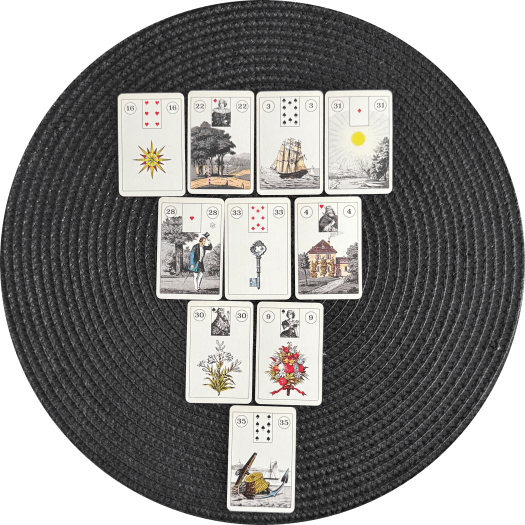
The following example is drawn from a Grand Tableau performed during the summer of 2024. We shall focus solely upon the relevant section of the tableau.
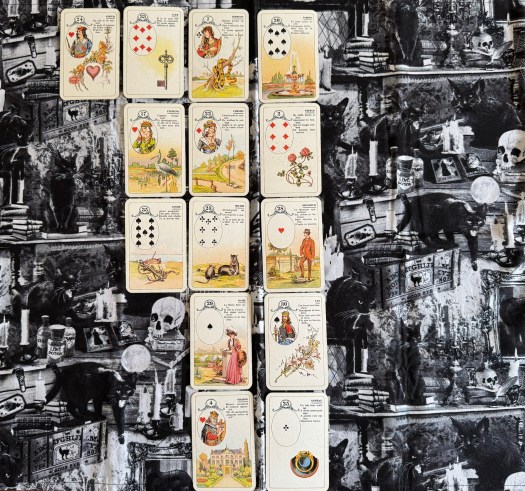
The Lady fell in the house of the Letter and the Serpent in the house of the Ship. For the purposes of this example, however, we shall not utilise houses.
The first thing that demands attention is the Serpent’s proximity to the Lady.
The Serpent has fallen close enough to the Lady to strike.
We therefore know that whatever the Serpent signifies has the potential to bring adversity, toxicity, betrayal, or complication directly into the querent’s life.
The next feature is the chain formed by the cards:
Serpent – Roads – Mice – Lady
This sequence suggests that a toxic influence or poor decision (Serpent) leads to a crossroads (Roads) which ultimately produces a loss (Mice) affecting the Lady directly.
One of the recurring ways I have observed the Roads–Mice combination manifest is through two separate paths, people, or directions being forced to converge through the loss represented by the Mice. Something that should have remained separate is brought together, usually to somebody’s detriment.
In this case, the Lady falls both after and beneath (influenced) the Mice, making it clear that she suffers the consequences.
The identity of the Serpent can then be investigated.
Immediately to the right of the Serpent stands the Park. Because the Park is a social card, we can be reasonably confident that the Serpent represents a person encountered through a social environment rather than an abstract influence.
The most important rule is to identify the role being played, not merely the sex of the individual. However, since the Serpent is flanked by cards from the suits of Diamonds and Spades, it is reasonable to assume that the Serpent is female.
Attention then turns to the relationship between the Lady, the Lord, and the Serpent.
The Lord falls close to both the Lady and the Serpent. The Lady and Lord are connected diagonally, whilst the Lilies fall beneath the Lord and introduce questions concerning honour, propriety, fidelity, and sexual conduct.
Beneath the Lilies stands the Ring, which is touched by the Lady.
The relationship between the Lord and Lady was immediately obvious, and the querent confirmed that she had a long-term partner.
Yet the Lord was connected to the Serpent as well.
This connection was formed through knighting, a technique derived from the movement of the Knight in chess. Techniques such as knighting, reflection, intersection points, counting, and houses are used selectively within the Grand Tableau. Each serves a different purpose depending upon how the pattern is formed.
Knighting frequently reveals indirect, concealed, or developing connections. It often points towards what is “around the corner” or otherwise not yet fully visible.
Here, the Lord knights to the Serpent via the Park.
His connection to the Serpent therefore occurs through a social setting, group, network, or shared activity.
Importantly, this connection is not immediately visible to the Lady.
The evidence becomes stronger still when we examine another line of the Lord: Anchor – Mice – Lord
The Mice are actively eroding the stability, reliability, permanence, and faithfulness represented by the Anchor. Because the Lord receives this combination directly, the loss pertains to him. We will discuss this, and how the Mice functions, more when we cover the Mice.
The Serpent herself knights to the Anchor via the Mice, identifying her as the underlying poison which will be the cause of that erosion.
Taken individually, none of these testimonies would necessarily be sufficient to predict infidelity.
Taken together, however, they create a coherent picture of betrayal, divided loyalties, secrecy, and the loss of faithfulness within the relationship.
The evidence therefore pointed towards adultery. Albeit a complicated one (remember this is the Serpent!).
The Lord had encouraged the querent to consider an “open relationship.” The Stork positioned above the Anchor clearly showed this change in the established rules of faithfulness in the relationship. The proposal itself had arisen through a social circle or group environment, represented by the Park.
The Lady had agreed, albeit under considerable pressure.
Unfortunately, the Lord had already formed a close attachment to another woman and had been seeing her outside the boundaries and agreements established by the couple. Apparently, the rule was they only saw people together.
After confronting him, the Lord eventually confessed. He asked the Lady to consider a permanent third partner: the Serpent.
The Lady ended the relationship.
This example illustrates one of the most important lessons of the Serpent.
The issue was not simply that another woman existed.
Rather, trust had been poisoned.
What ultimately destroyed the relationship was not attraction itself, but the betrayal hidden behind it. As is so often the case with the Serpent, the greatest injury came not simply from a stranger, but from someone who the Lady had trusted and allowed close enough to strike.
Over the next few weeks we will review the Hound, the Fishes, the High Tower, the Stars, the House, the Coffin, the Roads and the Tree.
§
Images:
Featured Image:
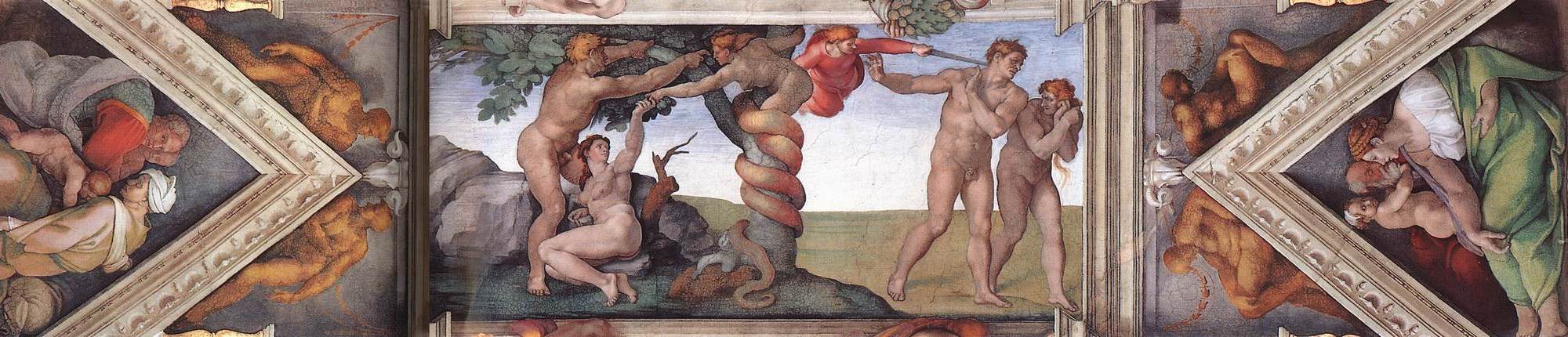
Fall and Expulsion from the Garden of Eden, Michelangelo, Public domain, via Wikimedia Commons
Cards:
Lenormand Cards: Jeu Lenormand © Cartamundi, WanderWüst © Jorge/Wandering Oracle, Lenormand Fortune-Telling Cards © Zao-Gelli, The Lenormand Oracle © Verlag für die Frau, Leipzig, Nieuwe Lenormand © Amber Studio/Erna Droesbeke, Lenormand 36 Orakelspielkarten © Königsfurt-Urania,
References:
Aesop (2013) Aesop’s illustrated fables (Barnes & Noble Collectible Editions). S.l.: Barnes & Noble.
Boroveshengra, A., 2013. Cartomantes’ Cabinet: The Petit Lenormand Course.
Boroveshengra, A., 2015. Lenormand Thirty Six cards. 2nd ed. Create Space.
George, R. 2014 The Essential Lenormand: Your Guide to Precise & Practical Fortunetelling. Woodbury, MN: Llewellyn Publications.
Grimm, J. & L. 2020 The Complete Grimms’ Fairy Tales. New Delhi, India: Fingerprint! Classics.
Ignatius Press (2005) Holy Bible RSVCE Compact Zipper. Ignatius Press.
Kreiner, G. (2007) The Snakes of Europe: All Species from West of the Caucasus Mountains. Frankfurt am Main, Lanesboro, MN: Edition Chimaira ; Zoo Book Sales U.S. distributor.
McNamee, G. (2000) The Serpent’s tale: Snakes in Folklore and Literature. Athens: University of Georgia Press.
Marco, M. and Goffinet, J., 1989. Petit Lenormand. Bruxelles: Servranx.
Matthews, C. 2014 The Complete Lenormand Oracle Handbook: Reading the Language and Symbols of the Cards. Rochester, VT: Destiny Books.
Meuris, B., 2018. Petit Lenormand Encyclopaedia: Volume 1. Create Space.
Silvestre, C., 2003. Le Petit Lenormand. [Montpellier]: Gange éd.
Footnotes:
- Il montre le (la) rival(e), l’amant ou la maîtresse. p.73, Marco, M. and Goffinet, J., 1989. Petit Lenormand. Bruxelles: Servranx. ↩︎
 Journal of a Cartomante

_Cropped.jpg)
.jpg)
.jpg)
