As she grows, bright rays are shed I from the firmament
Homeric Hymn to Selene
Sweet Moon, I thank thee for thy sunny beams; I thank thee, Moon, for shining now so bright.
A Midsummer Night’s Dream, William Shakespeare
Moon, is a sign of great honour, if this card is located next to the person, on the contrary, if it is at a distance it announces misfortunes
Original Instructions
The Lenormand’s 32nd card, the Eight of Hearts — or the Moon — is at once intriguing and, for some, perplexing. Why should it be associated with employment? Is it not rather a card of emotions and sensibility? Surely it may be read in much the same way as the Moon in the Tarot?
The Essence and Function of the Moon Card
Reflection is the principal function of the Moon card. In the past, I have advanced “recognition”, “fascination” and “visibility” as its essence; however, reflection proves, in many respects, the more apt term, for it encompasses both the card’s essence and its function.
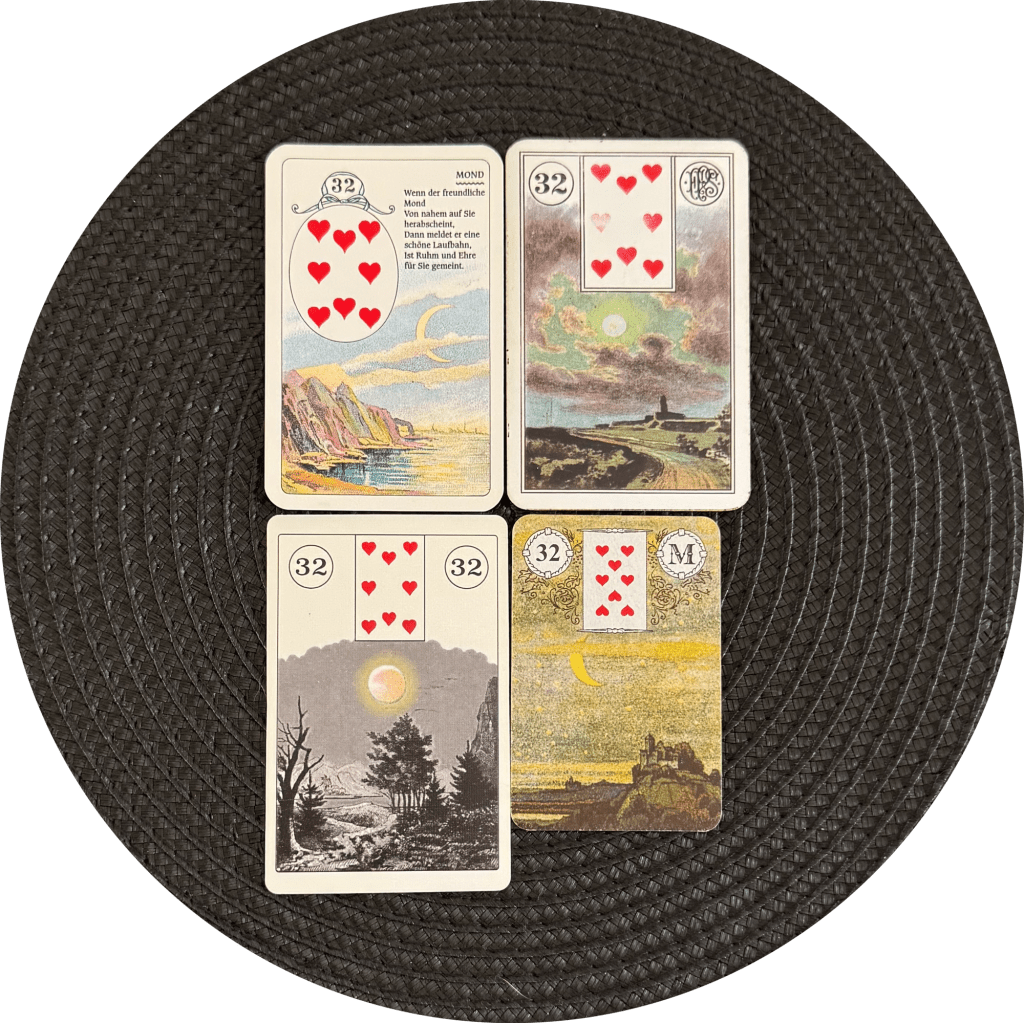
The traditional eikōn of the Moon remains remarkably consistent across well-known patterns — Brepols, Dondorf, Wüst, Piatnik, and the Blaue and Rote Eule, among others. In more elaborate packs, a crescent or full moon casts its light upon a landscape typically populated by trees and scattered clouds. Simpler decks favour a stylised crescent form.
The moon is the Earth’s sole natural satellite. Its gravitational influence helps to regulate climate, govern the tides, and sustain essential ecological processes. Although early cultures lacked the scientific vocabulary to articulate this, the moon’s vital importance was nevertheless recognised and revered from the earliest civilisations.
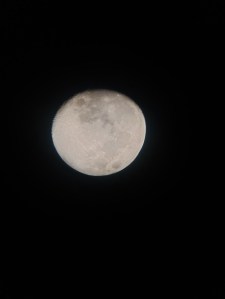
Accordingly, like the sun, the moon occupies a position of great significance within myth and folklore. Familiar are the tales of lunar deities — Coyolxāuhqui, Selene, Chang’e — as well as stories concerning the moon’s effects upon human nature. Medieval lore likewise abounds with images of a man confined within the moon.
Within the Western tradition from which the Lenormand cards emerged, the moon has long been understood in intimate relation to the sun. These two luminaries were regarded not only as mythological consorts, but as complementary principles within a broader cosmology.
Particular emphasis was placed upon the moon as the reflector of the sun’s light, and consequently upon its phases. Where the sun signifies the vital, animating force, the moon represents the corporeal life and the body itself. For just as the soul cannot be seen directly, neither can light; both are apprehended through their manifestation — light through reflection, the soul through the living body.
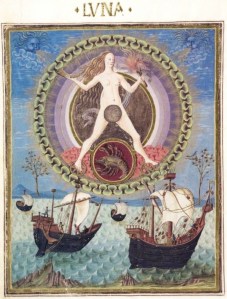
Sphaerae coelestis et planetarum descriptio aka De Sphaerae
Like the moon, the body waxes and wanes: it is born, it grows, and it declines. Owing to the shifting degrees of lunar illumination throughout its cycles, the moon has long been associated with fluctuation and inconstancy.
It is this dynamic interplay, centred upon the moon as the conduit of the sun’s light, that proves essential to a proper understanding of the card and its significations. The moon does not generate light of its own; rather, it receives, modulates, and reflects the sun’s radiance. Thus, its meaning lies not in independent force, but in transmission, mediation, and the varying degrees of visibility it affords. It is through this reflective function — the transformation of light into perceptible form — that the deeper significance of the card is revealed.
A Case of Two Moon: Lenormand and Tarot
For some, the Lenormand’s Moon may appear readily interchangeable with its counterpart in the Tarot. Yet this is not the case. While both cards ultimately derive their meanings from the same underlying principle — the reflection of light — their emphases diverge markedly.
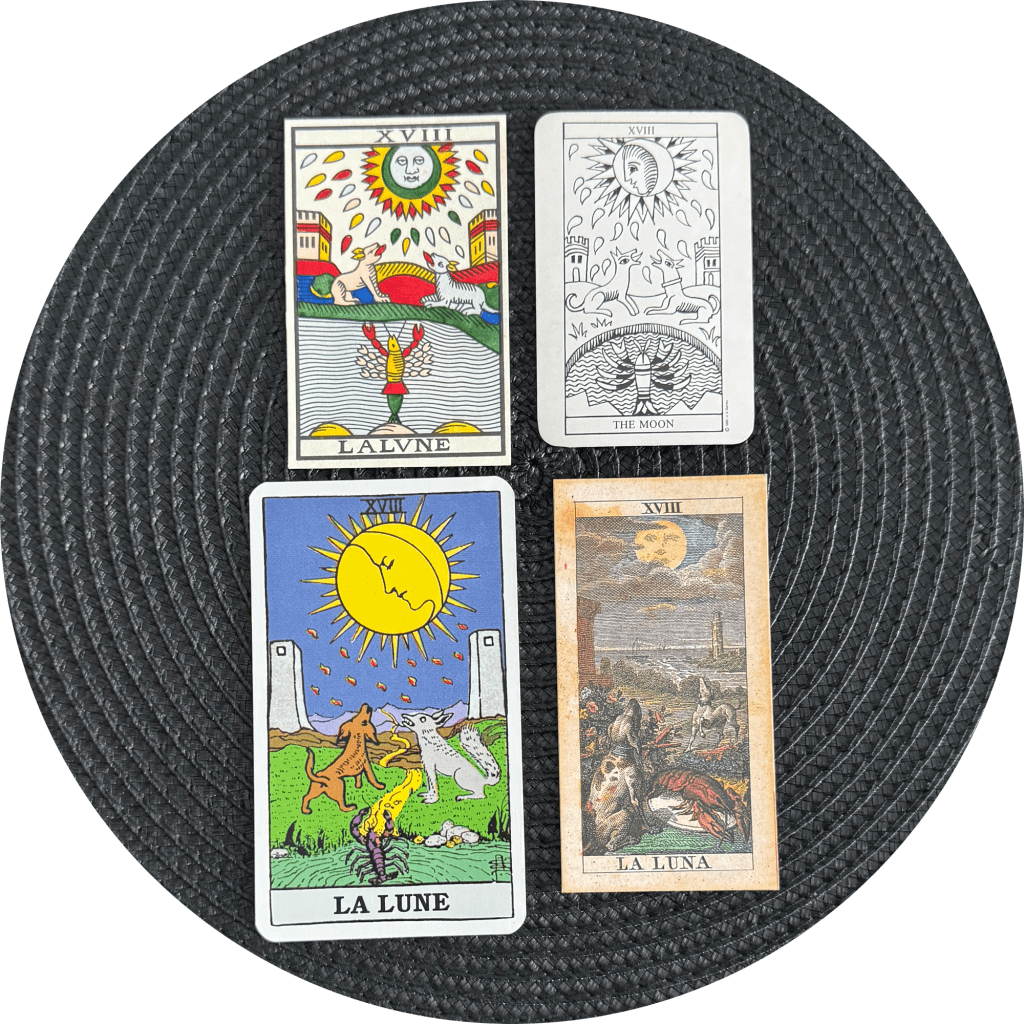
In the Lenormand system, the Moon presents the benevolence of reflected light. Its illumination is steady, guiding, and socially perceptible. It speaks to the visibility conferred through reflection — how one is seen when light is cast upon them.
By contrast, the Tarot’s Moon is concerned not with the gift of reflection, but with its instability. Here, the reflected light is partial, shifting, and uncertain — a mirror that distorts as much as it reveals. It aligns itself with half-truths, obscurity, confusion, voluntary change and forces that operate beyond conscious control. Rather than conferring recognition, it introduces ambiguity and disorientation.
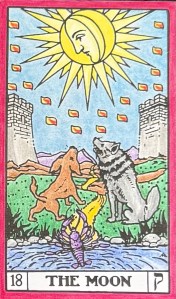
Thus, although both cards arise from the same cosmological idea — the moon as reflector of light — they articulate opposing aspects of that condition. The Lenormand emphasises reflection as guidance and affirmation; the Tarot emphasises it as distortion and concealment. In this sense, the essential quality of the Tarot’s Moon is not illumination, but a kind of darkness — a state defined in implicit contrast to the clarity and vitality of the Sun.
Interpreting the Moon
In interpretation, the Moon card offers a reflection of the querent or of the situation as it appears in the eyes of others. It does not generate light in its own right, but instead reveals how illumination — as signified by the Sun — is received, modulated, and perceived. In this sense, it presents a portrait: a mediated image shaped by reflection rather than direct exposure.
The card therefore provides the reader with an essential perspective — how the matter at hand will be seen, recognised, and judged. It speaks to reputation, standing, and the outward impression formed when light is cast indirectly. If the Sun shows what is, the Moon shows how that reality is reflected back into the social and perceptual realm.
It follows that the Moon concerns itself not with internal states, but with outward appearance. It does not, of itself, describe emotional experience or personal sentiment. Such matters properly belong to the domain of the Heart card, which alone addresses affection, emotion, and feelings. The Moon, by contrast, pertains to visibility and perception — to how things are seen, rather than how they are felt.
Coda
The Moon reflects. It reveals how light—truth, status, or circumstance—is mediated and recognised in the wider world. Thus, it is not a card of feeling, but of appearance, reputation, and the image that endures in the minds of others.
Person and Description
The Moon is not, in itself, a significator of a person. When it appears in combination with a person-card, however, it may serve to describe that individual’s appearance and character.
Physical Description
In itself, the Moon card suggests a person of a distinctly phlegmatic cast: a round or softly contoured face, clear complexion, and a fuller figure, typically of short to average stature. Hair colouring often tends towards the lighter spectrum — from pale blonde to silver or ashen tones.
Owing to its essential quality of reflection, the Moon frequently indicates an appearance that recalls or evokes another individual. The person may seem familiar, as though they echo or resemble someone known to or admired by the querent. This resemblance may extend to public figures, though it need not be confined to celebrities.
When accompanied by the Bouquet, the indication is elevated towards a more classical ideal of beauty — polished, harmonious, and somewhat timeless in its appeal. One might think in terms of refined glamour or cultivated attractiveness, akin to figures such as Dorothy Dandridge, Hedy Lamarr, Oscar Micheaux, or Cary Grant.
Temperament
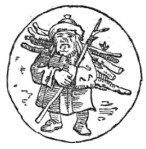
Baring-Gould, Sabine (1872). Curious Myths of the Middle Ages
In matters of temperament, the Moon commonly describes an individual of calm and composed disposition, though at times inclined towards timidity or reserve. Such a person is often acutely aware of appearances and the impressions they create, not necessarily from vanity, but from a desire to be well-regarded and properly received.
Moreover, the Moon frequently denotes a mind capable of sustained fascination. This may manifest as a deep and abiding interest in particular subjects or pursuits, occasionally tending towards the obsessive. Their inner life, though not explicitly emotional in the sense of the Heart, is nevertheless shaped by habitual reflection and attentiveness to how things are perceived.
Special Features
Fame
The traditional instructions associate the Moon with fame and honours — an attribution that is neither arbitrary nor without foundation. As noted earlier, the Moon governs the public, reflecting its tastes, inclinations, and mood. It is from this collective body that recognition arises, and it is recognition that forms the very currency of fame.
For what is fame, if not the sustained regard of others? It is, in essence, the successful reflection of one’s image in the minds of the many.
Accordingly, when the Moon appears at a distance, or is afflicted by cards such as the Clouds or the Coffin, it often indicates difficulty in attaining recognition or rejection . The querent may find their efforts overlooked, their qualities insufficiently acknowledged, leading in time to frustration or disillusionment.
Work
For most individuals, fame and recognition are realised — in however modest a form — through their professional life. It follows, therefore, that the Moon assumes a position of particular importance in matters of career and vocation.
The rationale is straightforward: in seeking employment or advancement, one must be perceived favourably. One must impress, distinguish oneself, and be seen — in short, to achieve a form of personal distinction (fame) in order to be selected or honoured (employed).
Thus, the cards surrounding the Moon will indicate how the querent presents within a professional context: the strength of their credentials, the impression they make upon others, and the balance of their perceived strengths and weaknesses.
More broadly, the Moon serves as a barometer of professional standing and trajectory. Beneficial cards suggest an individual who is established, respected, and progressing; adverse influences, by contrast, indicate obscurity, stagnation, or a lack of due appreciation.
In this respect, the Moon may rightly be regarded as the master card of work. It not only reveals how one is perceived, but also reflects what one does and the status one holds within that sphere. Through the eyes of others, it presents a living portrait of the querent’s professional identity — their role, their standing, and the degree of recognition accorded to them.
It governs not the labour itself, but the acknowledgement of that labour, upon which all opportunity, advancement, and ultimately the attainment of a better life depend.
It may be usefully contrasted with other occupational indicators within the system. The Anchor, for instance, speaks to stability, permanence, and thus job security — the extent to which one’s position is fixed and enduring. The Fox, by contrast, introduces the element of rivalry and competition, indicating colleagues, competitors, or adversaries within the professional sphere. Where the Moon reflects how one is seen and valued, the Anchor shows how secure one is, and the Fox reveals the conditions under which one must contend.
Proximity
As a mere reflection of the Sun’s rays, the light of the Moon does not carry with the same force or reach; it must be near at hand to be properly perceived. Consequently, when the Moon appears at a distance within the tableau, it indicates a lack of visible success or recognition. The querent’s efforts may go unnoticed or insufficiently appreciated, often giving rise to frustration or disillusionment, as the reflection fails to reach those whose regard is sought.
When joined by the Clouds, this condition is further degraded. The reflected light is obscured, producing not only diminished visibility, but a distorted or unfavourable appearance. In such instances, the card may signify a damaged reputation or poor public impression, which in turn restricts opportunity and diminishes tangible prospects.
Timing
The Moon is generally regarded as a swift-moving card. Traditionally, it is associated with the evening, standing in contrast to the Stars, which pertain to the deeper hours of night.
In broader temporal terms, the Moon may also signify a lunar cycle, approximately twenty‑eight days.
From experience, the pairing of Moon and Child may be read as after new moon. The Moon in conjunction with the Sun may denote the full moon. Conversely, the sequence of Sun followed by Moon may be taken to signify the summer solstice.
Health
In matters of health, the Moon often points towards conditions rooted in perception, identity, and the relationship between the self and its reflected image. It is particularly associated with disturbances such as body dysmorphia, gender dysmorphia, eating disorders, and avoidant personality patterns — all of which involve a disjunction between reality and its perception or expression.
The card may also describe intrusive recollection, such as flashbacks, particularly those associated with trauma. In this respect, it reflects not the present reality, but the persistent re‑emergence of past impressions, as seen in conditions such as post-traumatic stress.
In combination with the Scythe, the indications may become more severe, extending to self-harming tendencies or behaviours directed against the body.
The Moon in Action
In 2024, a client consulted me with a fairly common difficulty: why could she not meet someone with whom she might form a lasting relationship. Siobhan, in her late twenties, had explored a variety of avenues — dating applications, singles’ events, blind dates, and so forth — yet nothing progressed beyond an initial encounter.
The cards as they fell:
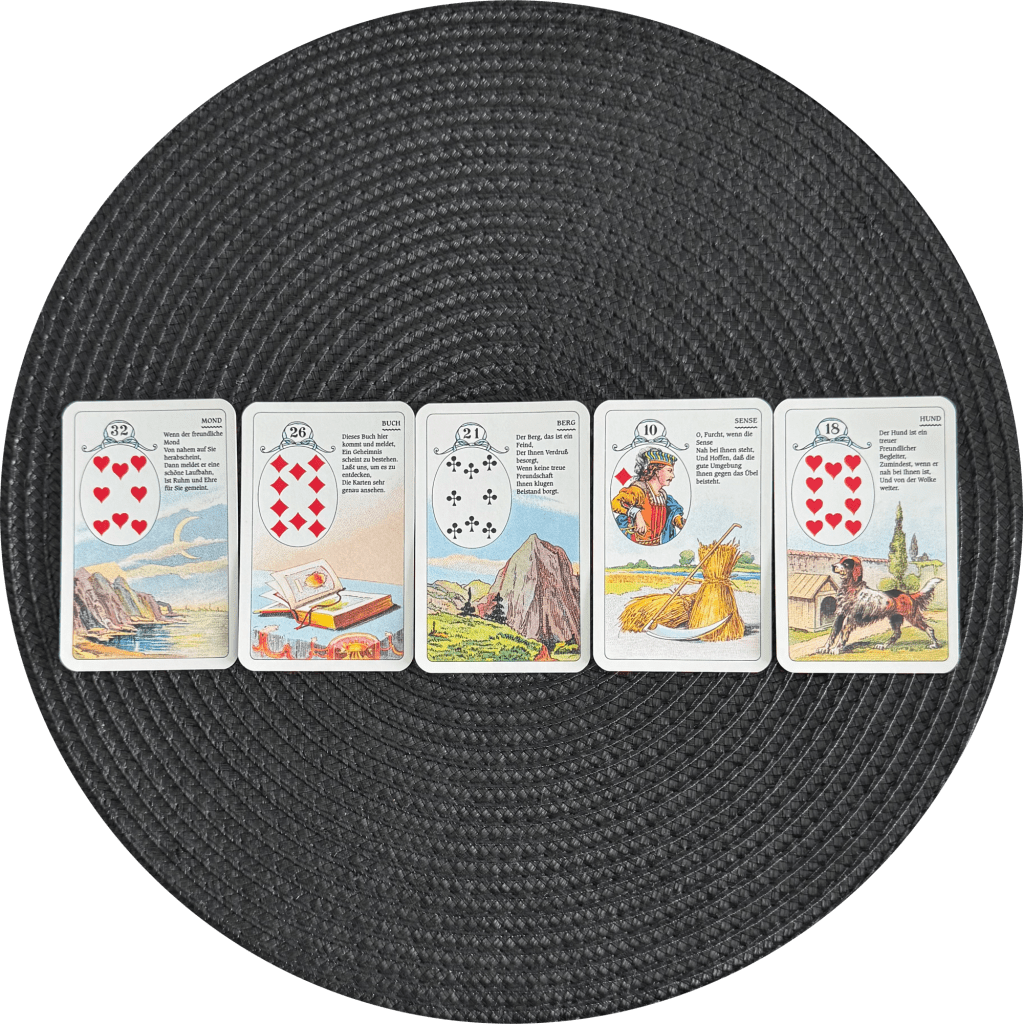
The Moon, the Book, the Mountain, the Scythe, and the Hound.
The message conveyed by the cards was both clear and direct: she was perceived as too guarded.
Within a relational context, the Moon affords a glimpse into how one is seen by partners or prospective suitors. Followed by the Book, it suggests an air of inscrutability — reinforced by the way in which the Moon reflects upon the spine of the Book — indicating something withheld or not readily accessible. This inscrutability functions as a barrier, as shown by the Mountain, preventing others from approaching with ease.
The resulting first impression is one of distance or reserve. Consequently, others struggle to engage with Siobhan, to establish common ground, or to form a meaningful connection — a difficulty expressed through the Scythe and the Hound. The Hound, as the card of one’s circle or “pack”, represents those with whom one feels at ease and shares familiarity; its separation here underscores the absence of that natural ease and rapport.
The cards’ response, though somewhat cutting, aligned closely with feedback Siobhan had previously received — namely, that connections tended to falter due to a perceived lack of chemistry or shared ground.
§
Images:
Lenormand Cards: Jeu Lenormand © Cartamundi, WanderWüst © Jorge/Wandering Oracle, Nr. 1941 Mlle Lenormand Wahrsagekarten © Piatnik, Lenormand Fortune-Telling Cards © Zao-Gelli
Tarot Cards: Les Tarots Marseille de Jean Noblet, Paris, vers 1650 © Éditions Letarot.com (2001), Rolla Nordic Tarot © US Games, Systems, Inc (1981), Je de Tarot Albano-Waite © Carta Mundi/US Games Systems, Inc (1987), Tarocco Soprafino © Il Meneghello Edizioni, Milano-Italy (2023), BOTA Tarot © Builders of the Adytum
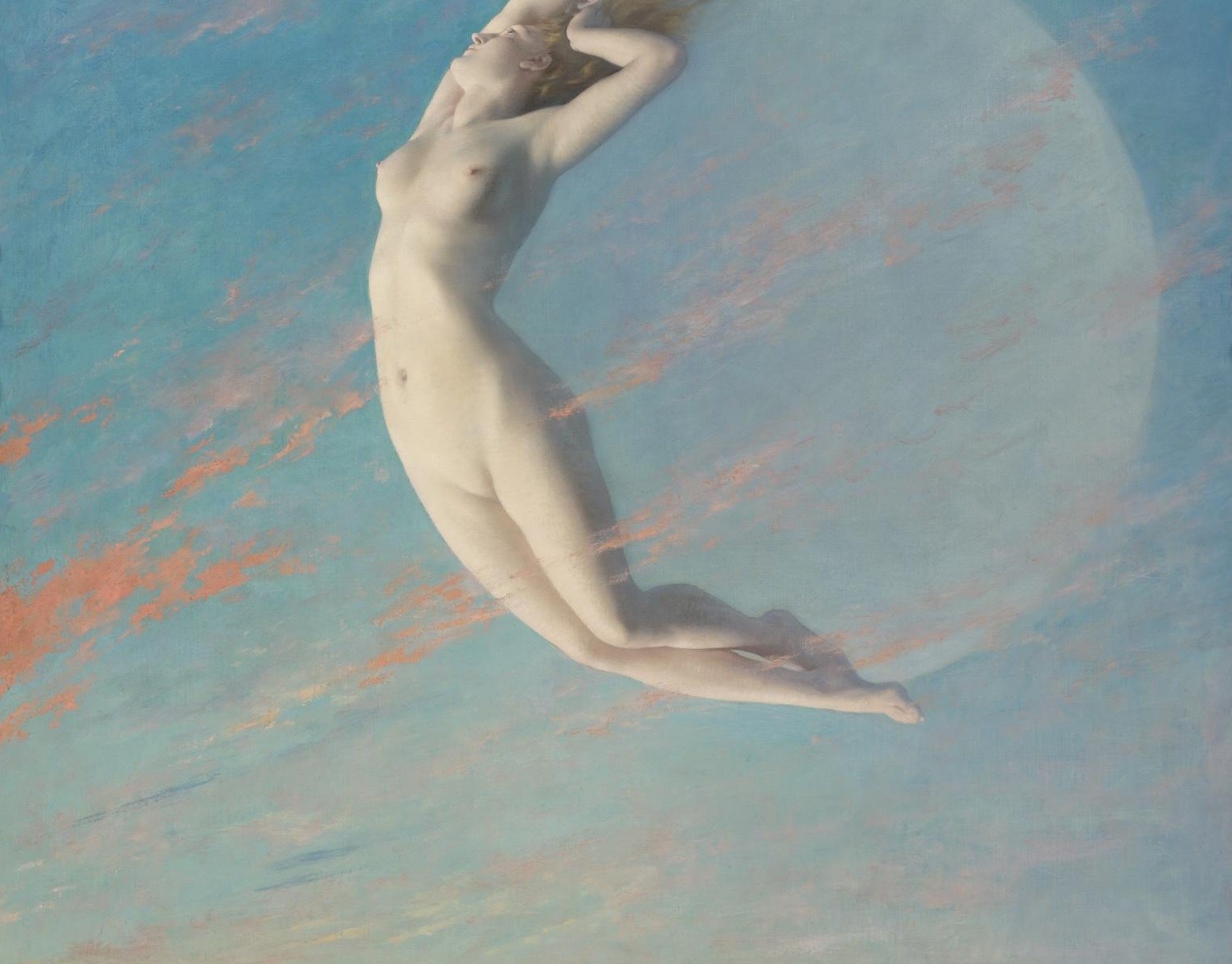
Featured Image: Selene, Albert Aublet, via Wiki Commons
References:
Avelar, H. and Ribeiro, L. (2010) On the Heavenly Spheres: A Treatise on Traditional Astrology. Tempe, AZ: American Federation of Astrologers.
Boroveshengra, A., 2013. Cartomantes’ Cabinet: The Petit Lenormand Course.
Boroveshengra, A., 2015. Lenormand Thirty Six cards. 2nd ed. Create Space.
Delclos, M., 2013. Le Livre du Petit Lenormand. 1st ed. Escalquens: Éd. Trajectoire.
Marco, M. and Goffinet, J., 1989. Petit Lenormand. Bruxelles: Servranx.
Ptolemaeus, C. and Robbins, F.E. (2001) Tetrabiblos. Cambridge, MA: Harvard Univ. Press.
Valens, V. and Riley, M.T. (2022) The Anthology. Denver, CO: Amor Fati Publications.
 Journal of a Cartomante