For there is hope for a tree, if it be cut down, that it will sprout again, and that its shoots will not cease. Though its root grow old in the earth, and its stump die in the ground, yet at the scent of water it will bud and put forth branches like a young plant.
Job 14: 7 – 9
The just will flourish like the palm-tree and grow like a Lebanon cedar. Planted in the house of the Lord they will flourish in the courts of our God, still bearing fruit when they are old, still full of sap, still green, to proclaim that the Lord is just.
Psalm 91:13 – 16 (Grail Translation)
Loveliest of trees, the cherry now
Is hung with bloom along the bough,
And stands about the woodland ride
Wearing white for Eastertide.
Now, of my threescore years and ten,
Twenty will not come again,
And take from seventy springs a score,
It only leaves me fifty more
A.E. Housman, The Loveliest of Trees
Tree, away from the person, it is a sign of good health, several trees together there is no doubt that their wishes will be fulfilled and they will have brilliant future.
Original Instructions
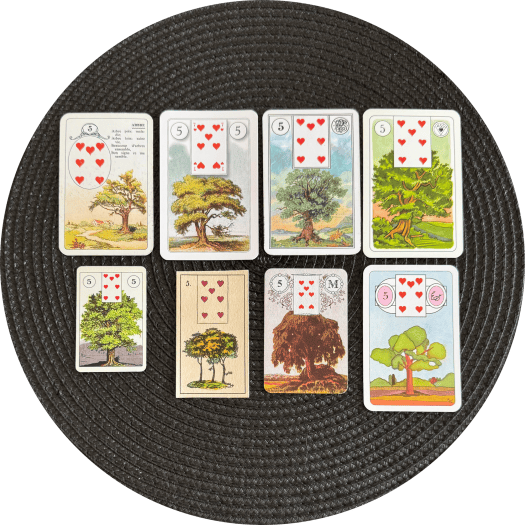
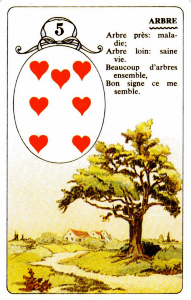
Card No. 5 in the Petit Lenormand, the Tree, is represented by the Seven of Hearts. Does the Tree or the Coffin signify health, and if so, how do they differ? Why do some people talk about family with the Tree? Is the Tree a card of boredom and cause relationship problems?
The Essence and Function of the Tree
The traditional eikōn of the Tree varies remarkably little across the different patterns. We see a mature, well-established tree covered with healthy green foliage. The species of tree may differ from deck to deck, and some artists occasionally include a broken or withered branch, but the central symbolism remains unchanged.
It is a tree that is alive, rooted, and thriving.
To understand the Tree properly, we must consider how human beings have understood trees throughout history.
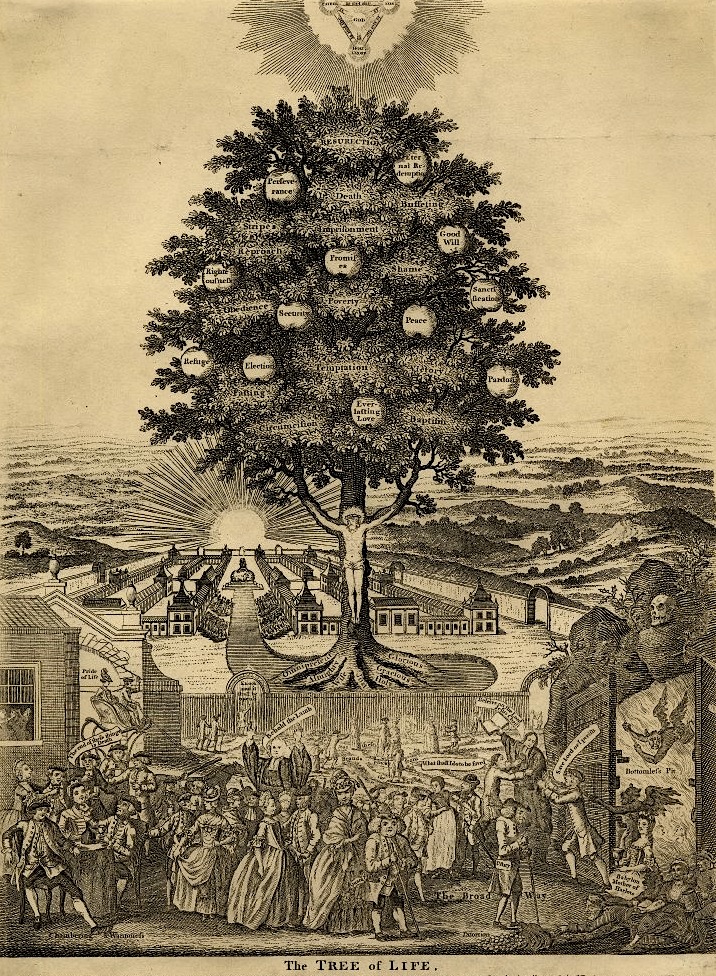
The Game of Hope appeared during a period when scientific knowledge regarding the natural world was expanding rapidly. The discoveries of Priestley and Ingenhousz concerning the relationship between plants and oxygen were beginning to transform our understanding of nature. Yet long before scientific investigation, people already recognised that trees were essential to life.
Trees have long occupied a sacred place within human culture.
The yew was seen as a symbol of longevity and eternal life. The oak represented strength, steadfastness, and endurance. Throughout Europe and the Near East, sacred groves and ancient trees served as places of worship, assembly, and remembrance.
Trees also naturally connect different realms.
Their branches reach towards the sky, their trunks stand in the present, and their roots disappear into the earth below. Consequently, they became powerful symbols of ancestry, inheritance, and continuity between generations. Their roots connected them not merely to the soil, but to the past itself.
At a practical level, trees sustain life. They produce oxygen, regulate water, protect the soil, store carbon, provide shelter, and support entire ecosystems.
It is therefore unsurprising that the essence of the Tree is wellness and its function is to sustain.
The Tree is therefore the principal card of health within the Petit Lenormand.
This should not be confused with illness.
Health and disease are not identical concepts viewed from opposite directions. The Tree signifies vitality, resilience, constitution, and overall wellbeing. It is the life force that enables us to grow, recover, flourish, and endure.
The card is as much concerned with wellness as health.
It asks whether the seeker’s physical, mental, emotional, and spiritual needs are being met. It examines the foundations that allow a person not merely to survive but to thrive.
For this reason, the Tree often encourages reflection and self-care.
It asks us to step back and consider how circumstances are truly affecting us. Are we exhausted? Are we nourished? Are we grounded? Are we growing? Are we living in a way that supports long-term wellbeing?
The Tree reminds us that growth requires both nourishment and time.
A useful distinction may be drawn between the Tree and the Coffin.
The Tree concerns vitality, resilience, and the capacity for life. The Coffin concerns the deterioration, exhaustion, or breakdown of those same qualities.
If the Tree asks: How strong is the life force? the Coffin asks: What is causing it to fail?
For this reason, we rarely wish to find the Tree and Coffin in close communion, particularly near the significator. The Tree sustains life; the Coffin signifies its decline. Together they introduce the concept of dis-ease, a condition in which vitality weakens and the body’s natural resilience becomes compromised, resulting in physical, mental, emotional, or spiritual suffering.
Yet the roots of a tree do more than nourish it. They bind it to the earth.
From the earliest civilisations onwards, people recognised that the dead eventually return to the soil from which life emerges. Whether through burial, cremation, or simple decay, all things ultimately return to the earth.
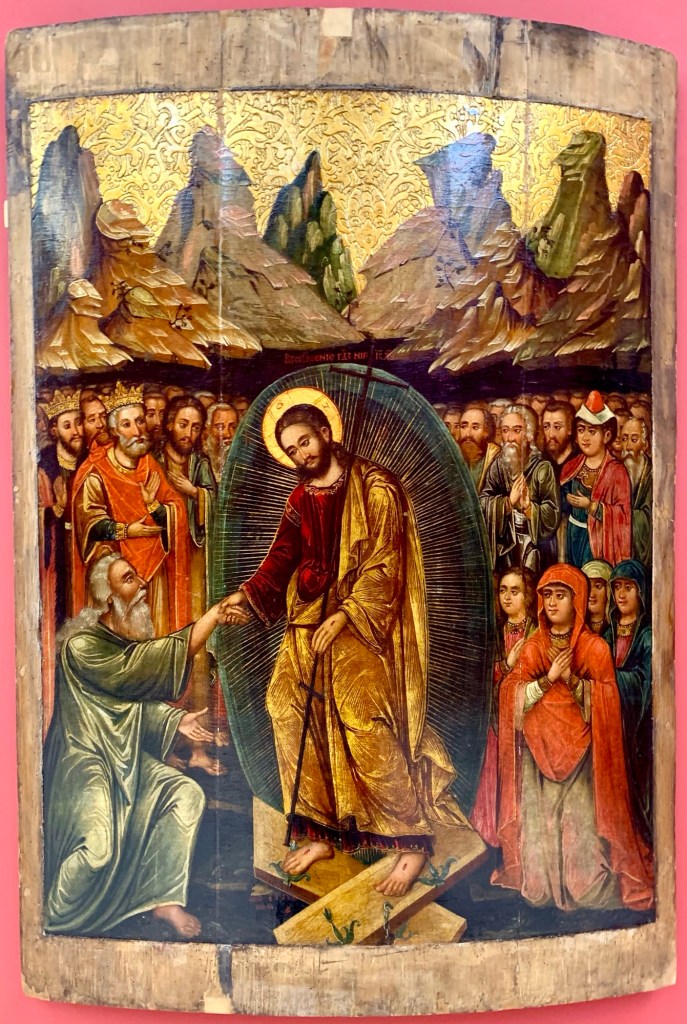
For this reason, many cultures envisioned the world of the dead as existing below. The land itself became a vast ancestral resting place. As the Credo recalls1, Christ is said to have descended into hell before the Resurrection.
The Tree therefore became a natural symbol of ancestry, lineage, genealogy, and inheritance.
It tells us something about where we come from.
In contemporary terms, the Tree speaks of what we inherit through our DNA. It describes the traits, predispositions, strengths, weaknesses, talents, vulnerabilities, and family legacies transmitted through generations.
It is the card of family roots in their deepest sense.
The House may describe those with whom we live, and the Lilies our family as a social unit, but the Tree reaches further still. It speaks of the ancestral roots from which we descend.
The Tree therefore tells us two important things.
Firstly, how well we are sustained in the present.
Secondly, where our roots lie in the past.
It speaks simultaneously of vitality and ancestry, of growth and inheritance, of health and lineage.
Like a living tree, we flourish only when both our roots and our branches remain healthy.
Coda
The Tree is one of the most life-affirming cards in the Petit Lenormand.
Whilst many cards concern events, opportunities, people, and circumstances, the Tree speaks about the foundation that allows us to experience them. It describes our vitality, resilience, inheritance, and capacity to endure. It reminds us that a good life requires strong roots as much as flourishing branches.
Whether appearing as a symbol of health, wellbeing, ancestry, or personal growth, the Tree asks us to consider what sustains us and whether those foundations remain strong.
For a tree cannot flourish without roots, nor can we.
The Tree therefore reminds us that true strength comes not only from what we achieve, but from what supports us, nourishes us, and connects us to those who came before us. In understanding our roots, we better understand ourselves.
Person and Description
Person
Unlike cards such as the Child or Hound, the Tree does not ordinarily signify a specific person.
When appearing alongside a significator or person card, however, it can contribute valuable information regarding the individual’s appearance, health, constitution, and temperament.
The Tree therefore functions descriptively rather than representationally. It tells us what a person is like rather than who they are.
Physical Description
The Tree frequently describes a person older than the querent, although this should be understood relatively.
When reading for a twenty-year-old, the Tree may signify someone in their late thirties or forties. When reading for an older seeker, the age difference may be less pronounced. The important point is that the Tree often introduces an element of maturity, experience, or seniority.
The individual frequently appears healthy, robust, and well grounded. There is often a solid or statuesque quality to the physique, with a relatively straight or tubular build. Naturally, surrounding cards will modify this description.
The Tree also has a tendency towards darker complexions and colouring, although this should not be applied rigidly.
In terms of eye colour, the card will occasionally describe green eyes, though hazel and brown are considerably more common in practice. Blue eyes occur less frequently under the Tree than under cards such as the Stars or Moon.
The voice is often slow, measured, and deliberate. Such individuals frequently speak after careful consideration rather than reacting impulsively. This can sometimes lend them a thoughtful or ponderous air.
More than any specific physical feature, however, the Tree often describes a person who appears healthy, settled, and firmly rooted in themselves.
Temperament
The Tree most closely corresponds to a sanguine–phlegmatic temperament.
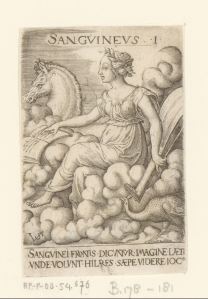
The sanguine element provides warmth, vitality, and an enjoyment of life. Tree people often possess a natural appreciation for growth, family, friendship, and the simple pleasures that sustain wellbeing.
The phlegmatic influence introduces patience, stability, reliability, and endurance. These individuals are rarely hurried and seldom react impulsively. They prefer steady progress to sudden change and are generally comfortable allowing matters to develop in their own time.
At their best, Tree people are dependable, resilient, nurturing, and reassuring. Others often see them as a source of support, wisdom, or stability during difficult times.
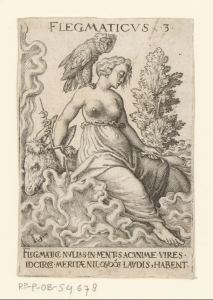
When poorly aspected or influenced by more challenging cards, however, these same qualities can become inertia, passivity, stubbornness, or an excessive resistance to change. Like an old tree whose roots run deep, they may find it difficult to adapt once a position has been adopted.
Above all, the Tree describes someone who is grounded. Whether physically, emotionally, or psychologically, their strength comes from deep roots and a strong constitution that allows them to endure challenges that would unsettle others.
Special Features
Grand Tableau
The traditional instructions place considerable emphasis upon the Tree’s relationship to the significator. Rather surprisingly, they suggest that the Tree is more favourable when it stands at a distance from the querent.
At first glance, this may seem counterintuitive.
If the Tree signifies health, vitality, and wellbeing, surely we would prefer to see it as close to the seeker as possible?
In practice, however, the traditional instruction makes considerable sense once proximity is understood spatially rather than morally.
When the Tree falls close to the significator, wellbeing becomes a prominent theme within the seeker’s life. This does not automatically indicate illness, but it does suggest that health, vitality, recovery, self-care, or constitutional strength presently require attention.
The seeker is actively engaging with Tree matters.
If the Tree is nearby because wellbeing has become a concern, steps must often be taken to safeguard and strengthen the constitution before matters deteriorate further.
By contrast, a distant Tree frequently indicates that wellbeing is not presently demanding the seeker’s attention. The constitution remains sufficiently strong that other concerns occupy the foreground of life. In this sense, a distant Tree can be regarded as rather auspicious.
This does not mean it should be ignored.
Even at a distance, careful attention should be paid to the cards surrounding the Tree. Cards such as the Clouds, Serpent, Coffin, Fox, Mice, and Cross may all reveal factors undermining physical, mental, emotional, or spiritual wellbeing.
For example:
- Clouds may obscure vitality and make it difficult to identify underlying causes.
- Fox may indicate hidden, misleading, or poorly understood health issues.
- Mice often points towards gradual depletion and loss of energy.
- Coffin reveals deterioration and illness.
- Cross introduces suffering, burdens, and hardship.
- Serpent can reveal complications, toxicity, or circumstances that undermine recovery.
Addressing such issues early often prevents a more serious breakdown of vitality later.
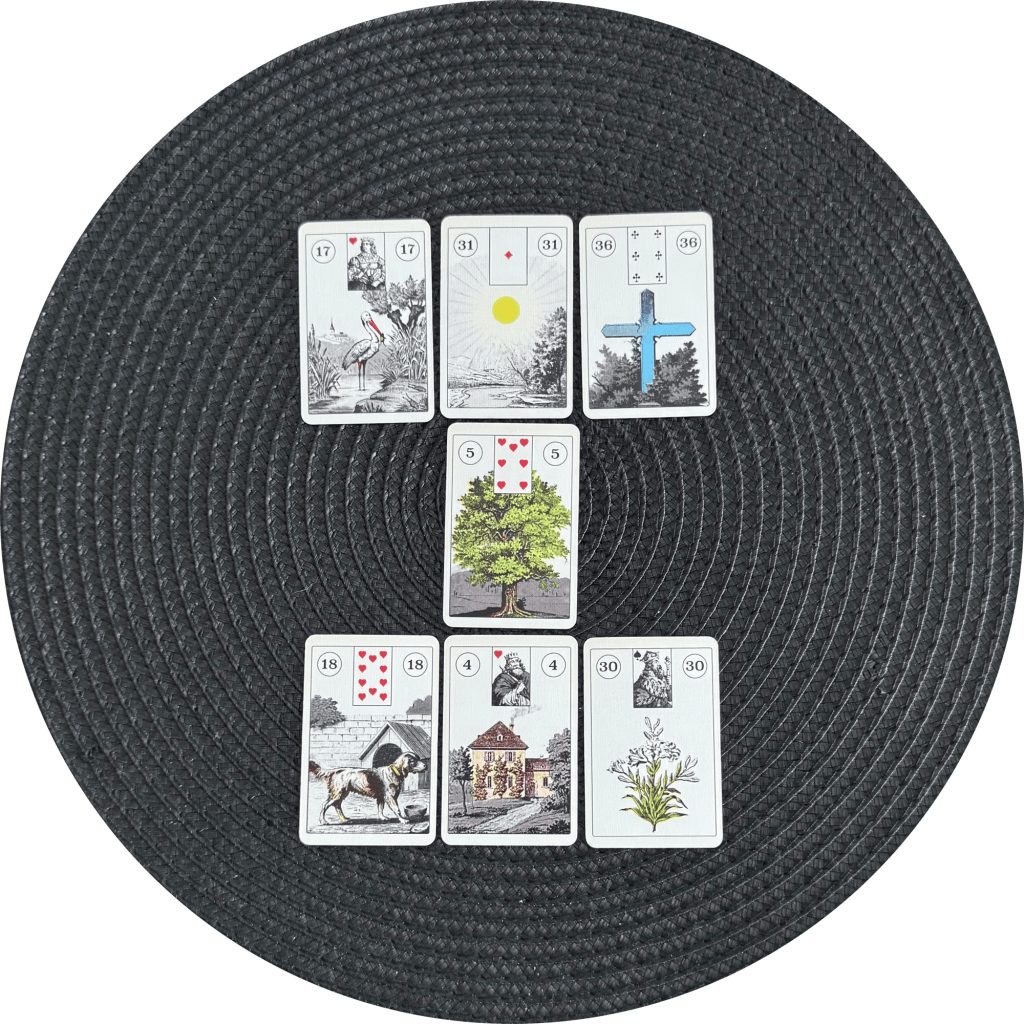
For example, consider the following formation involving a distant Tree:
Coffin
Heart – Tree – Cross
Stork
Here, we might conclude that a change in health (Stork, Tree) is being brought about by a painful illness (Cross, Coffin), resulting in grief, worry, or emotional suffering (Heart, Cross) whilst forcing a change of plans (Stork, Coffin).
The specific nature of the illness would be determined through further delineation, particularly by examining the cards immediately following the Tree and Coffin. In this example, one might reasonably consider issues affecting the lower back, hips, legs, or mobility through the combination of the Cross and Stork.
As the Tree and Coffin are both far away, we know that the severity is reduced. Nevertheless, one would encourage the Querent to seek medical help.
The Tree and the Clouds
Particular attention should be given whenever the Tree falls with the Clouds.
The Clouds darken whatever they touch. Consequently, the Tree’s vitality becomes obscured and wellbeing can become a significant concern.
Interestingly, I have often observed this combination manifesting through mental and emotional wellbeing rather than purely physical illness.
The individual may struggle to identify the root cause of their difficulties. They know something is wrong, yet cannot clearly see what lies beneath the surface. In such circumstances, time, patience, support, and careful reflection are often required.
This can become a genuine dark night of the soul.
Many Trees Together
The original instructions also make reference to several trees appearing together, suggesting the fulfilment of the seeker’s wishes and a bright future.
When I first studied the Petit Lenormand, my aunt offered a slightly different interpretation.
She taught that when the Tree appeared with cards such as the House, Park, Roads, or Sun, the seeker would often make a full recovery from illness and experience considerable improvement in their circumstances. This was particularly important, for my aunt, if the Tree was near the significator or Coffin.
If one examines these cards carefully, a common feature emerges.
All are often illustrated with trees.
Her view was that these “trees” effectively converged and worked together to rejuvenate the seeker. Over time, I’ve expanded the list she gave based on experience.
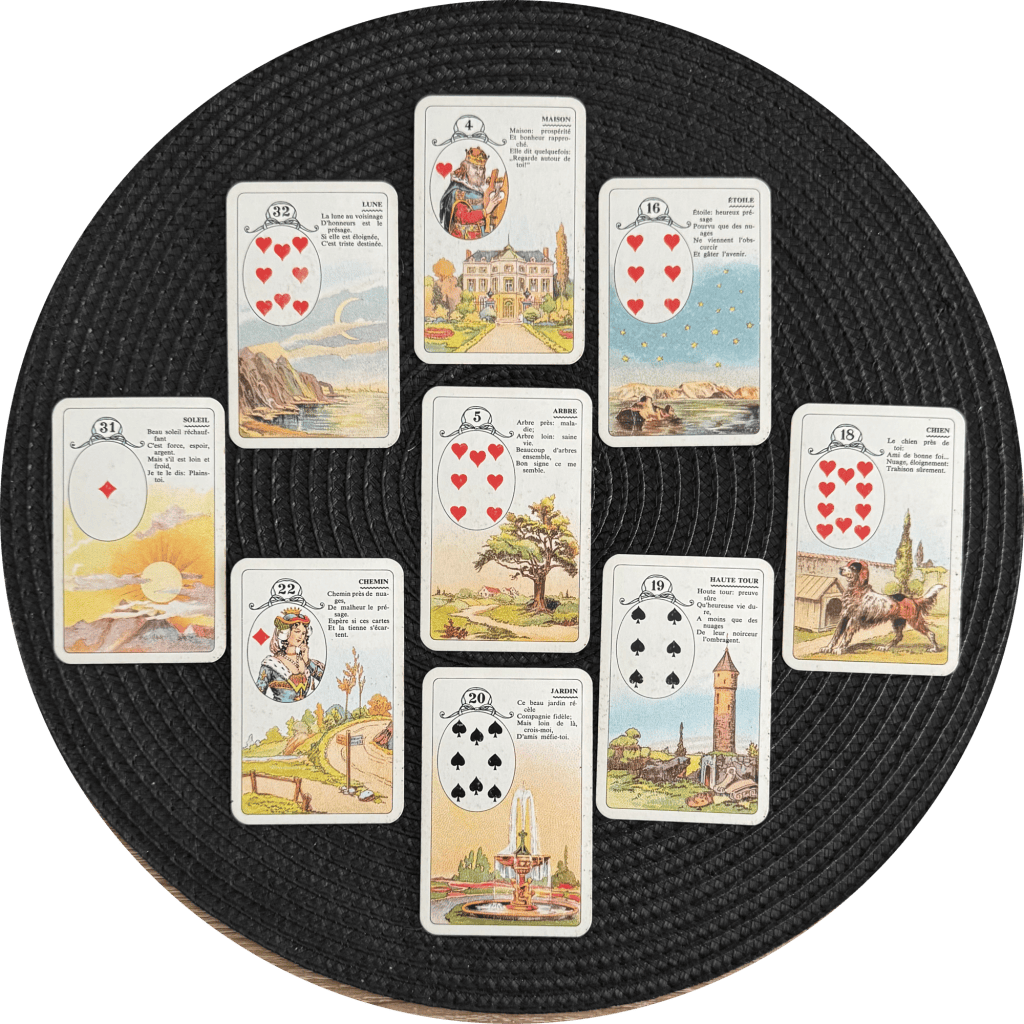
- House: stability and security.
- Hound: support and companionship.
- Stars: clarity and guidance.
- Storks: change and modification.
- High Tower: longevity and protection.
- Roads: options and opportunities.
- Park: community and social engagement.
- Sun: vitality, optimism, and success.
- Moon: recognition and medical expertise.
It is my firm belief that the “many trees” is an aide-mémoire and that the significance lies in these cards’ core essence and significance functioning in the context of health and wellbeing.
Whilst my aunt never spoke of wishes being granted, I have repeatedly observed such combinations accompanying recovery, renewed strength, and improved wellbeing. Whether they also fulfil wishes, as stated in the traditional instructions, remains an open question. Again, I’d encourage you to keep an open mind – although I have not seen this, other cartomantes, such as Björn Meuris, have and follow this tradition.
The Tree and the Significator
Another lesson I learned early was that it was generally more auspicious for the Tree to fall beneath the seeker.
This follows naturally from the principle that cards influence those below them.
When the Lord or Lady stands above the Tree, it often suggests an individual who actively manages and maintains their wellbeing. Such people are frequently health-conscious and understand the importance of sustaining their constitution.
They are, quite literally, supported by the Tree.
My aunt also preferred to see the Tree positioned towards the lower-right corner of the Tableau. Whilst she never offered a precise explanation, the preference makes a certain amount of sense. In older forms of cartomancy, the right side was often regarded as more favourable and constructive. Likewise, a lower position increases the likelihood of the significator standing above the Tree.
Whilst admittedly anecdotal, I have often found her preference justified in practice.
Ultimately, the Tree in the Grand Tableau is less concerned with illness than with vitality.
It asks a simple question: how well sustained is the seeker’s life force?
Its distance from the significator tells us how directly that question is being experienced, whilst the surrounding cards reveal what strengthens it, weakens it, or helps it recover.
In this respect, the Tree remains entirely faithful to its function: it sustains.
Branches and Roots
The Tree is one of a small number of cards that forms particularly important relationships with the cards immediately above and below it. In this respect it behaves somewhat like the Scythe or the Cross, creating a vertical axis through which additional information may be obtained.
A useful way to understand this relationship is through the structure of the tree itself.
The card above the Tree may be thought of as its branches, whilst the card below may be understood as its roots.
The Branches
Because cards influence those beneath them, the card above the Tree often describes the visible and outward expression of the Tree’s vitality.
In health matters, it frequently shows how wellbeing manifests in daily life and what currently has the greatest influence upon the person’s constitution.
For example:
- Sun above the Tree may indicate strong vitality, optimism, and a healthy constitution.
- Stork above the Tree may suggest a changeable constitution, something that comes and goes and need for stability.
- Cross above the Tree may indicate that burdens and suffering are affecting health.
This principle can also be applied outside health questions.
In career readings, the card above the Tree often reveals how work affects the seeker’s wellbeing and work-life balance.
In relationship readings, it can demonstrate whether the relationship contributes positively to wellbeing or whether it is placing strain upon the individual.
The branches therefore reveal what is visible, active, and presently influencing the Tree.
The Roots
The card beneath the Tree functions differently.
Because it is influenced by the Tree, it often represents the foundations from which the Tree draws strength and nourishment.
These are the roots.
In health readings, this can quite literally indicate hereditary conditions, familial predispositions, inherited traits, and other health matters carried through the family line.
Yet the meaning extends beyond biology.
In career matters, the roots frequently reveal the values, habits, and work ethic that the individual has inherited or developed over time.
In relationship readings, they often reveal the foundations upon which the relationship rests, including family influences, shared values, emotional security, and long-established patterns of behaviour.
For example:
- House beneath the Tree may indicate strong domestic foundations and support.
- Hound beneath the Tree may reveal loyalty, friendship, and dependable support systems.
- Lilies beneath the Tree may point towards family traditions, inherited values, a sense of familial honour.
The roots therefore answer an important question: what is sustaining this tree?
Reading the Vertical Axis
When considered together, the card above and the card below often provide a remarkably clear picture.
The card above shows what is presently influencing the Tree and how its vitality expresses itself in the visible world.
The card below reveals the deeper foundations from which that vitality is nourished and sustained.
Just as a healthy tree depends upon both strong branches and healthy roots, so too do people depend upon what supports them in the present and what grounds them in the past. The Tree reminds us that wellbeing is rarely created in a moment. It grows from foundations that have often been developing for many years.
Roots and Towers
Although the Tree and High Tower possess important associations with longevity, they approach the subject from opposite directions.
The Tree concerns origins, roots, inheritance, ancestry, and the foundations from which life grows. The High Tower concerns destiny, achievement, legacy, and the structures we build over the course of a lifetime.
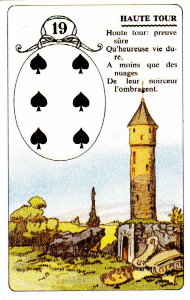
The Tree looks backwards. The High Tower looks forwards.
Together they form one of the most informative relationships within the Petit Lenormand.
The Tree asks: where do I come from?
The High Tower asks: what am I building towards?
This distinction can prove remarkably useful in larger layouts such as the Grand Tableau and the 5 × 5.
Readers who believe in reincarnation may also find the Tree functioning as an indicator of accumulated karma, inherited lessons, or circumstances brought forward into the present life. Whether interpreted literally or symbolically, the card often describes influences whose origins precede the seeker’s current circumstances.
When the Tree and High Tower form a chain, the intervening cards frequently describe how the seeker’s past influences their future and how their origins contribute to what they ultimately build.
For example:
Tree – Cloverleaf – Ship – House – Lilies – High Tower
Here we can see that a past (Tree) opportunity (Cloverleaf) to relocate (Ship) creates greater stability (House) and ultimately benefits the family (Lilies), contributing to the long-term future represented by the High Tower.
The chain effectively acts as a bridge connecting roots and legacy.
It shows how one gives rise to the other.
This principle can also be applied to the cartes maîtresses.
Whenever the Tree appears near a carte maîtresse, the associated area of life is often strongly influenced by the past. The Tree reveals the roots of the situation and the experiences that continue to shape it.
Thus, if the Tree appeared near the Ring and Anchor, I would immediately suspect that long-standing issues surrounding commitment, permanence, reliability, and stability were influencing the present relationship. The surrounding cards would then reveal the precise nature of those influences.
Cards such as the Serpent, Fox, or Clouds might indicate past betrayals, dishonesty, manipulation, or uncertainty. Conversely, cards such as the House, Lilies, or Sun may reveal stable foundations, family support, shared values, or a history of mutual commitment.
The same principle applies to every area of life.
- Tree + House often points towards the family background or domestic roots of the situation.
- Tree + Fishes may reveal inherited attitudes towards money, resources, or prosperity.
- Tree + Anchor frequently points towards deeply rooted habits, values, loyalties, or commitments.
- Tree + Moon may indicate following in our parents’ footsteps in terms of career choice, ambitions or status.
The Tree therefore does not necessarily show the past.
Rather, it shows the past that still has roots in the present.
For this reason, I seldom find it necessary to divide the Grand Tableau rigidly into past, present, and future sections. The Tree frequently reveals those influences from the past that remain alive and active within the seeker’s life. These are usually the only past events that truly matter to the reading.
Rather than examining an abstract timeline, I prefer to identify which elements of the past continue to sustain, shape, nourish, or burden the life the seeker is currently building.
The rest, much like fallen leaves, have already returned to the soil.
The Tree in Matters of the Heart
Like the High Tower, the Tree possesses a somewhat unfair reputation in relationship readings.
Because the card is associated with roots, longevity, and permanence, some readers assume it automatically signifies stagnation, boredom, or relationships that have become trapped by habit. Whilst this can certainly occur, such interpretations are incomplete.
The Tree itself is neither favourable nor unfavourable.
It simply describes what is being sustained.
For this reason, careful attention should be paid to the Tree’s position relative to the significators and to the cards surrounding it.
For the sake of clarity, let us use the Lord and Lady as our examples.
When the Tree falls between the Lord and Lady, it frequently describes a long-standing relationship whose roots run deep. The couple have shared experiences, memories, habits, routines, and a common history. Their connection has survived the passage of time and become firmly established.
Naturally, such relationships often develop patterns and routines.
In some cases, this can and does sometimes become problematic.
If difficult cards surround the Tree, the relationship may be sustained more by habit than genuine engagement with one another.
For example:
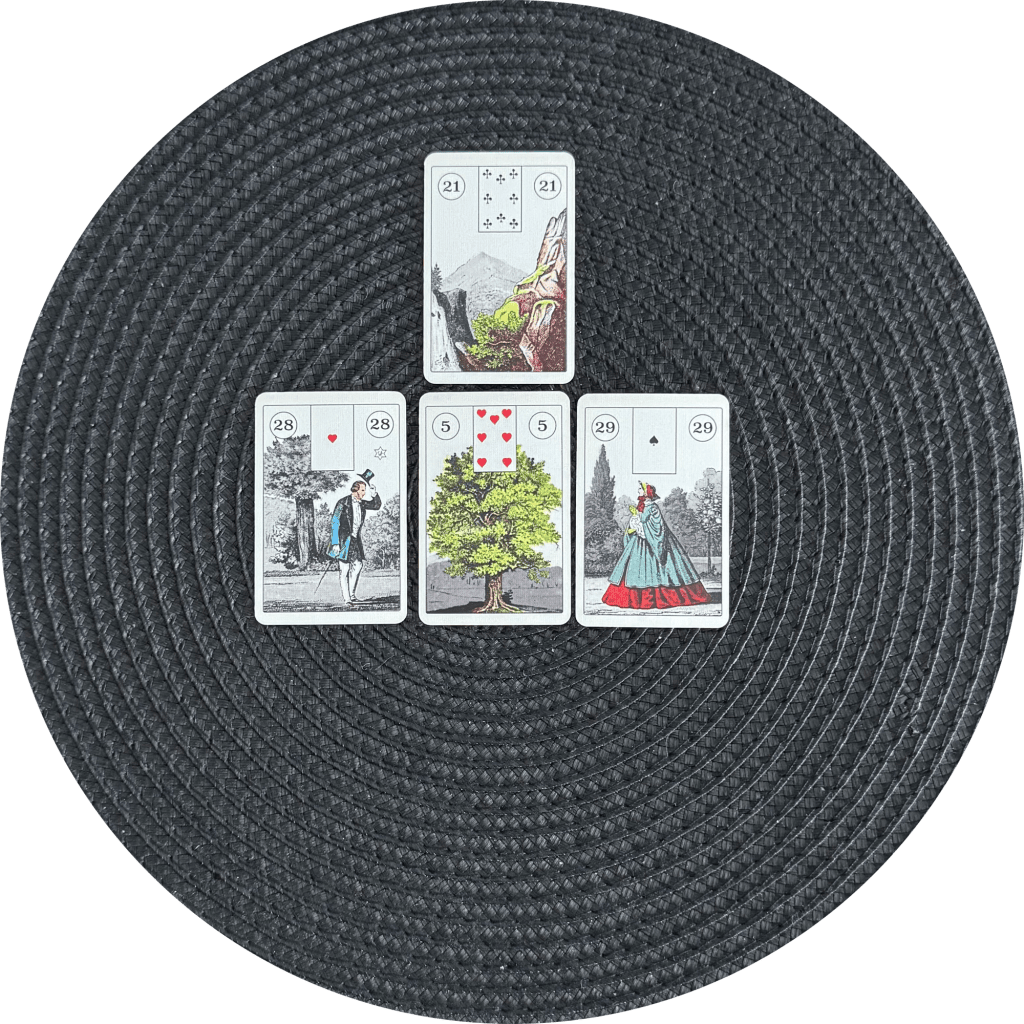
Mountain above the Tree may indicate a blockage that has developed gradually over time. Communication becomes difficult, problems remain unresolved, and the relationship begins to feel like hard work. The couple remain together, but growth has become restricted.
The Tree is still sustaining the relationship.
It is simply sustaining something that has ceased to flourish.
By contrast:
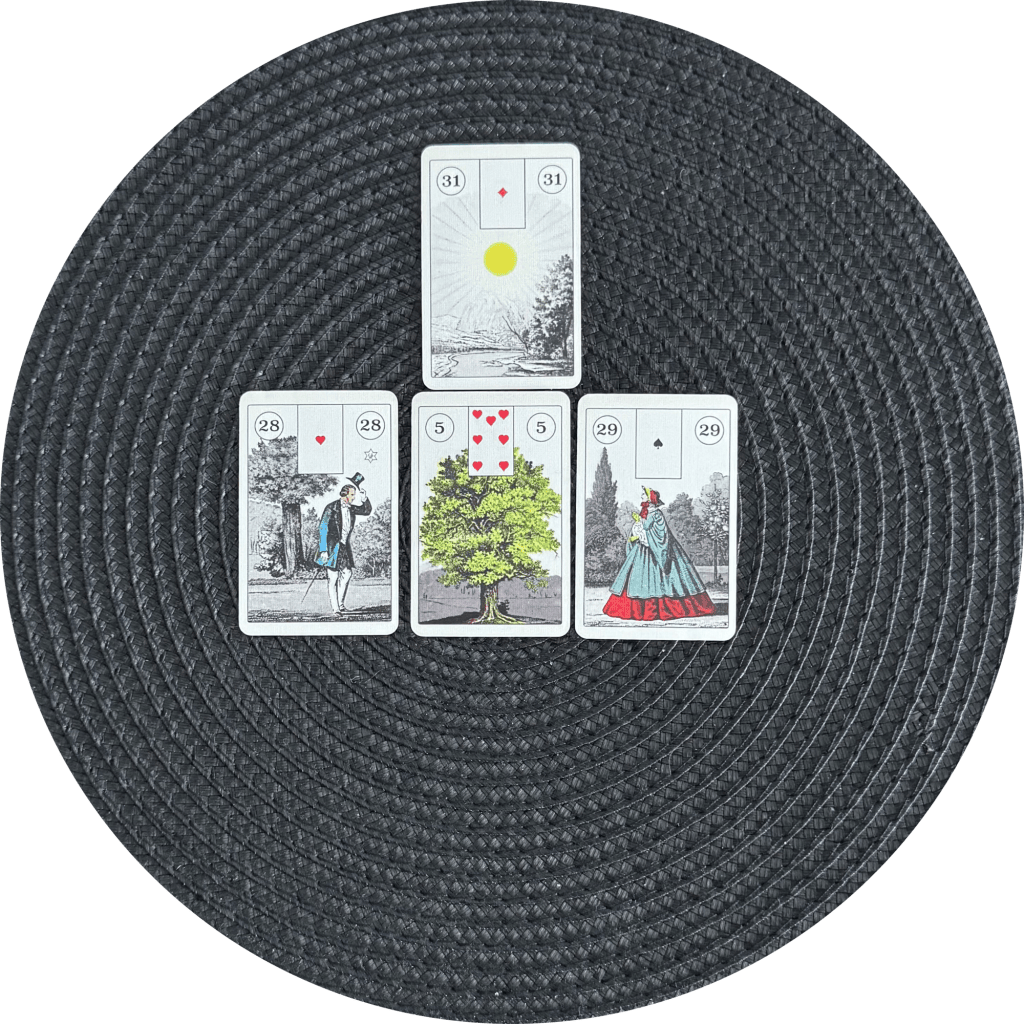
Sun above the Tree paints an entirely different picture.
Here the relationship remains healthy, supportive, and life-affirming. The couple find happiness in familiarity and comfort in routine. They do not require constant excitement or dramatic romantic gestures because the relationship itself provides stability, warmth, and contentment.
Indeed, one of the mistakes frequently made in relationship readings is assuming that all healthy relationships must be characterised by continual passion and novelty.
Many happy couples are perfectly content with a life built upon habit, routine, and mutual understanding.
The Tree often appears in such relationships precisely because they possess strong roots.
The card therefore asks a simple question: is this relationship still growing, or is it merely surviving?
The answer will be found not in the Tree itself, but in the company it keeps.
When supported by positive cards, the Tree often describes one of the greatest strengths a relationship can possess: the ability to endure, adapt, and sustain both partners through the changing seasons of life.
Timing
In matters of timing, the Tree is a slow-moving card. Indeed, it is arguably the slowest card in the entire Petit Lenormand.
Trees do not grow overnight. Their development is gradual, steady, and often imperceptible from one day to the next. Consequently, the Tree can significantly slow the pace of a reading.
Unlike the Mountain, which delays through obstruction and resistance, the Tree slows through growth and natural development. Matters unfold when they are sufficiently established and have developed strong enough roots to sustain themselves.
For this reason, when the Tree appears in timing questions, I generally think in terms of months rather than days or weeks.
The card frequently indicates processes that require patience. Growth cannot be rushed, nor can the results be forced into existence before their proper time.
Some cartomantes associate the Tree with Christmastide because of its connection with evergreen trees and seasonal traditions. Personally, I have never observed this association with any consistency.
Over the years, however, I have repeatedly found the Tree referring to the period between 3 May and 5 June.
This is a personal observation rather than a traditional attribution.
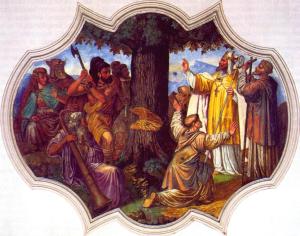
The symbolism is nevertheless appealing. The 3 May was traditionally observed as the Feast of the Holy Cross (Roodmas), whilst the fifth of June was associated with St Boniface, famed for felling the sacred oak of Thor. Furthermore, the Tree is Card No. 5, naturally echoing the month of May, and belongs to the suit of Hearts, which signifies strong springtime.
The Tree often manifests in another way entirely.
Rather than indicating a future date, it frequently points towards something that already exists.
The card regularly reveals circumstances, habits, relationships, illnesses, or influences whose origins lie in the past but whose effects continue into the present. In such instances, it may be more useful to examine the cards surrounding the Tree as causes rather than focusing exclusively upon future developments.
The Tree therefore reminds us that not every answer lies ahead.
Sometimes the most important question is not: “What happens next?” but rather: “How did we get here?”
For like the roots of a tree, the true causes of many situations often lie buried beneath the surface, quietly shaping the present long before they become visible.
Health
As we have discussed throughout this chapter, the Tree is the principal carte maîtresse of health within the Petit Lenormand.
It concerns vitality, constitution, resilience, recovery, and wellbeing. The card therefore tells us what sustains health rather than what produces illness.
This distinction is important.
The Tree does not primarily ask: what disease is present?
Instead, it asks: how strong is the individual’s vitality and what is affecting it?
For this reason, careful attention should be paid to the cards surrounding the Tree. They frequently reveal factors that strengthen or undermine wellbeing.
Sometimes these cards may point towards particular ailments or constitutional weaknesses. More often, however, they reveal the circumstances, events, relationships, and emotional burdens that are affecting the individual’s health.
For example:
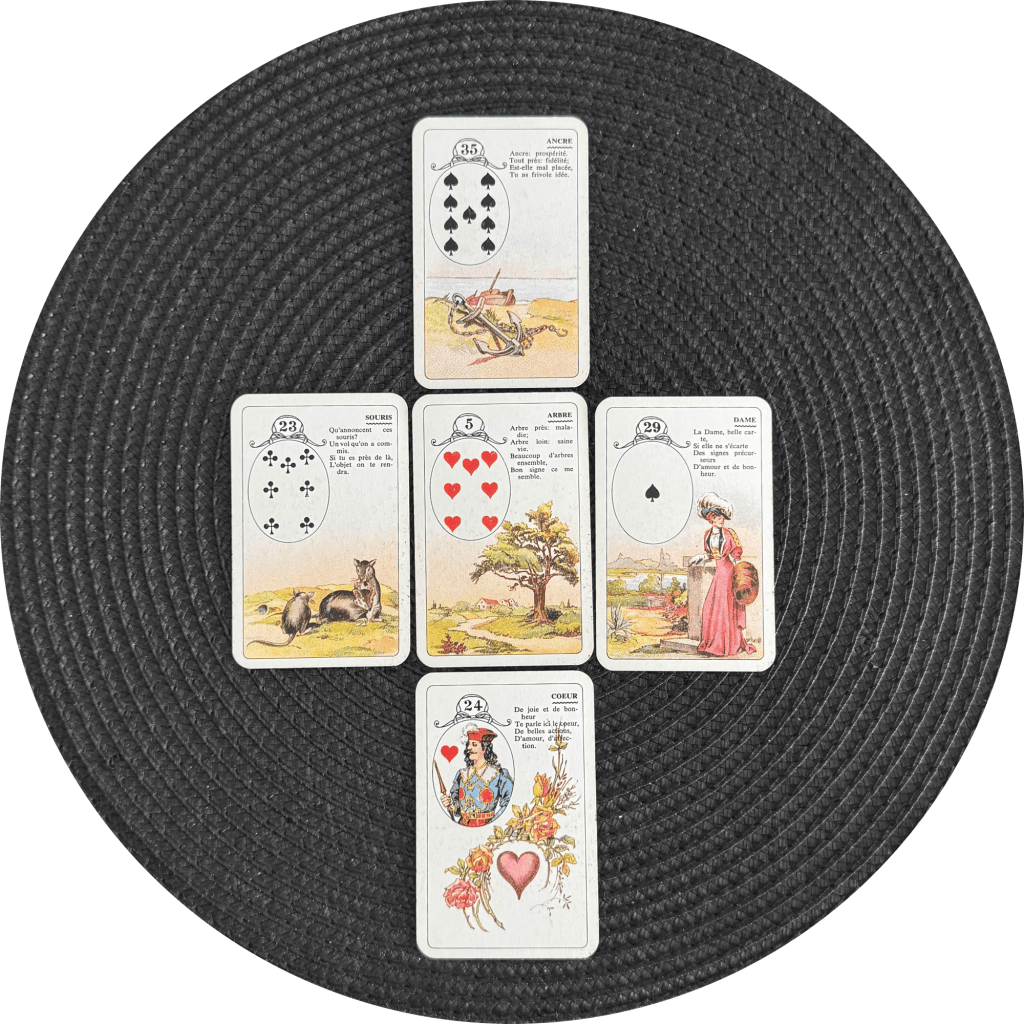
Anchor
Mice – Tree – Lady
Heart
These cards formed part of a Grand Tableau for a female client.
The Tree standing directly beside the Lady immediately indicated that wellbeing was an important theme within the reading.
The surrounding cards revealed why.
The Anchor described a long-standing and established relationship. The Mice showed gradual erosion and deterioration, whilst the Heart pointed towards emotional pain and heartache.
Taken together, the cards suggested that the slow breakdown (Mice) of an important long-term relationship (Anchor) was causing significant emotional distress (Heart) and adversely affecting the client’s wellbeing (Tree).
Certainly, the Mice could potentially have described parasites, infestation, vermin, or other factors producing physical symptoms, particularly if supported by cards such as the Coffin. In this instance, however, the reading proved far more situational than medical.
The relationship gradually deteriorated, causing genuine emotional suffering that ultimately affected both the client’s mental and physical health.
This illustrates an important lesson.
The Tree frequently speaks less about illness itself and more about the conditions that either nourish or deplete our vitality. Sometimes the cards point directly towards symptoms and disease. More often, they reveal the circumstances that have been quietly affecting wellbeing long before physical symptoms become visible.
Like the roots of a tree, the true cause is often found beneath the surface.
The Tree in Action
The following example utilises a spread known as the Coven of Thirteen, although I personally refer to it as the Sun Cross owing to its distinctive structure and the way the cards radiate from the centre.
The Coven of Thirteen was first described in Fortune Telling by Basil Ivan Rakaczi, an Irish-Hungarian artist and member of The White Stag Group.
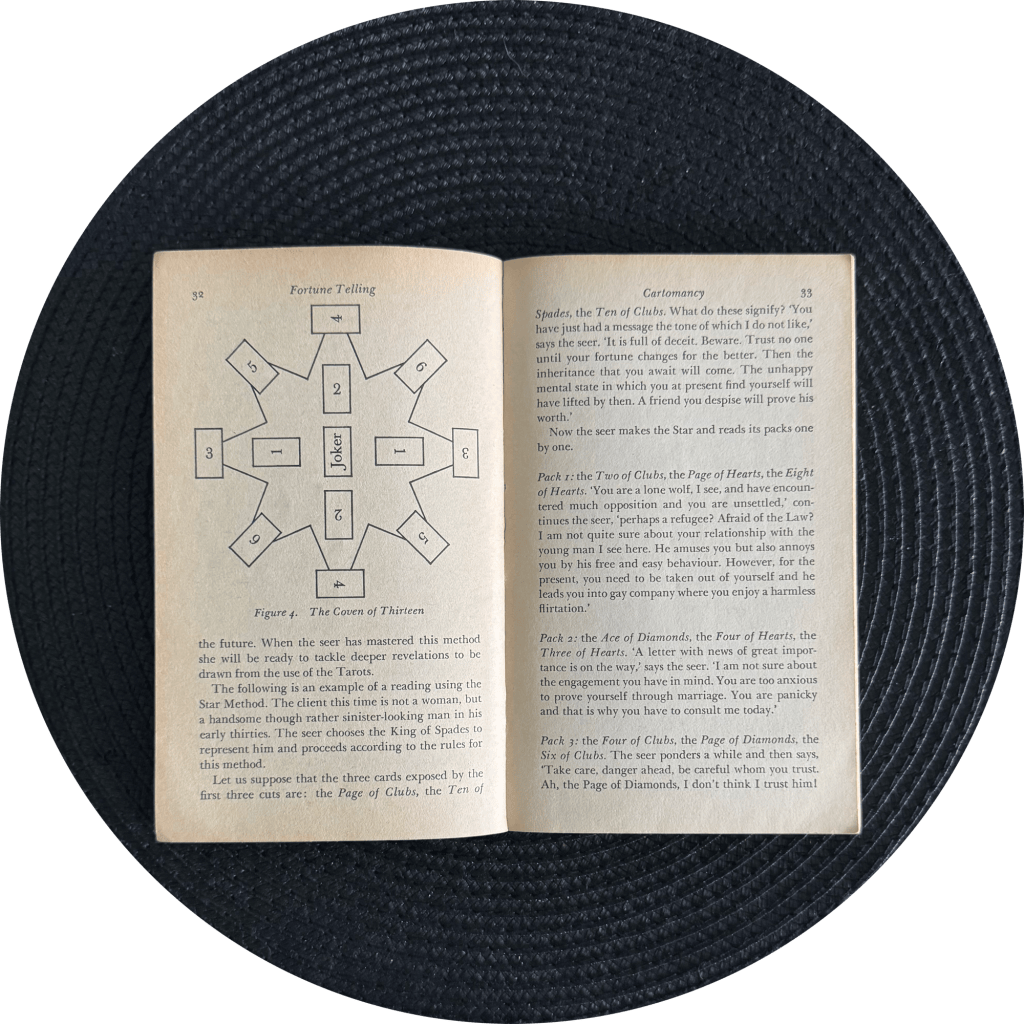
Within Anglo-American divinatory circles, the spread is perhaps best known through the essays of the Anonymous Witch, formerly hosted on the late Dawn Jackson’s website. It should be noted, however, that Jackson herself was not the author of those articles.
Some attribute the spread to Etteilla, but I have not been able to find evidence supporting this claim. The confusion appears to arise from the Anonymous Witch’s typography. The Temple of Fortune, mentioned within the articles, was indeed described by Etteilla. Likewise, the twenty-one card Three Steps spread appearing in one of the essays is included in certain editions of the Grand Etteilla booklet, although this appears to be a later innovation. Other spreads discussed by the Anonymous Witch can be traced to authors such as Chita St Lawrence and Charles Platt. Many layouts commonly attributed to Etteilla actually originate with his successors, including the Great Star, which differs considerably from the Coven.
Rakaczi’s text covers several methods of divination using both the Tarot and playing cards. The Coven of Thirteen is one of four spreads he outlines for the latter. Of particular interest is his discussion of the twelve court cards, where he employs names such as The Devouring Sun and The Corn King, titles that readers of the Anonymous Witch will immediately recognise. For this reason, it seems far more likely that Rakaczi is the true source of the spread.
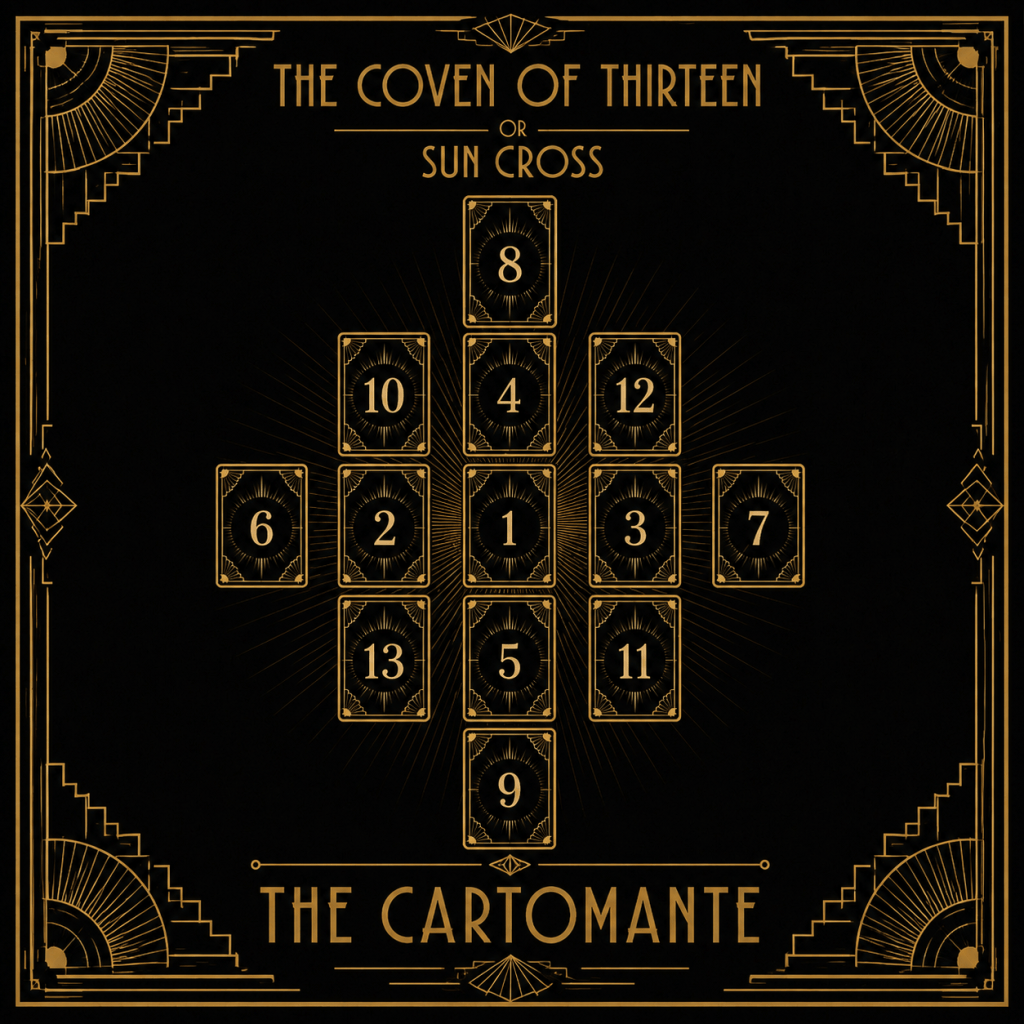
The original instructions direct the reader to place the Joker at the centre of the layout, treating it much like Le Mat. When adapting the spread for the Petit Lenormand, we can place the Lord, Lady, or Child at the centre and then deal the first card over it.
Personally, I prefer to leave the significator within the pack with this particular spread.
The absence of the significator often indicates that the querent is passive in the matter or unable to exert direct influence. If the significator appears amongst the dealt cards, the opposite is frequently true.
The Reading
This reading was performed for a woman named Marianne.
After twenty years of marriage, her relationship was struggling. Her question was straightforward: Will couples therapy help my marriage?
The cards were laid as follows:
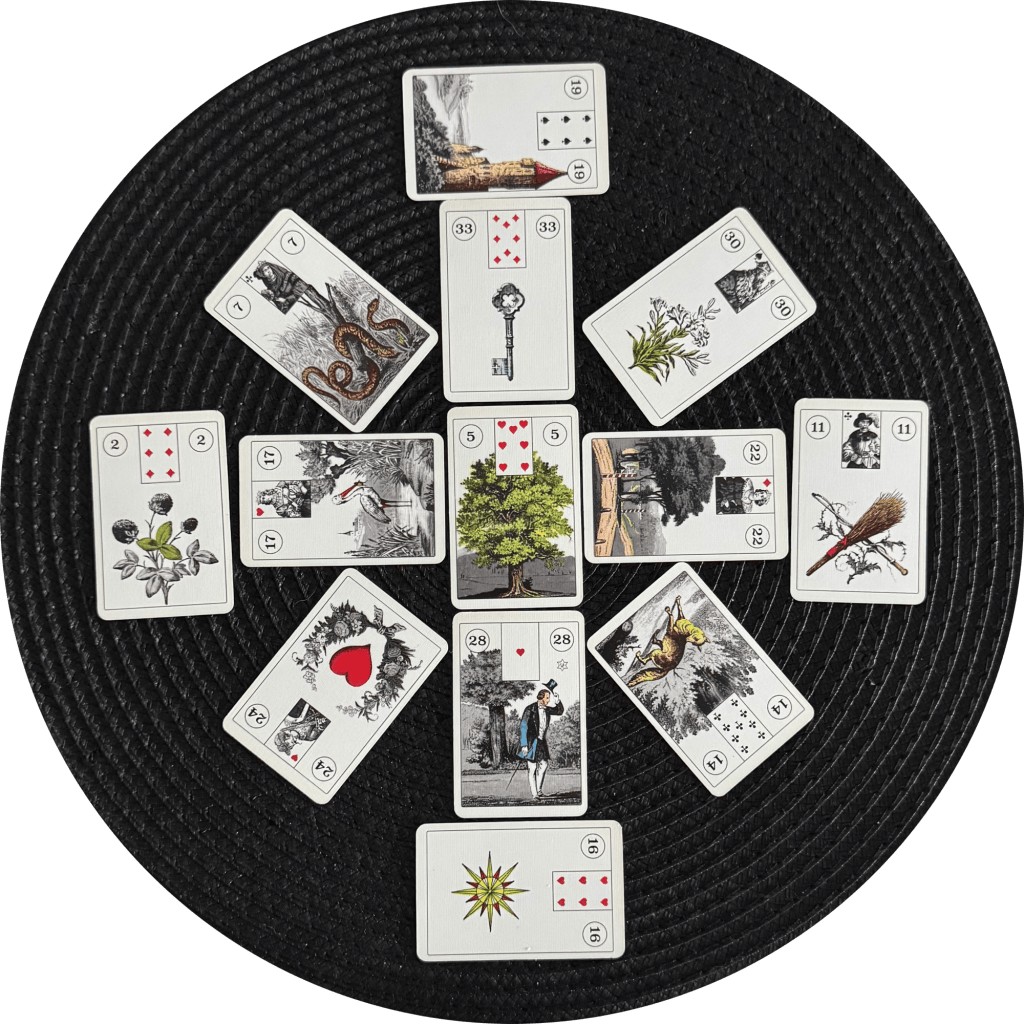
The Tree occupies the centre of the spread.
This immediately reveals the true heart of the matter.
The reading is not simply asking whether counselling will occur but whether the relationship’s roots remain healthy enough to sustain future growth. Given both Marianne’s question and the Tree’s symbolism, the card could hardly be more appropriate.
The Pairs
The paired cards are first read vis-à-vis the centre card.
Stork – Roads suggests that a change in direction will bring renewal and improvement to the relationship.
Key – Lord indicates that counselling will help the husband open up about deeper issues and long-established patterns. As the Lord falls beneath the Tree, these are likely rooted in his past or personal foundations.
Cloverleaf – Birch Rod suggests that counselling offers a valuable opportunity to correct the present state of the relationship.
High Tower – Stars indicates that the process will provide clarity concerning the long-term future and trajectory of the marriage.
Serpent – Fox suggests that counselling will help identify, understand, and untangle the genuine sources of difficulty.
Lilies – Heart points towards the restoration of emotional wellbeing, harmony, and peace within the relationship.
Collectively, the pairs suggest that meaningful change, openness, correction, clarity, understanding, and emotional reconciliation are all possible through the therapeutic process.
Reading the Arms
As with certain other layouts, such as the Dame’s Nowl, additional information may be obtained by examining the four arms of the cross.
I generally begin on the left-hand side of the cross and proceed clockwise.
Left Arm
The Stork is touched by the Heart, Cloverleaf, and Serpent.
This suggests that feelings concerning the relationship have become unhealthy and require attention before genuine change can occur.
Whilst there have been brief periods of improvement (Cloverleaf – Stork), these temporary respites have failed to address the underlying issues because there remain toxic influences (Serpent) affecting the emotional life of the relationship (Heart).
The Upper Arm
The Key is touched by the Serpent, High Tower, and Lilies.
The long-term future of the marriage (High Tower) remains within the couple’s control (Key). However, this depends entirely upon identifying and resolving a complicated web of underlying influences (Serpent – Key) before true harmony (Lilies) can be restored.
Particularly noteworthy is the fact that the Key opens the Serpent whilst securing the Lilies.
In other words, the poison must first be identified before harmony can be restored.
The closeness of the Serpent, High Tower, and Lilies suggested that the problems were both significant and long-standing. I also suspected the presence of a concealed influence acting against the health of the relationship.
At the time, I felt that another individual was contributing to the difficulties, although their precise identity remained unclear.
The Right Arm
The Roads is touched by the Lilies, Birch Rod, and Fox.
The conflict affecting the family unit (Lilies – Birch Rod) has reached the point where action is required.
The Roads indicates that the couple stands at a crossroads. The Birch Rod shows that correction is necessary. The Fox suggests a practical and carefully considered approach.
This arm therefore suggests that meaningful improvement requires guidance, structure, and a deliberate strategy rather than impulsive action.
The Lower Arm
The Lord is touched by the Heart, Stars, and Fox.
The Lord must demonstrate greater emotional intelligence (Heart – Stars) if the relationship is to recover.
The Fox faces the Lord, a configuration I frequently regard with suspicion.
Here, it suggested that he was not merely affected by the problem but contributing to it.
The Lord mirrors the Key above him. Consequently, helping him open up and discuss his emotions appeared to be central to understanding the roots of the difficulty and restoring the health of the marriage.
Additional Testimony
The principal reading had already produced a coherent narrative. Nevertheless, the playing cards offered further supporting testimony.
The spread contained three Queens, three Sixes, and two Valets.
Three Queens frequently indicate the involvement of another woman.
Three Sixes often suggest considerable expenditure.
Two Valets traditionally warn that something within one’s affairs has gone awry.
Taken together, these reinforced my suspicion that an outside female influence was contributing to the problem and that counselling would likely prove expensive.
Outcome
My conclusion was that therapy would work and the marriage could survive, but only if both parties fully committed themselves to the therapeutic process.
The Lord needed help opening up. The relationship required correction.
Most importantly, the hidden influence represented by the Serpent needed to be identified and removed.
Counselling did indeed help Marianne and her husband. The Lord had some issues stemming from his past. Also, a female family member (Serpent near the Lilies) had been steadily undermining the relationship and fuelling tensions between them. Once appropriate boundaries were established and this individual was kept at a distance, the situation began to improve.
The therapy was not inexpensive, but it proved worthwhile.
Marianne and her husband remain together three years on.
The Tree had correctly identified that the real problem lay not in the visible symptoms but in the roots themselves.
Once those roots were properly tended, the relationship was able to recover and continue growing.
§
Images:
Featured Image:
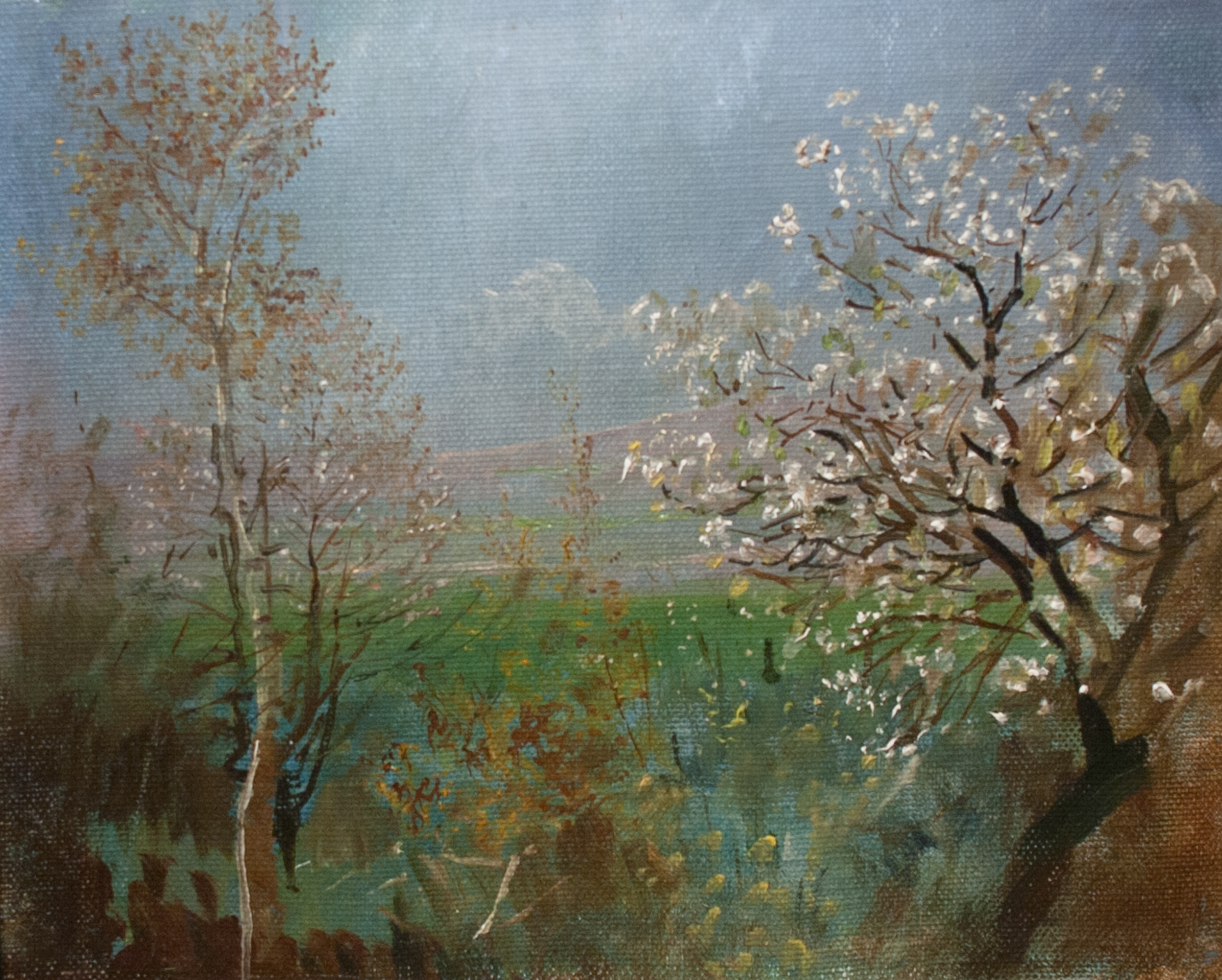
Blossoming Tree, László Mednyánszky, Public domain, via Wikimedia Commons
Cards:
Lenormand Cards: Jeu Lenormand © Cartamundi, WanderWüst © Jorge/Wandering Oracle, Lenormand Fortune-Telling Cards © Zao-Gelli, The Lenormand Oracle © Verlag für die Frau, Leipzig, Nieuwe Lenormand © Amber Studio/Erna Droesbeke, Lenormand 36 Orakelspielkarten © Königsfurt-Urania,
References:
Boroveshengra, A., 2013. Cartomantes’ Cabinet: The Petit Lenormand Course.
Boroveshengra, A., 2015. Lenormand Thirty Six cards. 2nd ed. Create Space.
George, R. 2014 The Essential Lenormand: Your Guide to Precise & Practical Fortunetelling. Woodbury, MN: Llewellyn Publications.
Matthews, C. 2014 The Complete Lenormand Oracle Handbook: Reading the Language and Symbols of the Cards. Rochester, VT: Destiny Books.
Meuris, B., 2018. Petit Lenormand Encyclopaedia: Volume 1. Create Space.
Silvestre, C., 2003. Le Petit Lenormand. [Montpellier]: Gange éd.
- Descendit ad inferos ↩︎
 Journal of a Cartomante