I know there is no straight road
No straight road in this world
Only a giant labyrinth
Of intersecting crossroads…
Federico García Lorca, Floating Bridges
One day, I saw two roads. One was broad, covered with sand and flowers, full of joy, music and all sorts of pleasures. People walked along it, dancing and enjoying themselves. They reached the end of the road without realizing it. And at the end of the road there was a horrible precipice; that is, the abyss of hell. The souls fell blindly into it; as they walked, so they fell.
Diary: Divine Mercy in My Soul, St Faustina Kowalska
An evangelising community knows that the Lord has taken the initiative, he has loved us first, and therefore we can move forward, boldly take the initiative, go out to others, seek those who have fallen away, stand at the crossroads and welcome the outcast.
Pope Francis, Evangelli Gaudium
Paths, surrounded by clouds it is a sign of unhappiness, but away from this card and the person, there are ways or means to be found to escape a danger…
Original Instructions
Card No. 22 in the Petit Lenormand, the Roads, also known as the Paths or Ways, is represented by the Queen of Diamonds. Does it just mean choices? Is it the card of cheating and breakups? If it signifies travel, how does it differ from the Ship?
The Essence and Function of the Roads
The traditional eikōn is remarkably consistent across the various patterns. We see a road arriving at a junction where it divides into two or more possible routes. Some decks depict a simple fork in the road, whilst others show a more elaborate crossroads surrounded by fields, trees, or countryside. Whether the junction contains three paths or four, the symbolism remains unchanged.
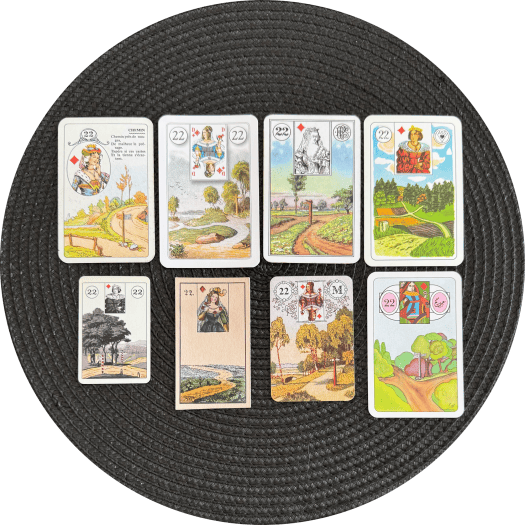
A point has been reached at which a choice must be made.
The essence of the Roads is possibility and its function is to diverge.
The Roads is both a simple and surprisingly complex card.
At its most basic level, it signifies choices and decisions. Yet every choice contains a hidden consequence. By choosing one road, we simultaneously reject another. The card therefore introduces both opportunity and uncertainty into the reading.
This uncertainty is entirely natural.
When standing at a crossroads, we rarely possess complete knowledge of where each path will ultimately lead. One route may bring happiness, another disappointment. One may prove profitable, whilst another cultivates wisdom or fulfilment. The difficulty is that such outcomes are seldom known in advance.
Consequently, the Roads frequently appears when important decisions must be made.
The exact circumstances bringing the seeker to the crossroads will depend upon the question being asked and the surrounding cards. The card itself identifies the presence of alternatives; the neighbouring cards reveal what those alternatives are.
For this reason, careful attention should always be paid to the cards surrounding the Roads. In particular, one should examine the cards lying in the direction of the available paths.
For example, if a path points towards the Fishes, the choice may lead towards increased financial activity, commerce, or economic growth. If another path points towards the Ring, the alternative may place greater emphasis upon relationships, commitments, or partnerships.
In such a case, the seeker might literally be choosing between pursuing financial independence and prioritising a relationship.
The Roads therefore presents us not merely with options but with diverging futures. This is where much of the card’s complexity resides.
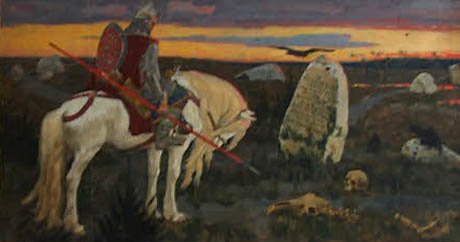
One of the great challenges presented by the Roads is that choices ultimately require commitment. We may spend considerable time gathering information, comparing alternatives, and weighing possibilities, but eventually a decision must be made and a path chosen. This is often where the anxiety of the Roads originates. The card asks us to step beyond the familiar and place our trust in a future that cannot yet be seen. No matter how carefully we plan, we cannot know with absolute certainty how a chosen road will unfold, whom we shall meet along the way, or which people and circumstances we may eventually leave behind. For this reason, the Roads frequently asks for courage as much as wisdom. The challenge is not merely identifying the available options, but having sufficient faith in ourselves to take the first step and commit to one of them. Life rarely rewards those who remain standing at the crossroads indefinitely.
Possibilities are generally welcome. Choices create opportunities that would not otherwise exist. At the same time, however, the card provides no guarantees. Every new possibility introduces uncertainty, and uncertainty naturally creates worry.
Over the years, some readers have felt that I describe the Roads too negatively because I occasionally refer to it as a card of crisis.
This misunderstanding arises from the modern use of the word.
I am not using crisis to mean a disaster or catastrophe. Rather, I employ the older meaning of a decisive turning point at which a choice must be made.
Accepting a job offer, moving house, choosing a career, ending a relationship, getting married, or deciding whether to have children are all crises in this sense. None are necessarily disasters, yet all require a decision that permanently alters the future.
The Roads therefore indicates a moment at which remaining stationary is no longer possible.
A choice must be made.
The card also governs journeys, particularly those that are local, regular, or routine in nature.
Unlike the Ship, which carries us towards distant horizons and unfamiliar destinations, the Roads usually concerns travel within a familiar environment. Daily commutes, shopping trips, visits to friends and relatives, school runs, and other routine journeys all fall naturally under its influence.
These journeys may occur by car, bicycle, motorcycle, train, bus, or simply on foot.
Coda
At its heart, the Roads reminds us that life is shaped by decisions. Some are trivial. Others alter the course of our lives. Yet every path begins at the same place: the moment we stand at the crossroads and decide which direction to take.
Person and Description
Person
Although the Roads is not primarily a person card, it can occasionally signify an individual through its association with the Queen of Diamonds.
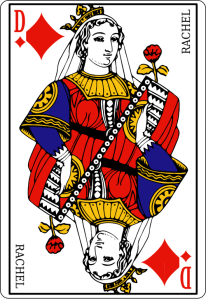
Traditionally, the Queen of Diamonds was described as a rival, jealous woman, or female competitor. In practice, I have found this interpretation somewhat overemphasised. More commonly, the card signifies a woman of approximately the querent’s own generation whose actions can either assist or complicate the matter at hand.
Whether she proves helpful or troublesome depends largely upon the surrounding cards.
With favourable cards, she may appear as a friend, adviser, colleague, intermediary, or someone helping the querent navigate an important decision. With more difficult cards, she can become a source of interference, indecision, confusion, or competition.
The surrounding cards will usually reveal which face of the Queen is being presented.
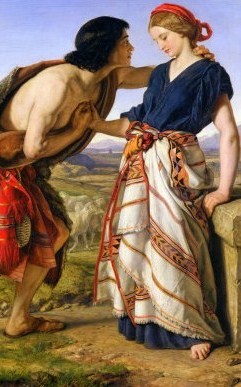
In the folklore of the playing cards, the Queen of Diamonds is associated with Rachel, wife of Jacob and one of the biblical matriarchs. This association sometimes produces a woman who has endured hardship, disappointment, separation, or difficult choices during her life.
Older sources also describe the Queen of Diamonds as a fair-haired woman, particularly one who was widowed, divorced, or had experienced the loss of a significant relationship. Whilst such descriptions occasionally prove accurate, I find them considerably less reliable than the broader themes of experience, resilience, and difficult choices.
Like the Roads itself, this Queen often appears at moments when important decisions must be made.
Physical Description
The Roads frequently describes individuals who stand at an important stage or turning point in life.
This can occasionally manifest through age. The card is often associated with milestone years such as twenty-one, forty, fifty, sixty, retirement age, or other periods where a person finds themselves reflecting upon where they have been and where they wish to go next.
Over the years, I have also observed the Roads appearing surprisingly often around a person’s Saturn return. Whilst I would not regard this as an absolute rule, the symbolism is entirely appropriate. The Saturn return is traditionally understood as a period of significant decisions, reassessment, accountability, and the consequences of previous choices. Individuals frequently find themselves committing to one path whilst abandoning another, making it one of the clearest astrological expressions of the Roads’ symbolism.
One particularly distinctive feature of the Roads is duality.
The card frequently describes hair containing two colours. This may be natural greying, highlights, streaks of colour, balayage treatments, or another combination of contrasting shades.
With supporting cards, especially the Birds, the Roads can occasionally describe heterochromia, where the eyes possess different colours. However, caution should be exercised. In modern life, coloured contact lenses are considerably more common than genuine cases of heterochromia.
The same principle often extends to clothing.
Over many years of practice, I have repeatedly observed the Roads describing people dressed in two contrasting colours or wearing garments that prominently combine different shades. In decks depicting more than two paths, the number of colours may occasionally increase accordingly.
The card is often describing division, contrast, and multiplicity made visible.
Temperament
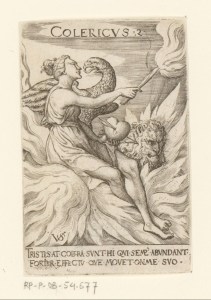
The Roads most closely corresponds to a melancholic temperament with a choleric undertone.
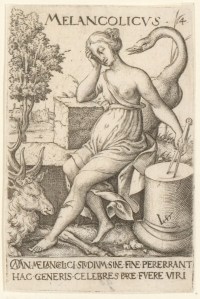
The melancholic influence produces reflection, caution, and a tendency to weigh possibilities carefully before acting. These individuals often spend considerable time comparing alternatives and considering the consequences of their decisions.
The choleric undertone, however, prevents them from remaining passive indefinitely. Once a decision has been made, they can move forward with surprising determination and conviction.
A common feature amongst Roads people is that they have often experienced a significant separation, disappointment, or turning point in life. A relationship may have ended. A career may have changed direction. They may have relocated, emigrated, divorced, retired, or otherwise found themselves forced onto a different path.
In many respects, they resemble people navigating a Saturn return. Experience has taught them that choices have consequences and that not every road leads where one expects.
For this reason, they frequently possess a certain world-weariness and caution. They understand that every decision closes one door whilst opening another.
At their best, Roads people are thoughtful, adaptable, perceptive, and capable of seeing multiple sides of a problem. They excel at comparing options, identifying alternatives, and helping others navigate uncertainty.
At their worst, they can become indecisive, hesitant, overly cautious, or trapped between competing possibilities. Rather than choosing a path, they remain standing at the crossroads indefinitely.
Like the card itself, these individuals are often defined by the choices they have made, the roads they have travelled, and the roads they chose to leave behind.
Special Features
The Roads in the Grand Tableau
In the original instructions for the game, the Roads is given the following augury:
“Paths, surrounded by clouds it is a sign of unhappiness, but away from this card and the person, there are ways or means to be found to escape a danger…”
This instruction has generated considerable discussion amongst cartomantes because it is not entirely clear what the word away refers to.
Some readers interpret this as meaning that the Roads must be distant from the Clouds. Others understand it as referring to the Roads, Clouds, and significator all being separated from one another. My own experience aligns more closely with the latter view.
To understand this instruction, we must first examine the relationship between the Roads and the Clouds.
Like the Stars, the Clouds exert a particularly noticeable influence upon the Roads. The reason is straightforward. Decisions require visibility. We must be able to see where we are, understand what has brought us to the crossroads, and assess where the available paths might lead.
The Clouds darken whatever they touch. They bring storms, obscurity, uncertainty, and hidden influences.
The Roads therefore does not cease to be a card of choices and possibilities. Rather, the darkness of the Clouds makes it difficult for the querent to identify the true nature of the situation. They may struggle to recognise the root cause of their difficulties, understand the consequences of their choices, or determine which course of action is most appropriate.
The problem is not the presence of options.
The problem is that it has become difficult to see them clearly.
For this reason, the cards surrounding the Roads deserve particularly careful examination whenever the Clouds are nearby. They often contain valuable clues regarding both the source of the problem and its eventual resolution.
One technique I have found especially useful is examining the card from which the road appears to emerge.
In the Brepols pattern published by Carta Mundi, the road emerges from the lower right-hand side of the card. Consequently, I pay particular attention to the card positioned diagonally below and to the right of the Roads. This often reveals the circumstances, motivations, or difficulties that brought the seeker to the crossroads in the first place.
Roads and Clouds Near the Significator
When both the Roads and Clouds stand close to the significator, the querent experiences their effects directly.
This is often a period marked by anxiety, uncertainty, and difficulty seeing a way forward. Important decisions must be made, yet the individual feels unable to assess the situation clearly. External circumstances may be obscure, information incomplete, or the true cause of the problem hidden from view.
The unhappiness described in the traditional instruction is often found here.
Roads Near the Significator, Clouds at a Distance
When the Roads stands close to the significator but the Clouds are somewhat removed, I often find the card describes an important turning point in life.
This is a crisis in the older sense of the word: a decisive moment at which a choice must be made.
Such situations frequently generate anxiety because the decision matters. The seeker worries about making the wrong choice, choosing the wrong path, or sacrificing one opportunity for another.
Yet unlike the previous situation, the problem is not that the path is invisible. The difficulty lies in deciding which visible path should be taken.
In my experience, once the decision is made, progress usually follows and the anxiety gradually subsides.
Roads, Clouds, and Significator at a Distance
When the Roads, Clouds, and significator are all separated from one another, I have found the traditional instruction to be remarkably accurate.
Problems, obstacles, and uncertainties may still arise, but they remain manageable. The seeker possesses sufficient distance from the situation to identify alternatives and discover solutions.
Indeed, one will often find that the cards surrounding the Roads reveal the means of escape referred to in the original text.
A route forward exists.
The task of the cartomante is simply to identify it.
Ultimately, the traditional instruction concerns visibility rather than danger. The Roads presents possibilities and choices. The Clouds may darken the landscape and make those choices more difficult to navigate, but they do not remove the paths themselves. The further these influences stand from the significator, the less intensely they are experienced and the easier it becomes to identify a way forward.
The foregoing reflects both my understanding and my experience of the Roads within the Grand Tableau. As always, however, I would encourage readers to explore alternative perspectives. Authors such as Rana George, Björn Meuris, Caitlín Matthews, and Lisa Young-Sutton each offer insights on the Roads that deserve thoughtful consideration. For almost thirty years, I kept journals of personal readings and those performed for family, friends, colleagues, and clients (with their permission). Reviewing these records over time taught me much. It allowed me to refine interpretations, identify recurring patterns, test assumptions, and observe how certain significations expanded or evolved through continued practice. This, I believe, is one of the great strengths of cartomancy. It is not merely inherited; it is observed. Our predecessors left us foundations, but each generation contributes its own experience and understanding. Read widely. Consider different perspectives. Track your readings and revisit them often. Above all, watch your cards carefully. They have a remarkable way of teaching those willing to pay attention.
Relationships
The Roads possesses a somewhat unfortunate tendency in matters of the heart.
When appearing alongside the Heart or Ring, it frequently indicates conflicted feelings, competing priorities, or partners who find themselves pulling in different directions. The relationship has reached a point at which important questions must be addressed and decisions can no longer be postponed indefinitely.
When the Roads appears close to a partner’s significator, it often indicates that they are questioning aspects of their life, future, ambitions, or current circumstances. Whilst the relationship may not be the root cause of these uncertainties, it is frequently affected by them.
This does not mean that the relationship is doomed.
The Roads is not inherently a card of separation.
Rather, it reveals that the future requires conscious choice and careful consideration. A crossroads has been reached and both parties must decide which direction they wish to travel.
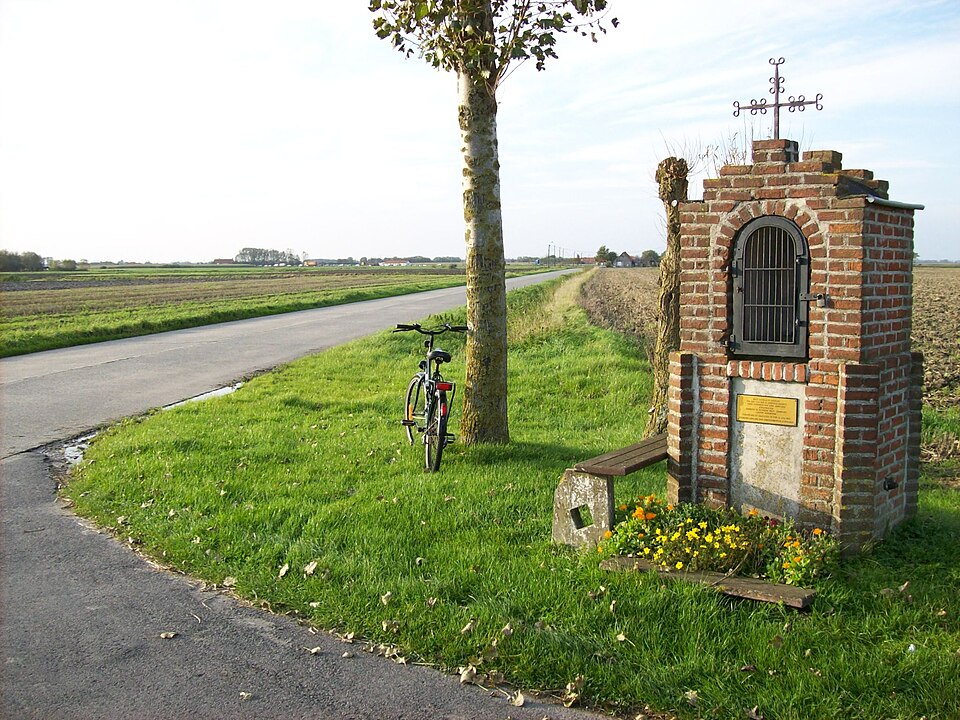
The difficulty arises because the Roads signifies divergence. Once different paths begin to emerge, the possibility of separation naturally increases.
Nevertheless, divergence and separation are not the same thing.
Before forecasting the end of a relationship, I prefer to see corroborating cards such as the Coffin, Scythe, Mice, or other indications of termination, decline, or finality. The Roads alone merely tells us that important decisions must be made concerning the future.
In many cases, the card simply describes two people attempting to determine whether their individual goals can continue to coexist within the same relationship.
At its heart, the Roads asks a simple question: can we continue travelling in the same direction, or are our paths beginning to diverge?
Vicinity
The Roads is one of the Petit Lenormand’s principal travel cards. Unlike the Ship, however, it generally concerns journeys within a familiar environment rather than travel to distant destinations.
The card therefore governs those journeys that form part of everyday life: commuting to work, visiting friends and family, shopping trips, school runs, appointments, and other regular movements within one’s local area.
Such travel may occur by car, bicycle, motorcycle, public transport, or simply on foot. The important factor is not the method of travel but the relative proximity of the destination.
A useful distinction may be drawn between the Roads and the Ship.
The Ship carries us beyond our usual surroundings. It often signifies travel to another town, city, county, state, or even another country altogether. The Roads, by contrast, keeps us within a familiar landscape.
The Ship takes us away.
The Roads takes us around.
This principle also proves useful when considering relocation.
If the Roads appears in close proximity to the House, it frequently suggests a move within the local area. The seeker may relocate to a neighbouring district, quarter, suburb, arrondissement, village, or neighbourhood whilst remaining within the same broader community.
Rather than beginning an entirely new chapter elsewhere, the individual is simply choosing a different path within a familiar environment.
In practice, I often find the Roads describing places that are easily accessible. The destination may be within walking distance, cycling distance, or reachable by a relatively short drive. Whilst there is no absolute rule, the card frequently points towards a journey that takes less than thirty minutes by car.
For this reason, the Roads often functions as a card of local movement and local opportunity. What the seeker needs is rarely far away. The challenge is not reaching it but deciding which route to take.
Like the card itself, the destination is usually not hidden beyond the horizon. It lies somewhere within the network of roads, streets, and pathways that already form part of the seeker’s everyday world. The question is not whether the destination can be reached, but which route will prove the most rewarding once the journey begins.
Fellow Travellers
The Roads does not merely connect places. It connects people.
Every road eventually crosses another road, and in much the same way the Roads frequently reveals where the threads of our lives intersect with the lives of others. The card therefore possesses an important social dimension that is sometimes overlooked.
For this reason, careful attention should be paid to any person cards surrounding the Roads.
These individuals often both influence and are influenced by the decisions represented by the card. Their actions may bring the seeker to the crossroads, whilst the choices ultimately made may affect them in turn.
One particularly useful technique is to examine the person card situated at the point from which the road appears to emerge.
Such individuals frequently reveal the cause of the decision or the circumstances that have brought the seeker to the crossroads.
Thus, the Child may indicate choices arising through a son or daughter, decisions concerning education, or questions regarding whether to expand a family. A partner significator may reveal decisions concerning relationships, cohabitation, marriage, relocation, or shared responsibilities. Likewise, the Hound may indicate that a friend, colleague, or trusted adviser has helped create the circumstances requiring a choice.
The Roads can also operate in the opposite direction.
When person cards appear along the paths towards which the Roads points, they frequently represent people we are likely to encounter should we pursue that particular course of action.
These individuals often help us navigate the decision itself. They may appear as advisers, colleagues, employers, teachers, friends, or specialists whose experience allows us to make a more informed choice. In other readings, they become part of the future opened by a particular path.
The Roads can also reveal the point at which people’s lives diverge.
Relationships end, children leave home, friends relocate, careers take different directions, and families find themselves scattered across different places and circumstances. In such situations, the Roads reminds us that not every separation is negative. Sometimes people simply find themselves travelling towards different destinations.
The card therefore reminds us that our decisions rarely affect only ourselves.
Every choice influences the wider network of relationships in which we participate. As we travel down one road, we move closer to certain people and further away from others.
In this sense, the Roads reveals more than options and possibilities. It shows how the threads of individual lives cross, separate, and occasionally rejoin to create the wider tapestry of human experience.
Timing
In matters of timing, the Roads is generally a card of moderate or steady pace. It neither accelerates events like the Cloverleaf nor slows them significantly like the Tree or Mountain.
Instead, the Roads introduces variables.
The card often indicates that additional factors must be considered before events can progress. Alternative possibilities remain available, choices have not yet been finalised, or circumstances are still evolving.
For this reason, outcomes represented by the Roads are rarely immediate.
The card frequently points towards a period measured in weeks rather than days.
Thus:
Cloverleaf – Roads will often indicate something occurring within three or four weeks.
Roads – Stork frequently suggests a change of plans, alteration of circumstances, or a change in direction within the next few weeks, often around the fourth week.
The precise timing depends upon the surrounding cards and the nature of the question.
The key to understanding the Roads in timing is recognising that it frequently signifies several possibilities rather than a single fixed outcome. Events take longer to unfold because other variables remain unresolved and alternative paths have not yet been ruled out.
For this reason, the Roads often appears when timing predictions require refinement. The card is effectively telling the reader that there are additional considerations that must be taken into account before a reliable conclusion can be reached.
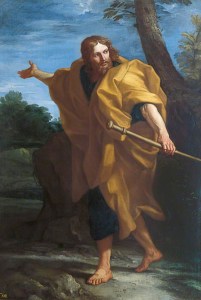
Particular care should be exercised when the Roads appears alongside the High Tower.
This combination often describes a major life decision whose consequences extend far into the future. The choice itself may be made relatively quickly, but its effects are frequently felt for years or even decades afterwards. Questions concerning education, career, marriage, relocation, retirement, or long-term commitments commonly appear under this combination.
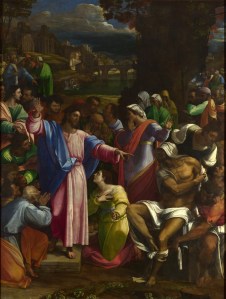
Over the years, I have also observed the Roads repeatedly referring to the period between 22 and 29 July. This is a personal observation rather than one derived from traditional Petit Lenormand literature. The association arises through the feasts of St James the Greater and St Lazarus of Bethany, both of whom possess strong associations with pilgrimage, wandering, and journeys. Whether the connection is symbolic or coincidental, I have encountered it often enough in recent years to consider it worthy of note.
Health
Anatomically, the Roads is associated primarily with the arteries and veins and, to a lesser extent, the nervous system.
The symbolism is straightforward. Just as roads carry people from one destination to another, arteries and veins transport blood throughout the body, whilst nerves carry signals between the brain and the rest of the organism. In each case, the emphasis is upon pathways, connections, and the movement of information or resources from one place to another.
The Roads is also one of the more reassuring cards to encounter in health readings.
Particularly when the Tree appears alongside more challenging cards such as the Coffin, Mice, or Cross, the Roads often acts as a mitigating influence. We shall examine this relationship in greater detail in the Tree chapter, but the underlying principle is simple.
The Roads suggests that options remain available.
Further investigations, alternative treatments, specialist referrals, second opinions, lifestyle changes, or different approaches to management may all be represented by this card. Rather than indicating a dead end, the Roads frequently points towards multiple possible routes forward.
For this reason, the card often encourages the seeker to gather information and consult the appropriate professionals before making decisions concerning treatment or care.
The Roads also appears frequently in conditions that are aggravated by stress, anxiety, indecision, or prolonged periods of uncertainty.
In such cases, the card rarely describes the illness itself. Instead, it points towards factors contributing to or exacerbating the condition. The individual may be worrying about competing responsibilities, struggling with an important decision, or finding themselves mentally exhausted by a situation for which no clear direction has yet emerged.
Consequently, the Roads often encourages us to look beyond the symptoms and identify the source of the distress.
Treating the symptom may bring temporary relief.
Understanding why it developed often leads to a more lasting solution.
Like the card itself, health under the Roads frequently improves once a clear direction has been chosen and the individual is no longer standing indefinitely at the crossroads.
The Roads in Action
The following example is taken from a Grand Tableau performed for a female client, Natasha, in 2010.
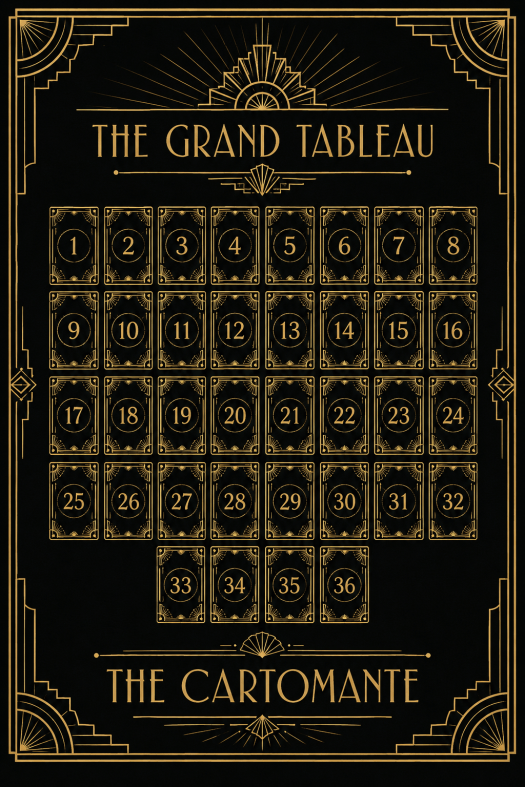
The Roads fell in House 5, immediately above the Lady, whilst the Clouds fell at some distance in house 25. For the purposes of this example, however, we shall not utilise houses and instead focus upon the cards themselves.
The relevant section of the Tableau was:
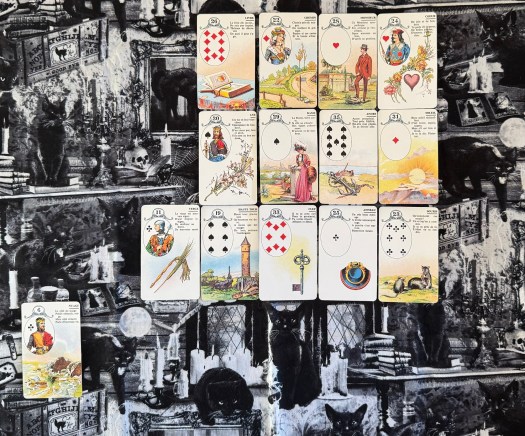
The first feature that immediately attracts attention is the Roads crowning the Lady. When the Roads is near the significator it shows an important junction has been reached. It is a crisis in the traditional sense: a decisive moment or turning point.
When the Roads stands directly above the significator it frequently indicates that the querent faces an important decision brought about by circumstances beyond their immediate control. The crossroads has not arisen in a vacuum. Rather, events or the actions of another person have placed the seeker in a position where a choice must now be made.
To understand the nature of that choice, we can examine from where the Roads originates. In this deck the road commences from the bottom right of the card. So we can say that the Roads commence from the Anchor and the Mice, whilst beneath the Anchor we find the Ring.
Together, these cards reveal a relationship whose stability, security, and permanence have been gradually undermined. The Mice are actively eroding both the Anchor and the Ring. Something has been quietly eating away at the foundations of the relationship for some time.
Further testimony appears through the combination: Birch Rod – Lilies – Roads.
The Birch Rod indicates conflict, disharmony, and correction. The Lilies concern tenderness, unity, peace, and the ability to co-exist harmoniously. Their connection to the Roads demonstrates that the decision facing Natasha arises because the unity (Lilies) of the relationship has broken down and now demands (Birch Rod) attention.
The situation can no longer be ignored.
Attention then turns to the Lord.
The Lord stands immediately to the right of the Roads and directly above the afflicted Anchor. This strongly suggests that his actions (Lord influencing the Anchor) are destabilising the relationship. Whilst there is no indication of adultery, there is clear evidence that the trust, reliability, and security represented by the Anchor have been damaged.
We therefore arrive at a very clear picture.
The relationship is in difficulty. Its foundations have been weakened. The harmony has been disturbed. And Natasha must now decide what to do about it.
The Roads presents two possible directions.
To one side stands the Lord and the Heart, representing reconciliation, affection, and continued emotional investment.
To the other stands the Book.
We shall discuss this more fully in the article devoted to the Book, but in my experience the Book more often signifies the unknown than a literal secret. The closer the Book falls to the significator, the greater the importance of what remains uncertain or undiscovered.
Natasha therefore stands between two futures.
One path leads towards working things out with the man she loves.
The other leads towards the unknown consequences of ending the relationship and beginning anew. The “unread pages” of the Book touch the Roads, so Natasha would really be charting an unknown course.
The High Tower touching the Lady adds considerable weight to the matter. This is not a trivial decision or passing disagreement. It is a significant life choice capable of shaping her future for many years.
The Key lying between the High Tower and the Ring is especially important.
The Key opens the High Tower whilst simultaneously securing the Ring.
This suggests that the future of the relationship remains viable (the Mice are near so their purloining can be remedied). The marriage is not ending. However, its long-term future depends entirely upon whether the underlying issues are properly addressed.
Because the Key stands with the Lady, I felt she still possessed both the will and the ability to save the relationship if she chose to do so.
Most importantly, she still loved the Lord. He has her heart (Lord – Heart).
Natasha confirmed that she and her husband had been arguing frequently because his work required him to spend long periods away from home (long distance driver).. Over time she had begun to feel that he was no longer fully committed to the relationship.
The marriage had quite genuinely reached a crossroads.
Rather than ending the relationship, however, the couple chose to address the underlying issues. Her husband subsequently secured alternative employment that required less travel and allowed him to spend considerably more time with his family.
Sixteen years later, they remain together.
The Roads had correctly identified the choice.
The Key and Ring had shown that the relationship could still be preserved.
All that remained was for the parties involved to decide which road they wished to take together. As you can see, here we’ve not used the houses, counting, knighting or other such techniques. Very often we can focus solely on proximity and attendance and receive all the information needed.
§
Images:
Featured Image:
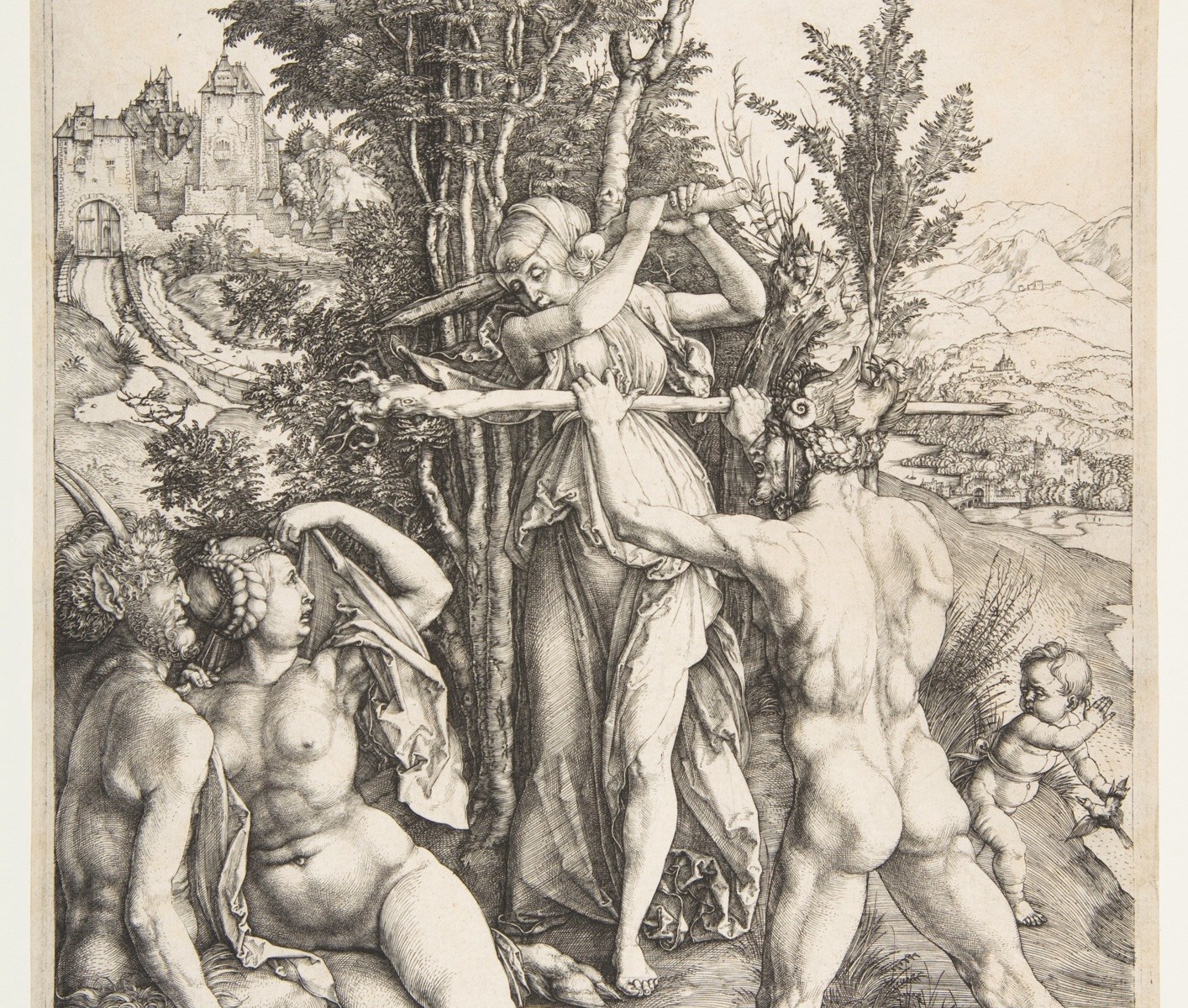
Hercules at the Crossroads, Albrecht Dürer, Public domain, via Wikimedia Commons
Cards:
Lenormand Cards: Jeu Lenormand © Cartamundi, WanderWüst © Jorge/Wandering Oracle, Lenormand Fortune-Telling Cards © Zao-Gelli, The Lenormand Oracle © Verlag für die Frau, Leipzig, Nieuwe Lenormand © Amber Studio/Erna Droesbeke, Lenormand 36 Orakelspielkarten © Königsfurt-Urania,
References:
Boroveshengra, A., 2013. Cartomantes’ Cabinet: The Petit Lenormand Course.
Boroveshengra, A., 2015. Lenormand Thirty Six cards. 2nd ed. Create Space.
George, R. 2014 The Essential Lenormand: Your Guide to Precise & Practical Fortunetelling. Woodbury, MN: Llewellyn Publications.
Matthews, C. 2014 The Complete Lenormand Oracle Handbook: Reading the Language and Symbols of the Cards. Rochester, VT: Destiny Books.
Meuris, B., 2018. Petit Lenormand Encyclopaedia: Volume 1. Create Space.
Silvestre, C., 2003. Le Petit Lenormand. [Montpellier]: Gange éd.
 Journal of a Cartomante